Awaab’s Law demands more than good intentions, it needs digital transformation
Only immediate digital transformation can solve the complex operational and compliance crisis facing the social housing sector, writes Rob Norton of PlanRadar



Rob Norton is UK director of PlanRadar
 Only immediate digital transformation can solve the complex operational and compliance crisis facing the social housing sector, writes Rob Norton of PlanRadar #UKhousing
In October, Awaab’s Law came into force for the social rented sector. Landlords now have a 24-hour emergency response time for investigating and responding to hazards like damp and mould. While this reflects the urgency that should have existed all along, the new deadline introduces complex operational challenges that threaten to overwhelm unprepared housing associations.
Awaab’s Law primarily targets social housing, but its operational requirements will influence property developers, facilities managers, commercial landlords and construction contractors across the industry.
Following the stringent requirements of the Building Safety Act 2022 and the tenant protections of the Social Housing (Regulation) Act, Awaab’s Law brings in significant regulatory changes. Phase 1 covers emergency hazards and damp and mould, with subsequent phases in 2026 and 2027 expanding to encompass virtually all Housing Health and Safety Rating System category 1 hazards.
Read more


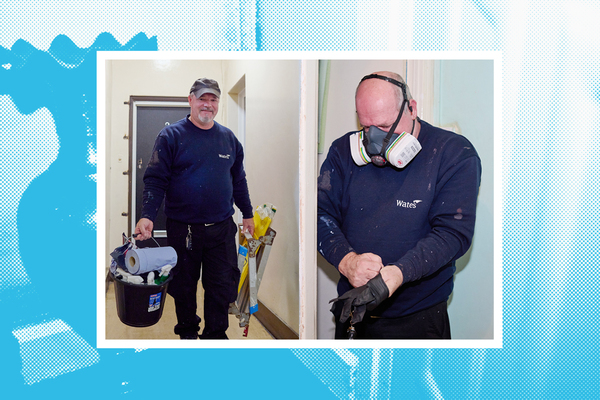
Crucially, each new phase of Awaab’s Law will multiply and intensify the operational complexity for housing associations, significantly increasing the requirements for data management, timeline tracking and documentation.
Awaab’s Law introduces the concept of ‘Day Zero’: the moment a landlord becomes aware of a potential hazard, a series of urgent deadlines kicks in. This effectively stipulates 24 hours to investigate and act, and three working days to document findings in writing and deliver them to tenants.
“Each new phase of Awaab’s Law will multiply and intensify the operational complexity for housing associations, significantly increasing the requirements for data management, timeline tracking and documentation”
Consider the following scenario: a tenant reports damp and mould on a Friday afternoon. The housing officer taking the call must immediately decide whether this is an emergency hazard (with a 24-hour timeline) or a significant hazard (allowing up to 10 days for investigation).
This decision is critically dependent on the tenant’s specific situation. For example, a pregnant woman or an elderly resident with respiratory conditions would transform a ‘standard’ mould issue into a potential emergency. The housing officer will need rapid access to the tenant’s vulnerability profile, the property’s repair history and records of previous inspections.
However, most housing associations store this critical information across multiple fragmented systems – tenant management databases, repair logs, assessments and paper files. In the time it takes to gather this data, precious hours are lost.
Furthermore, with multiple, non-negotiable deadlines around investigation, reporting, completion of safety work and preventative work, the legislation creates a compliance maze. Every phone call, access attempt, contractor booking and decision must be documented with timestamps and evidence trails. Multiply this across hundreds of properties and thousands of tenants, and the administrative burden is overwhelming.
Clearly, paper-based processes, fragmented communication channels and manual record-keeping are no longer fit for purpose. Most property professionals are already operating with constrained teams and budgets – it is far from feasible to hire your way out of systemic operational inefficiencies.
Digital transformation represents the realistic and effective path forward. In an increasingly regulated and litigious environment, it’s about ensuring operational survival.
“With multiple, non-negotiable deadlines around investigation, reporting, completion of safety work and preventative work, the legislation creates a compliance maze”
Mobile inspection capabilities capture hazards on site, in real time. This ends the delay of transcribing handwritten reports and ensures Day Zero starts instantly with photographic evidence and logged data.
Centralised dashboards give housing teams a live, single-source view of all open cases, including tenant vulnerability profiles and property histories, turning transparency from an aspiration into an operational reality.
Automated alerts ensure nothing falls through the cracks. When an emergency hazard is reported, digital platforms immediately assign tasks, notify contractors and escalate automatically if deadlines are not met. Technology enforces accountability that manual systems cannot match.
Digital documentation creates a comprehensive, timestamped audit trail, which is essential for compliance and provides irrefutable evidence in the event of future litigation.
Going digital is the bare minimum for organisations serious about their duty of care. Regulatory timelines and court orders are non-negotiable, and digital platforms provide the necessary support for housing professionals to cope with legislative demands.
The good news is that housing associations embracing this shift will not only meet compliance, but will fundamentally rebuild tenant trust and create the foundation for genuinely safe, healthy homes.
Rob Norton, UK director, PlanRadar
Sign up to Inside Housing’s Asset Management newsletter
Inside Housing’s Asset Management newsletter brings you comprehensive in-depth news, comment, insight and analysis of how affordable housing providers are managing their homes
Click here to register and receive the Asset Management newsletter straight to your inbox.
And subscribe to Inside Housing by clicking here.
Already have an account? Click here to manage your newsletters.
Related stories




How to use tenant satisfaction measures to strengthen your financial viabilitySPONSORED ARTICLE