You are viewing 1 of your 1 free articles

Rabina Khan is a journalist and former cabinet member for housing at Tower Hamlets Council
Black and Asian migrants built this country out of the post-war housing crisis, yet the industry still doesn’t reflect this
To fully understand the housing industry’s diversity problem, let’s look back at our history, writes Rabina Khan


 To fully understand the housing industry’s diversity problem, let’s look back at our history, writes Rabina Khan #UKhousing“Despite immigrants’ significant historical contribution to Britain’s housing crisis, housing organisations are still not representative of the communities they serve,” says Rabina Khan #UKhousing
I was asked to speak at last month’s Housing Summit on the session called ‘the housing crisis: can we fix it?’ and while looking for the speakers’ room, a very nice white man thought I was lost and politely pointed to the auditorium. His face registered surprise when I said I was in fact a speaker.
His expression reminded me of a time when I was presenting evidence as a cabinet member for housing over a decade ago and was overlooked by another white man.
In the aftermath of World War II, Britain faced a formidable challenge: a severe housing crisis. The war had left cities in ruins and the nation urgently needed to provide homes for returning soldiers and their families.
“Homes fit for heroes” was a term first coined in 1919 after the end of World War I by then-prime minister David Lloyd George. The Addison Act was established, which gave local authorities the responsibility of developing new housing and rented accommodation for working people.
Following World War II, the government created the ‘Homes for All’ policy to tackle the housing crisis.
Read more


The post-war housing crisis was staggering, with millions of homes needed to house those affected by the war, as well as for the growing population.
The New Towns Act 1946 aimed to tackle the problem of overcrowded city centres and create new towns by constructing a variety of affordable and efficient housing types. However, this ambitious endeavour required a substantial workforce with diverse skills.
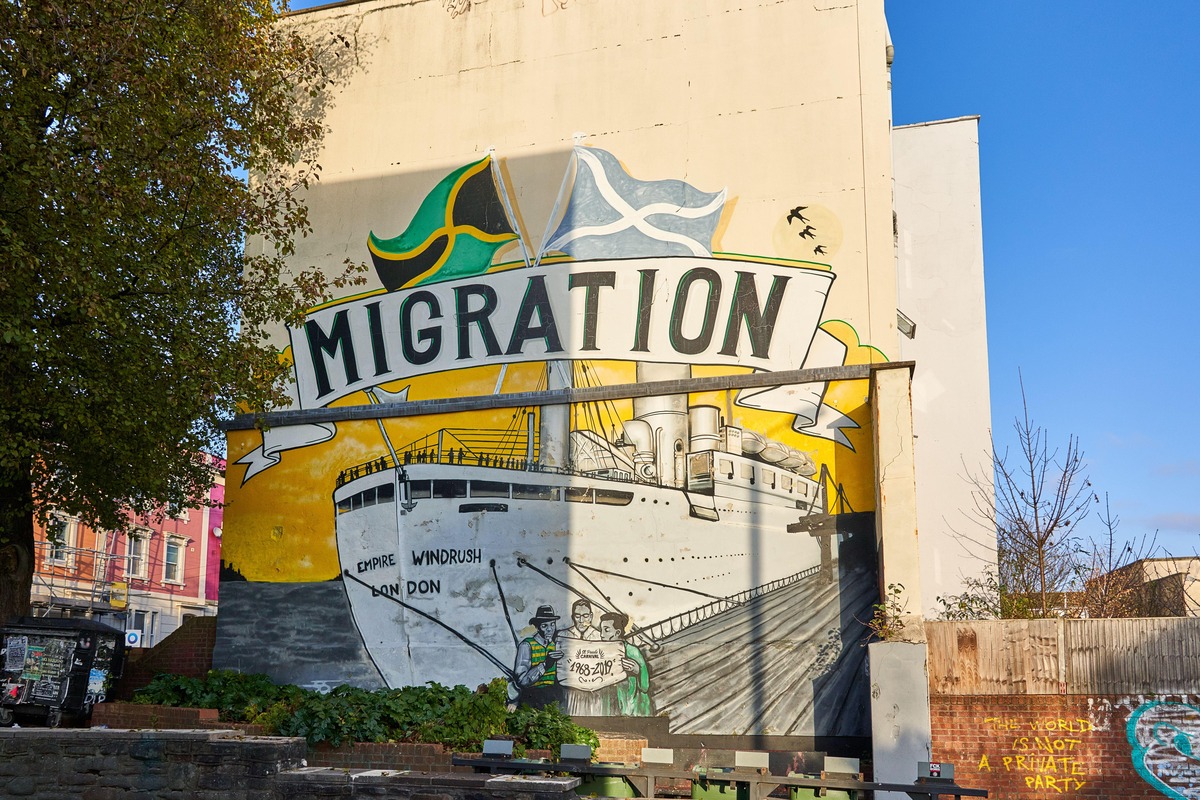
Arriving in 1948 from the Caribbean, the Windrush generation brought with them not only a determined spirit but also a strong work ethic. Despite facing housing challenges themselves, they actively participated in finding solutions. Many established businesses provided lodging to newly arriving immigrants, thereby contributing to the availability of housing.
“Despite immigrants’ significant historical contribution to Britain’s housing crisis, housing organisations are still not representative of the communities they serve”
A considerable number of the Windrush generation possessed construction skills. They joined the efforts to rebuild war-damaged areas and construct new homes. Their expertise was instrumental in both improving their own living conditions and aiding the broader rebuilding process.
The influx of immigrants from Bangladesh, India and Pakistan was another crucial element in the UK’s housing programme. These communities arrived with a diverse array of skills, many of which were directly applicable to the construction industry. Their expertise in trades, such as carpentry and masonry, became invaluable assets.
For instance, skilled carpenters from these communities played a pivotal role in the construction of wooden prefabricated houses. These houses provided immediate housing solutions, enabling communities to rebuild their lives swiftly after the war’s devastation.
The arrival of immigrant communities was a timely response to the UK’s severe skills shortage. These so-called newcomers filled critical labour gaps in the construction industry, where skilled professionals were desperately needed to meet the demand for new housing. Their contribution not only helped bridge this gap but also enriched the nation with their diverse cultures, traditions and conscientiousness.
The UK’s post-World War II housebuilding programme was a monumental undertaking to address an acute housing crisis. The Windrush generation, along with Bangladeshi, Indian and Pakistani immigrant communities, played integral roles in the programme’s success. Their skills, determination and hard work not only contributed to the nation’s recovery but also laid the foundation for diverse, inclusive communities that continue to thrive in the UK today.
Despite immigrants’ significant historical contribution to Britain’s housing crisis, housing organisations are still not representative of the communities they serve. Even though Black, Asian and minority ethnic citizens comprise a proportion of social housing tenants, “very, very few people from minority communities lead the largest organisations. Very few people from minority communities are represented on the boards and even few are chairs,” says Anu Bedi, chief executive at Genesis from 1999 to 2009.
“The Windrush generation’s expertise was instrumental in both improving their own living conditions and aiding the broader rebuilding process”
Aman Dalvi, who worked in housing for more than 40 years added: “You find very few Black, Asian and minority ethnic chief executives, and in particular very few female Black, Asian and minority ethnic chief executives.”
To break down the figures: only 10% of Black, Asian and minority ethnic staff hold executive-level jobs in the housing sector, 90% of housing associations have all-white executive teams, and only 19% of housing staff in England are from minority ethnic backgrounds.
Asked by an audience member what I would say to industry leaders at the housing session, I replied that it’s about time industry leaders recognised the historical contributions made by Black and South Asian communities to Britain’s housing developments.
The housing revolution led by these communities not only addressed immediate post-war needs but also shaped the diverse and inclusive Britain we see today, underscoring the enduring legacy of their contributions.
After my session, the only other Hijab-wearing Muslim sitting in the session came up to me to thank me for ‘telling’ industry leaders to make diversity a reality in their sectors, from the workforce to the boardroom.
Rabina Khan, journalist and former cabinet member for housing, Tower Hamlets Council
Sign up to our Best of In-Depth newsletter

We have recently relaunched our weekly Long Read newsletter as Best of In-Depth. The idea is to bring you a shorter selection of the very best analysis and comment we are publishing each week.
Already have an account? Click here to manage your newsletters.
Related stories