You are viewing 1 of your 1 free articles
Councils must take responsibility for connecting older people’s housing and support
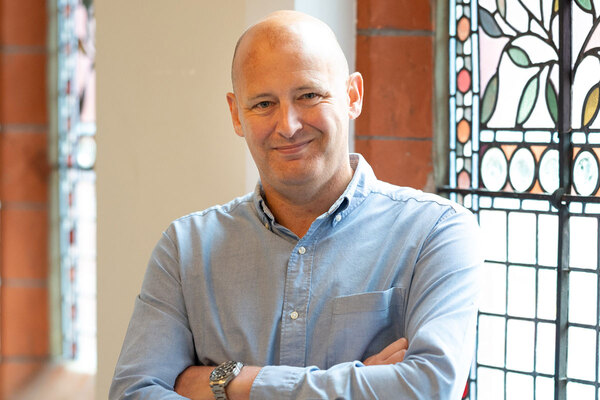
Our new strategy aims to shift the dial on how we approach older people’s housing, writes Sam Dalton, deputy cabinet member for supported housing at Southwark Council



Sam Dalton is deputy cabinet member for supported housing at Southwark Council
 Our new strategy aims to shift the dial on how we approach older people’s housing, writes Sam Dalton, deputy cabinet member for supported housing at Southwark Council #UKhousing
Older people’s housing has powered up the political agenda in recent years. Our rapidly ageing population has led to an increased focus on how we create the right housing options for people as they get older.
The Mayhew Review, published in 2022, found that 50,000 new specialist homes for older people are needed annually to tackle the housing and social care challenges springing from our ageing population. This was closely followed by the launch of the government’s Older People’s Housing Taskforce, which produced a set of clear recommendations for further action.
One of these actions was for local authorities to play a key role in improving older people’s housing in their areas. That’s exactly what we’re aiming to do in Southwark, through our newly published Older People’s Housing Strategy.

We haven’t just put this together because it is a national requirement. We recognised the demographic shifts taking place in our borough and the growing older population that deserve good housing. The population of over-65s in Southwark is expected to increase by 13,000 by 2035.
And although there are already shining examples of older people’s housing in the borough, not least the Appleby Blue almshouse in Bermondsey which was named ‘Building of the Year’ at this year’s RIBA awards, there is much more we need to do.
A crucial starting principle for our strategy was that it must bring together the housing and adult social care departments at the council. Older people’s housing is not just a question of physical buildings and a roof over the head, it is about the support and care residents receive.
“We are making a deliberate attempt to take a step back, look at our older people’s housing and reflect on whether this will really meet the needs of older people in the future”
Just as the national government recognised the “cross-department” nature of older people’s housing in the set up of its taskforce, we brought different council departments together for the development of our strategy. Both the cabinet member for health and well-being, Evelyn Akoto, and the cabinet member for council homes, Portia Mwangangye, have helped to jointly develop and launch the strategy.
In our strategy, we have been very clear that we will not settle for “more of the same”. We do not just need to build more of what we have already got in Southwark.
We are making a deliberate attempt to take a step back, look at our older people’s housing and reflect on whether this will really meet the needs of older people in the future, and whether it provides the exciting, attractive housing options that will make people look forward to retirement. We are prepared to shift the dial on older people’s housing.
What does this mean in practice? Currently, the vast majority of our specialist housing for older people in Southwark is what you could call sheltered or retirement housing. This involves residents having their own flat or apartment within a bigger scheme, some communal areas and basic support. There are around 1,300 properties of this kind within Southwark, compared to just over 200 ‘extra-care’ homes, which include the option of on-site social care and more extensive communal spaces.
Despite this imbalance in figures, the benefits of extra-care schemes, or ‘flexi-care’ as we call them in Southwark, are vast and well recognised. They help improve health and well-being, reduce NHS and social care costs by keeping people out of hospitals and more expensive care homes, and tackle loneliness. The ‘flexi’ element means that people can move into such a scheme with little or no care needs, but can draw on increased care over time as their needs change, without having to move out.
“We’re committing to ensuring all older people’s housing meets the recognised Decent Homes Standard as a minimum. The homes should be sufficiently warm, free from hazards, in a reasonable state of repair and should have modern facilities”
This is part of the exciting future of older people’s housing we hope to create in Southwark. Sheltered housing of course still has to be an option, because it is part of giving residents the full spectrum of choices. But it is not right that it remains the overwhelming and often the only option.
We want to rebalance that, and are committing to a full review of all sheltered housing in Southwark as part of our strategy, including looking at turning sheltered housing schemes into extra-care options where needed.
The future also needs to include an expansion of high-quality almshouses, building on the success of Appleby Blue, whose shared living spaces and sense of community can’t fail to impress. We’re delighted that partners like United St Saviour’s and Southwark Charities are already moving forward with plans to build more such places. An ‘Appleby Blue 2’ perhaps.
We’ve also drawn inspiration from other boroughs, for example the excellent LGBTQ+ retirement community in Vauxhall, Tonic@Bankhouse. We are exploring opening a similar scheme in Southwark, helping ensure our housing is inclusive of different groups within our community.
But Southwark’s strategy is not just about new older people’s housing. It’s no good creating the exciting options of the future if current stock is not up to standard. That’s why we’re committing to ensuring all older people’s housing meets the recognised Decent Homes Standard as a minimum. The homes should be sufficiently warm, free from hazards, in a reasonable state of repair and should have modern facilities.
We will also work hard to ensure that all supported housing – including older people’s housing – meets the new national standards being brought in by the Supported Housing (Regulatory Oversight) Act, and that new adaptations are completed quicker when older people need them.
So too will we step up the council’s support for those looking to downsize in later life. Even if we’re able to create the attractive housing options of the future for older people, the process itself of moving from one home to another can be burdensome, and may get in the way of these new options being taken up. With that in mind, we will set out a guarantee to increase the support available to people downsizing, including help with the physical move itself and additional incentives.
Though our ageing population and need to improve housing and care options for older people presents challenges, developing a local Older People’s Housing Strategy can also be a moment of great opportunity.
In Southwark, we hope to shift the dial on older people’s housing, not just building more of the same but looking to the exciting options of the future, and making sure what we’ve already got is up to standard.
Sam Dalton, deputy cabinet member for supported housing, Southwark Council
Sign up to Inside Housing’s Care and Support newsletter
Sign up to Inside Housing’s Care and Support newsletter, a fortnightly bulletin featuring care and support news and analysis.
Already have an account? Click here to manage your newsletters.
Related stories