You are viewing 1 of your 1 free articles
Grants are still available for heat network upgrades, so don’t wait for the stick
The government is tackling inefficient heat networks with a carrot and stick, so apply to the Heat Network Efficiency Scheme before the funding window closes, writes Neil Toner, a senior consultant at Devonshires



Neil Toner is a senior consultant at Devonshires
 Grants are still available for heat network upgrades, so don’t wait for the stick #UKHousingThe government is tackling inefficient heat networks with a carrot and stick, so apply to the Heat Network Efficiency Scheme before the window closes, writes Neil Toner at Devonshires #UKHousing
With Round 9 of the Heat Network Efficiency Scheme closing towards the end of March 2025, time is running out for owners and operators of heat networks to access this grant funding stream – for the time being at least. Round 10 will likely open in the summer, but only as long as the funding pot has not been exhausted.
Heat networks are systems that generate heat centrally and then distribute it (usually in the form of hot water or steam) to end users – whether residential or commercial. They’re nothing new. In fact, they were first introduced in Britain by the Romans around 2,000 years ago.
Reliably accurate statistics are hard to come by, but some estimates suggest that approaching one million households are connected to a heat network. And a key element of the government’s strategy to achieve its carbon-reduction targets is to ensure that those existing heat networks are running efficiently.
Read more


That’s because when well designed, maintained and operated, heat networks can generate heat from green energy sources and efficiently distribute it to consumers, providing a carbon-efficient way of heating many of our homes and businesses.
The problem is that when not well designed, maintained or operated, heat networks can be extremely inefficient. Resulting in consumers paying more for interruption-prone heating systems, while excessively contributing to carbon emissions.
A government-commissioned report from 2009 estimated that the majority of existing heat networks operated at a mere 35% to 45% efficiency, with a staggeringly high 65% to 70% of the heat they generate being lost before it gets to the consumer.
“When well designed, maintained and operated, heat networks can generate heat from green energy sources and efficiently distribute it to consumers – providing a carbon-efficient way of heating many of our homes and businesses”
The government is approaching the problem with a carrot and stick. The stick comes in the form of heat network regulation, found in the Energy Act 2023, which is gradually being introduced. Full implementation is anticipated in 2026-27. This regulation will include a requirement for networks to adhere to mandatory minimum technical standards, and those standards will include elements aimed at efficiency.
The carrot comes in the form of grant schemes, such as the Heat Network Efficiency Scheme. This is a £77m fund to contribute towards the costs of improving performance in existing heat networks where customers and/or operators are experiencing ‘sub-optimal outcomes’ such as poor reliability or inefficiency resulting in higher bills and carbon emissions.
The scheme applies in England and Wales and is available to public, private and third-sector entities including registered providers, local authorities and commercial private sector landlords. The applicant must be responsible for operating or managing an existing district heat network or communal heating system. The scheme provides for both revenue and capital grant funding.
The types of project that might receive revenue support include undertaking optimisation studies to assess one or more heat networks to identify the causes of poor performance and practical improvement steps which could be taken.
Grant funding is potentially available to cover the whole of the project costs, with the government indicating that they’re expecting applicants to seek between £15,000 and £24,000 per project. While grant applications above that limit will be considered, they would need to include compelling reasons to justify a higher award.
“Particularly with the stick, in the form of comprehensive regulation, on the horizon, heat network operators would be well advised to look at the performance of their systems and, if necessary, put in place programmes of remedial measures”
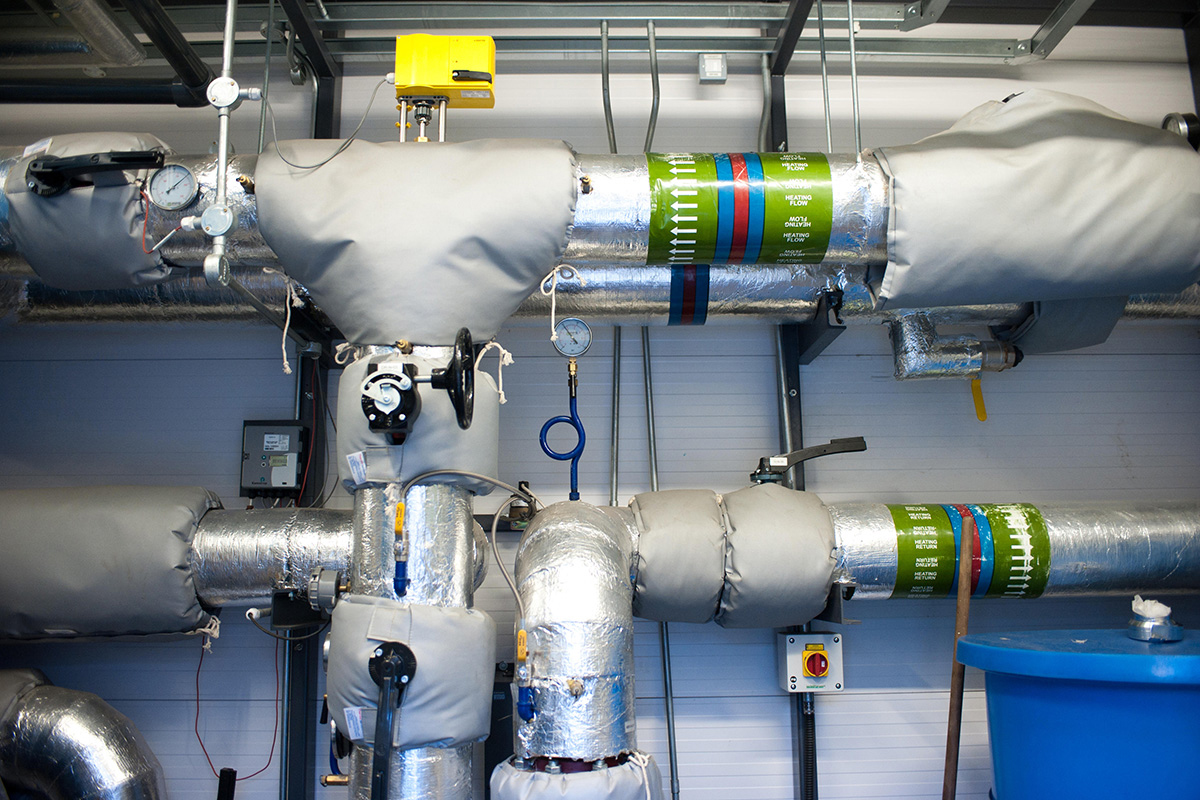
Capital grant funding is targeted at work to install intervention and improvement measures that will reduce carbon emissions by making networks more efficient or improving reliability. Typical examples include reconfiguring and/or insulating heat supply pipework, upgrading heat interface units, installing metering equipment and/or ‘smart controls’, and improving the efficiency of the network by upgrading pumps. Potentially, grant funding under the scheme could cover up to 50% of the project costs.
Examples of successful applicants include Hackney Council, which secured just over £40,000 towards the cost of two optimisation studies looking at networks which they operated serving their council homes. The studies identified 18 practical efficiency measures which, if implemented, would reduce carbon emissions by 676 tonnes over a decade.
Notting Hill Genesis was awarded just over £300,000 to undertake improvement works to their gas-powered Mildmay heat network ,which serves 139 homes, a hospital and church. The works, which included new heat interface units, installation of smart metering and upgrades to insulation, resulted in a 32% reduction in gas consumption.
Grant applications are assessed on a competitive basis within each round, with funding being focused towards projects which seek to address customer detriment (with greater emphasis on high proportions of ‘residential customers in need’) or which deliver high carbon emissions savings.
Particularly with the stick, in the form of comprehensive regulation, on the horizon, heat network operators would be well advised to look at the performance of their systems and, if necessary, put in place programmes of remedial measures. The Heat Network Efficiency Scheme could help cover the costs of doing so.
Neil Toner, senior consultant, Devonshires
Sign up for our asset management and sustainability newsletter

Already have an account? Click here to manage your newsletters
Related stories