You are viewing 1 of your 1 free articles
How can housing providers better support domestic abuse survivors with debt?
Our new report offers clear guidance on how to update policies and practices to improve outcomes for survivors seeking sanctuary in social housing, writes Stephanie Morphew, domestic abuse policy lead at the Chartered Institute of Housing



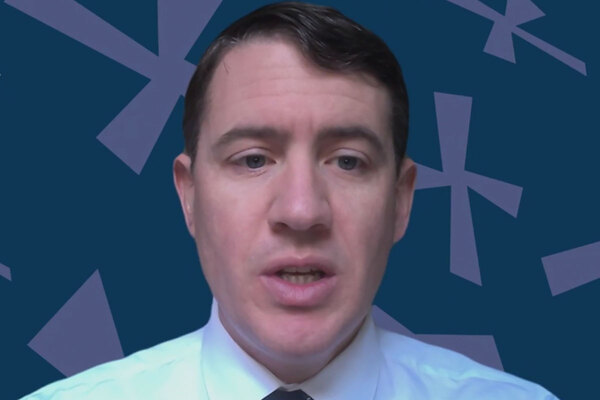
Stephanie Morphew is domestic abuse policy lead at the Chartered Institute of Housing
 Our new report offers clear guidance on how to update policies and practices to improve outcomes for survivors seeking sanctuary in social housing, writes Stephanie Morphew, domestic abuse policy lead at the Chartered Institute of Housing #UKhousing
Domestic abuse affects millions of families across England, but even for those who flee, the trauma doesn’t end after escape. Often, what comes next is a journey of housing insecurity, financial instability and no clear pathways to a safe home.
For those living in temporary accommodation (TA), current rules regarding housing-related debt in local authority and housing association allocation policies present an additional barrier for survivors. This is a barrier that can, and should, be removed.
CIH’s report, You can’t bid because you’re in red, co-badged with King’s College London and Oxford Brookes University, unpacks this pressing issue. It is a practical accompaniment to the Debt Trap Nation project, led by two of the report’s authors, Mel Nowicki and Katherine Brickell.
Since 2022, the project has laid out how the dual burden of domestic abuse and debt interacts with a homelessness system that often fails to see that the two experiences intersect at all.

Survivors of domestic abuse are likely to face financial hardship when leaving abusive situations. For many, debt follows them as the legacy of economic abuse, where the perpetrator exerts control over the household’s finances – this can be known or unknown to the survivor.
If these debts, accrued because of someone’s abuse, are housing-related, such as rent arrears or council tax, it leaves many survivors unable to bid for social housing later down the line. This represents an untenable situation, whereby lives are put on hold, but the debt is not. Survivors, often women with children, therefore face mounting costs whilst navigating homelessness.
“If these debts, accrued because of someone’s abuse, are housing-related, such as rent arrears or council tax, it leaves many unable to bid for social housing later down the line”
This barrier comes at a cost to local authorities, whose TA bills are estimated to have totalled over £2.8bn in 2024-25. These allocation debt rules lengthen survivors’ stays in costly and unsuitable TA until the debt is cleared or, in some case, if households have entered a repayment plan.
Previous research by Nowicki and Brickell found that around one in five local authorities in England exempt domestic abuse survivors from housing-related debt rules in their allocation policy. A similar proportion of housing associations’ allocation policies included explicit exemptions for survivors, according to the sample of policies collected as part of CIH’s Make a Stand campaign conducted over the last two years.
The new report offers housing providers clear guidance on how to update policies and practices to bridge this gap and improve outcomes for survivors seeking sanctuary in social housing. The suggestions for improvement revolve around three key themes. The first is for housing organisations to deploy proactive prevention strategies that, where possible, avoid homelessness occurring in the first place.
The second is that housing providers reassess their allocation policies in relation to domestic abuse and debt, including six key areas where improvements could be made.
Finally, we recommend cultivating a heightened awareness of domestic abuse across organisations and of the tools available to professionals to support survivors safely. This could be achieved by adopting the Whole Housing Approach, found in a recent evaluation to generate £10 of public savings for every £1 spent.
“Since the launch of the report, the government has published its long-awaited homelessness strategy, which includes a commitment to addressing the barriers faced by survivors of domestic abuse with debt when applying for social housing”
There are many housing providers that are already embedding these processes in their services, and this report showcases best practice examples gained from interviews with service providers, alongside an analysis of their policies. The report concludes with a suite of recommendations for both the government and housing providers.
These recommendations include asking for changes to how nominations agreements are built and reported on, that research is undertaken to understand the impact of these rules and their cost to the taxpayer, and that housing allocation processes adopt a person-centred approach that acknowledges each household’s unique housing history.
Another key recommendation is the call for government to implement regulatory change that explicitly exempts domestic abuse survivors from housing-related debt rules in allocation policies. The Debt Trap Nation project, with the support of Nick Bano at Garden Court Chambers, has drafted these regulatory changes and presented them to Alison McGovern, the minister for local government. CIH, along with 35 MPs and Lords across the political spectrum, put its names behind this submission.
Since the launch of the report, the government has published its long-awaited homelessness strategy, which includes a commitment to addressing “the barriers faced by survivors of domestic abuse with debt when applying for social housing” – directly citing Nowicki and Brickell’s research. In light of this announcement, the recommendations in this best practice guidance from CIH represent an opportunity for housing providers to familiarise themselves with this issue and start to address it.
Stephanie Morphew, domestic policy lead, Chartered Institute of Housing
Sign up to Inside Housing’s Homelessness newsletter
Sign up to Inside Housing’s Homelessness newsletter, a fortnightly round-up of the key news and insight for stories on homelessness and rough sleeping.
Click here to register and receive the Homelessness newsletter straight to your inbox.
And subscribe to Inside Housing by clicking here.
Already have an account? Click here to manage your newsletters.
Related stories