You are viewing 1 of your 1 free articles
Innovations like ‘sweat equity’ help people get on the ladder, but lenders must be more flexible
Shared ownership has a crucial role to play, so we need to make sure it is flexible and remains an option as lender support appears to dwindle, writes John Ghader, chief executive of Prima Group



John Ghader is chief executive of Prima Group
 Shared ownership has a crucial role to play, so we need to make sure it is flexible and remains an option, writes John Ghader, chief executive of Prima Group #UKHousing
Poet William Cowper’s fabled proverb “variety is the spice of life, that gives it all its flavour” is as apt for the housing sector as it is for everyday living.
If the government is to reach its 1.5 million new-homes target, then it must offer a diverse range of tenures that appeal to as many potential renters and homeowners as possible.
Since its introduction 45 years ago, shared ownership has, and continues to be, one of the most hotly debated types of housing. While it is not right for everyone, neither are social rent, affordable rent or homes for outright sale.
Shared ownership has a crucial role to play, so we need to make sure it is flexible and remains an option as lender support appears to dwindle.
Read more
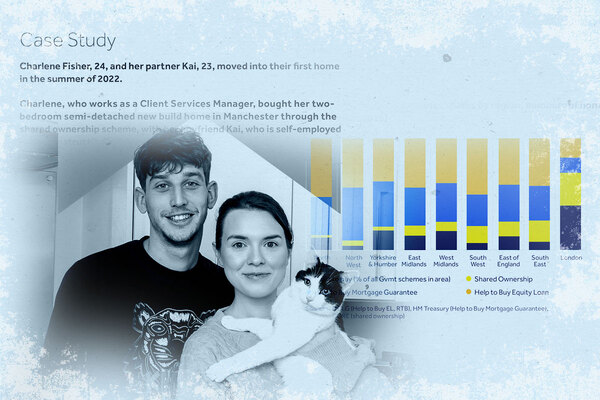


We were encouraged by the Financial Conduct Authority (FCA) writing to the government to review the regulation that supports homeownership and remind lenders of the flexibility in its rules that can help more people access mortgages.
In June, the FCA will open a public discussion on the future of the mortgage market, looking at risk appetite, responsible risk-taking, alternative affordability testing and product innovation. It follows the call from Rachel Reeves, the chancellor, for regulators to pursue a pro-growth agenda instead of “excessively focusing on risk”.
If considered and managed carefully, higher homeownership levels can co-exist with financial stability; we don’t need a return to pre-credit crunch loan-to-value levels, nor to choke supply.
At Prima, we have a perfect example of shared ownership product innovation that brings an array of social and economic benefits for people, communities and the Treasury.
“Our sweat-equity model saw residents – called home partners – work 500 hours to help the contractor build their homes, in return for a £10,000 mortgage reduction”
We are handing over keys at St William’s in Wigan, which is a 27-home shared ownership scheme with a twist.
Our sweat-equity model saw residents – called home partners – work 500 hours to help the contractor build their homes, in return for a £10,000 mortgage reduction. Work included general labour, painting, decorating, landscaping, administration, marketing and IT.
To ensure home partners were well rewarded, we paid a sweat-equity rate of £20 per hour (£10,000 for 500 hours), which is almost double the National Living Wage. It has addressed affordable housing challenges for low-income families by helping local people who would otherwise not be able to afford deposits.
Everyone moving in previously lived within four miles of the site, and 70% resided within one mile.
All home partners work in Wigan, with 90% employed in the village where St William’s is situated.
To involve the local community, volunteering and training opportunities were given to college students, while other stakeholders, like the local primary school, benefited too.
Furthermore, it created an immediate neighbourhood, as home partners fostered relationships working side by side. This avoided the development being soulless, like some new schemes can be.
Sweat-equity benefits are clearly plentiful then, and St William’s won a UK Housing Award and four other accolades. So it was disappointing to find many lenders losing their appetite to provide mortgages. Some were reluctant to recognise the sweat-equity element, while others did not like applicants receiving Universal Credit or working part-time; we need them to be more flexible.
As a result, this scheme was only possible because of the £4m capital investment we made, which in turn was supported by a £1.6m grant from Homes England’s Affordable Homes Programme (AHP) and brownfield land funding through the Greater Manchester Combined Authority.
“Some lenders were reluctant to recognise the sweat-equity element, while others did not like applicants receiving Universal Credit or working part-time”
Even with these significant contributions and a fully costed business plan, it was a challenge.
Lenders need to review their stress-testing criteria and view shared ownership as a core housing product that taps into a significant segment of the market, a halfway house for those who can’t access social housing nor afford outright homeownership with a full mortgage.
The government should look at the wider impact this type of product innovation has. Higher grant rates could be linked to social and economic returns and factored into the overall new-home target.
The sector has already made a compelling case to the government for greater funding certainty via longer AHPs and an extended rent settlement.
From a sweat-equity shared ownership perspective, greater lead-in times would allow us to work more closely with contractors and home partners to formalise results.
Sweat equity could contribute to mortgage applications and provide accredited skills and training, leading to employment with construction trades being a natural fit.
It could also extend to the groups of people we as a society should be supporting more, such as those with disabilities or support needs, ex-service personnel, young people leaving care, and key workers who aspire to get on the housing ladder.
With greater government support and lender flexibility, we could look at alternatives to the Bank of Mum and Dad, too. Instead of putting their hands in their pocket to help with a deposit – something not every parent can afford – they could get their hands on a shovel and contribute to their offspring’s on-site sweat-equity hours.
These are just some examples of the type of product innovation the FCA is calling on lenders to recognise.
Shaping the debate with the government and the financial authority is something the sector should be actively involved in, so we can ultimately build, and house more people.
This is our and the government’s collective task.
John Ghader, chief executive, Prima Group
Sign up for our development and finance newsletter

Already have an account? Click here to manage your newsletters
Related stories