3 top takeaways from Inside Housing’s survey on social housing, allocations and immigration
Inside Housing has surveyed hundreds of housing staff about how the spread of misinformation on immigration and allocations is impacting the social housing sector. Katharine Swindells breaks down the key findings


 Inside Housing has surveyed hundreds of housing staff about how the spread of misinformation on immigration and allocations is impacting the social housing sector. Katharine Swindells breaks down the key findings #UKhousing
Over the past year, Inside Housing has heard increasing numbers of stories around how misinformation relating to social housing and immigration is affecting staff and residents. So we surveyed hundreds of sector staff across the UK to find out more.
The results from the data are striking, but even more so is that we received more than 1,000 written answers, which shed light on how misinformation is affecting the lives of staff: their jobs, their safety and well-being, and their organisation’s responses.
Read more



Read the full article for more about the survey results, and how senior sector figures responded.
Here are the top takeaways from the findings.
1. Misinformation that immigrants are being prioritised for new homes is rife nationwide
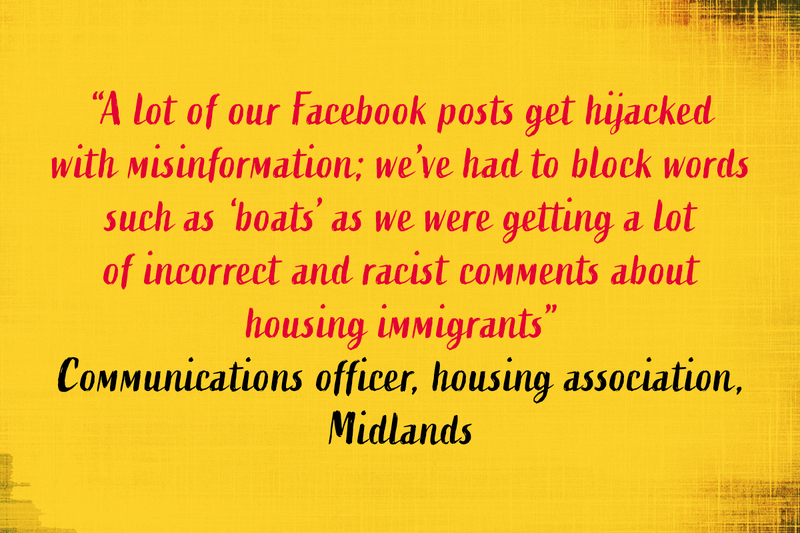
The survey found that two-thirds of staff say they have – in real life – encountered factually inaccurate information along the lines of “all social housing is going to immigrants”, and 72% have encountered it online.
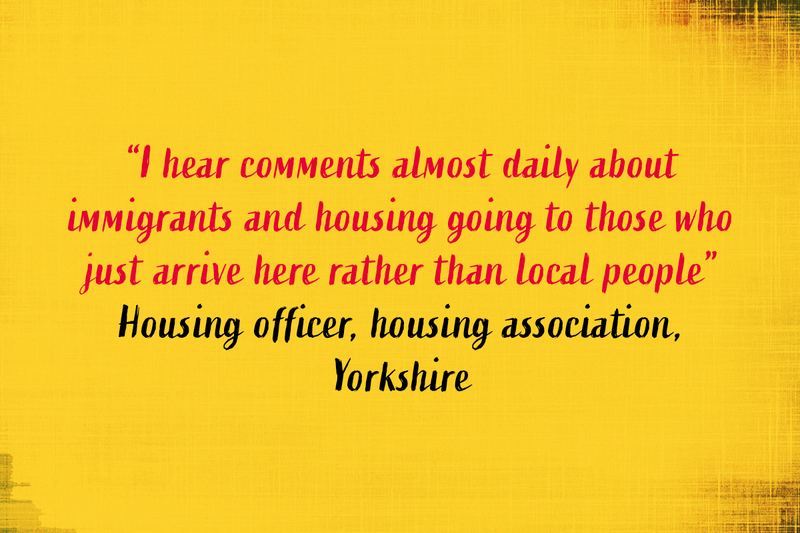
Respondents say that they receive many comments on social media about how new homes will go to immigrants over local people. Resident-facing staff say they’ve heard it from residents when out on their patch, or from members of the public at development consultation events.
Government figures show that only one in 10 new social tenancies in England goes to a non-UK national, and the 2021 census found that only 7% of social housing tenants across England and Wales had a non-UK passport.
Many staff say their organisation is reluctant to engage in the issue, and this is particularly true for councils, who worry it will be a “vote-loser” as their electorate swings towards Reform.
One landlord in Merseyside shared its experience encountering misinformation, and how it tackled it. Read more about its approach here.
2. Many ethnic minority staff members are experiencing discrimination and negative sentiments from residents and colleagues related to their race, nationality and religion
Staff were candid about the way this misinformation is impacting them. Four in 10 minority ethnic staff had felt discrimination, prejudice or negative sentiment from residents/clients because of their ethnicity, race, immigrant background or religion in the past 12 months, rising to 55% among those not born in the UK.
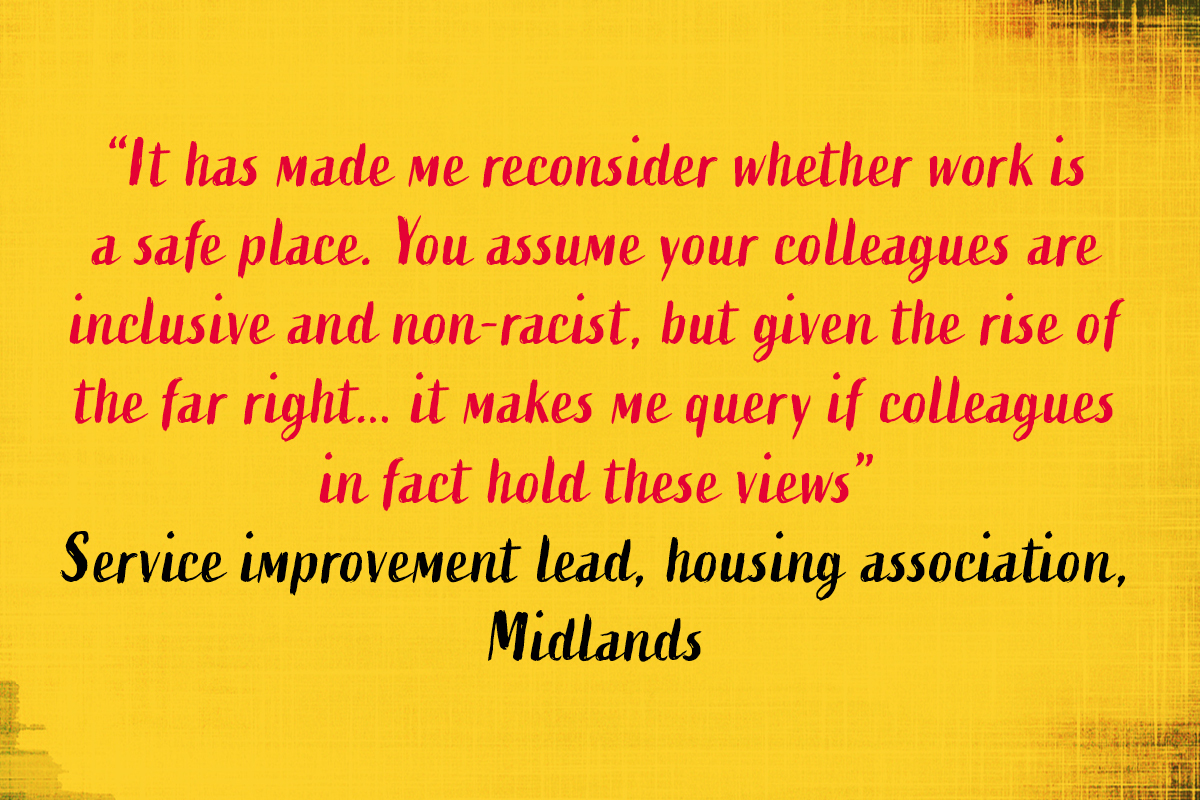
Further, more than a third say they’ve experienced discrimination from colleagues at their organisation.
Almost two-thirds of minority ethnic staff say that they have felt fear because of their ethnicity, race, immigrant background or religion in the past year.
Read the full article for more detail on how these statistics vary for different ethnicities, and for those born outside of the UK, as well as personal stories from the staff impacted.
3. Some organisations are stepping up, but many staff want to see more
So how should organisations be responding? Many respondents shared positive examples of internal support, or of resident-facing work being done to tackle misinformation.
Read more about the work South Liverpool Homes has done to combat misinformation here.
While more than half of staff said their organisation had done a lot in the past 12 months to support minority ethnic staff, 40% still believed their organisation should have done more.
But this varied hugely by ethnicity – read the full article to see a more detailed breakdown of the data.
“These findings are concerning and highlight the need for a more proactive, inclusive approach to supporting colleagues from diverse backgrounds,” says Gavin Smart, chief executive of the Chartered Institute of Housing.
“Misinformation about social housing allocation remains a significant challenge. Addressing this requires a collective effort to improve public understanding and challenge harmful stereotypes.”
Read more
- Inside Housing’s full analysis of our survey results
- Mushtaq Khan on why the sector must confront misinformation on immigration
- Annalisa Langton on the impact of anti-immigration sentiment on staff and residents
- South Liverpool Homes chief executive Anna Bishop on how the housing association has tackled misinformation
Sign up to Inside Housing’s Daily News bulletin
Sign up to Inside Housing’s Daily News bulletin, featuring the latest social housing news delivered to your inbox.
Already have an account? Click here to manage your newsletters.
Related stories