You are viewing 1 of your 1 free articles
Migration and housing: what do the stats say?
Disentangling the myths and challenging negative attitudes about migrants and housing isn’t easy, but let’s try, writes John Perry, policy advisor for the Chartered Institute of Housing



John Perry is a policy advisor at the Chartered Institute of Housing
 Disentangling the myths and challenging negative attitudes about migrants and housing isn’t easy, but let’s try, writes John Perry, policy advisor for the Chartered Institute of Housing #UKhousing
Nearly half of people questioned in a recent poll believed that most migrants to the UK are asylum seekers, when the real figure is just 5%. On arrival, ‘illegal’ migrants are believed to get ‘free council houses’.
Myths like these about migration are more common than facts. So, it’s not surprising that 62% of respondents to another poll think that migration worsens the housing crisis.
Disentangling the myths and challenging negative attitudes about migrants and housing isn’t easy, because these are complicated issues, but let’s try.
First, it’s important to remember that net migration (numbers entering the UK minus numbers leaving) is falling. It’s down to around 200,000 annually, is very likely to fall further and – as some experts predict – could reach zero.
Also, because births and deaths are in balance, UK population growth depends on migration. The UK Housing Review 2026 shows that forecasts of new household formation in England could soon fall below 150,000 annually in a ‘low migration’ scenario, well below the number of homes being added to the stock each year.
But there is no straightforward link between migration levels and housing demand.
For example, three-quarters of new arrivals are students, workers or their dependants, on short-term visas. Students may use university lodgings, farm and hospitality workers may have tied accommodation. Of migrants who have been in the UK for under five years, 75% are in the private rented sector where (in England) they face document checks before they can get a tenancy.
“Asylum seekers are singled out for attention but they are ineligible for social housing, receive only very basic support via Home Office contractors and are mostly barred from working”
Furthermore, up to four million migrants have ‘no recourse to public funds’. This means they can’t access housing benefit or social housing tenancies.
Asylum seekers are singled out for attention but they are ineligible for social housing, receive only very basic support via Home Office contractors and are mostly barred from working. Those in ordinary housing (usually multi-occupied properties) receive just £49.18 weekly for food and clothing; those in hotels and army barracks receive only £9.95. Some new arrivals – such as over 200,000 Ukrainians – are hosted by families with spare rooms.
If, after several months or even years, asylum seekers are given refugee status, they become eligible for social housing, but many are single and (in England) not likely to be in ‘priority need’. This and other factors have led to a five-fold increase in numbers of refugees experiencing homelessness or at risk of homelessness in the last four years.
Each year, two-thirds of those leaving the UK are previous immigrants. But what about those who stay? At the moment, if they can afford the hefty fees, they can apply for settlement after five years – but the government plans to make them wait 10 years or even longer.
Once granted settlement, a migrant can get benefits and go onto a housing register. But many councils have residence or local connection requirements which mean that most will wait much longer than that before they get a housing offer.
The idea that immigrants are prioritised for social housing has been called a ‘zombie myth’ because it ‘refuses to die’. Government figures show that only one in 10 new social tenancies in England goes to a non-UK national. In the 2021 census, across England and Wales, only 7% of social housing tenants had a non-UK passport. Figures are higher in some parts of the country – notably London – simply because their populations include large proportions of foreign nationals.
There are two wider issues about migration that are very important for UK housing.
First, if net migration fell to zero, the effect on the economy would be huge. The National Institute of Economic and Social Research likened it to Brexit, saying that it would knock 3.7% off the national income by 2040. Separately, the Office for Budget Responsibility says government would need to borrow about £20bn more annually, because migrants pay more in taxes than they receive in benefits.
“The real answer to the crisis is to build more homes – and for that we need a buoyant economy, public investment and skilled workers. And to achieve those, we need a healthy level of migration”
Demand for housing depends not just on demographics but on economic conditions. A sluggish economy and high public borrowing are bad news for housing: fewer people will be able to rent or buy, developers will be reluctant to build and the government will have more difficulty funding new social housing.
Second, the building industry is short of around 300,000 workers, and toughened visa requirements in response to political pressure are making the problem worse. Fewer workers means fewer new homes, and less chance of meeting government targets to upgrade and decarbonise the existing stock. Similar points could be made about shortages of care workers.
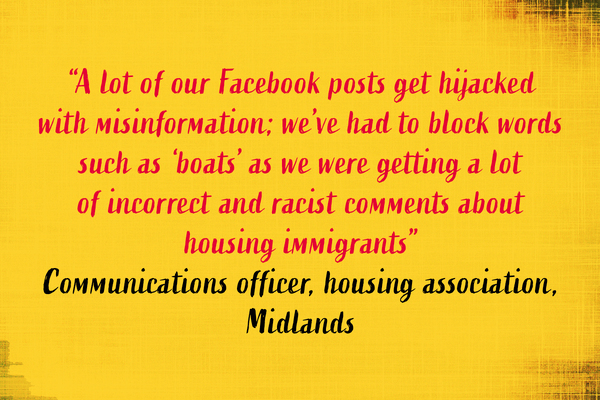
The clamour for lower migration focuses on ‘small boats’. But because stopping the boats is near impossible, governments have resorted to easier ways of cutting immigration. The challenge is to explain that this won’t ease the housing crisis and might well make it worse.
The real answer to the crisis is to build more homes – and for that we need a buoyant economy, public investment and skilled workers. And to achieve those, we need a healthy level of migration.
John Perry, policy advisor, Chartered Institute of Housing
Sign up to Inside Housing’s Daily News bulletin
Sign up to Inside Housing’s Daily News bulletin, featuring the latest social housing news delivered to your inbox.
Already have an account? Click here to manage your newsletters.
Related stories