You are viewing 1 of your 1 free articles
Our new House of Lords report investigates the human side of the New Towns Programme
We held a total of seven public evidence sessions and received 90 pieces of written evidence on what it will take to create thriving communities in new towns, says Lord Gascoigne, chair of the Built Environment Committee



Lord Gascoigne is chair of the House of Lords Built Environment Committee
 We held a total of seven public evidence sessions and received 90 pieces of written evidence on what it will take to create thriving communities in new towns, says Lord Gascoigne, chair of the Built Environment Committee #UKhousing
I have now chaired the House of Lords Built Environment Committee for just over a year. My first act, in January 2025, was to launch our major modular inquiry into the government’s new-towns programme. This was a policy that caught all of our attention and genuinely excited us.
My last contribution here, in October last year, marked the conclusion of our first module and publication of our New Towns: Laying the Foundations report, which looked into legal, governance and funding frameworks that will be required to get the programme off the ground.
I am delighted to be writing again now that we have concluded our second module and published our New Towns: Creating Communities report. This time, as the name suggests, we have focused on the human side of the programme, investigating what it will take to create thriving communities in these new towns.
Read more

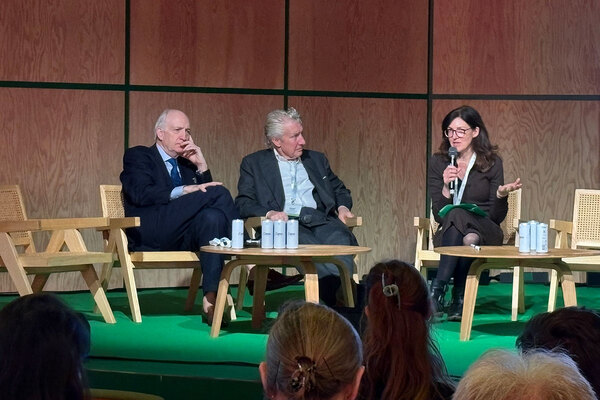

This was a wide-ranging inquiry, and we looked into the issues of vision, placemaking and design in some depth, as well as how to create environments that are accessible, age-friendly and safe.
We held a total of seven public evidence sessions and received 90 pieces of written evidence from all sections of society – experts and lay people alike. We were deeply impressed by the passion, knowledge and experience that all contributors brought to the inquiry. I hope our report has done justice to them.
While the flagship, postwar new-towns programme left a considerable legacy, with several resilient, well-loved communities continuing to thrive to this day, success was not universal. Today, just as we face our own challenges as a country, we must find new ways to not just build homes for homes’ sake, but new and thriving communities too.
“The government has to grab the bull by the horns and really drive the programme forward, while also using it as an opportunity to support innovation and set an example for future communities”
In our first report, we highlighted the need for strong, central leadership and coordination at the highest levels of government. This remains a fundamental concern for us, and we believe that there is still work to do in this respect. We are not convinced that the current structures will be sufficiently focused and have enough authority to drive the programme forward. This has real risks for the programme as whole and for each individual town.
The government has to grab the bull by the horns and really drive the programme forward, while also using it as an opportunity to support innovation and set an example for future communities.
In this report, we reiterate the need for a clear, compelling vision for the programme and each individual new town.
We heard about the opposition that is already building in respect of some of the sites that have been identified as possible locations for new towns and expanded settlements. Without a clear vision backed by dedicated leadership, and full, frank and meaningful engagement with existing and future communities, the programme will founder and this once-in-a-generation opportunity will be wasted.
“Placemaking in the new towns must be people-centred, with nature and green space at its heart”
In terms of the communities themselves, we have identified a number of clear criteria for success. First of all, placemaking in the new towns must be people-centred, with nature and green space at its heart. It should also take inspiration from, and build upon, local heritage and reflect local architectural traditions.
At the same time, designs must build in health and accessibility for all from the start, embedding health and social infrastructure within the community and ensuring that residents of all ages are supported throughout their lives.
We also recognise that these communities will be built over decades, and that needs and expectations will change over time. That means that masterplans must be brought forward in phases, with regular reviews and a diverse range of plot sizes to enable small and medium-sized enterprises to participate fully in the programme. A phased approach will also enable delivery bodies to foster innovation by allowing time and space for design competitions.
We remain enthusiastic about the new-towns programme and want to ensure that it reaches its full potential. But if we are to embark on this huge programme, it is important we get it right.
We are taking a short breather over the next couple of months but will be launching our final module, Bricks and Mortar, later in the spring. After examining the operating systems in our first report, and the software in this report, this final module will examine the concrete issues of housing and infrastructure and how we get these new towns built.
Lord Gascoigne, chair, House of Lords Built Environment Committee
Sign up to Inside Housing’s Development and Finance newsletter
Sign up to Inside Housing’s weekly Development and Finance newsletter, featuring a round-up of business, development and regeneration news and analysis.
Already have an account? Click here to manage your newsletters.
Related stories