
Duncan Smith is chief operating officer at AECB, and a board member at CIH Scotland
Social landlords need to take control of retrofitting homes
We urgently need to reduce our homes’ demand for energy to heat the people in them. In today’s market-driven world, energy is money, and many don’t have enough of the latter to afford the former, warns Duncan Smith


 Social landlords need to take control of retrofitting homes, says Duncan Smith from @AECBnet “We need to control the design of retrofit solutions in collaboration with professionals, such as architects and engineers. This work is too important to leave to the market’s interpretation of sustainability,” says Duncan Smith from @AECBnet #UKhousing
Spring is just around the corner. The days might be getting longer, but for many they’re not getting much brighter. The recent increase in Ofgem’s energy cap, the rise in inflation and the cost of living crisis will impact millions of people over the coming year in a way that will see less money in their pockets and less heat in their homes.
“The very nature of what social housing was intended to be used for will be undermined if we can’t provide warm, healthy homes in an environmentally sustainable way”
However, these factors will disproportionately affect those living in social housing, many of whom are on low incomes. As many as two million more households may fall into fuel poverty later this year, bringing the total to more than five million.
The very nature of what social housing was intended to be used for will be undermined if we can’t provide warm, healthy homes in an environmentally sustainable way, and this will have a broader negative impact on our society and our health service. The consequences could be catastrophic if we don’t.
Read more

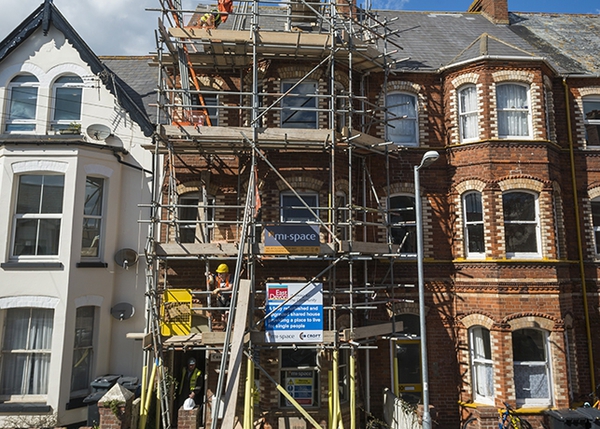

It’s hard not to use emotive language to describe this modern-day tragedy. It is the same when we look at the other broader issues that still loom large: climate change and environmental breakdown. But emotions won’t help us address the root cause and help those most at risk of fuel poverty and climate breakdown – we need practical action.
We need to be galvanised as a body of housing professionals to achieve this.
Decarbonising heating and eradicating fuel poverty for our tenants are the twin challenges that social landlords face over the coming decade. They are immediate and urgent, and we can’t address one without the other.
There are no silver bullets; no magical technology will spring into existence to save us. While heat networks and heat pumps will be part of the solution, their implementation needs to be managed carefully, as their design requires careful planning.
We need commitment from decision-makers
Eradicating fuel poverty and addressing climate change, first of all, requires commitment – the commitment to resources, innovation and forward planning. Fundamentally, we need a commitment to two critical things from the decision-makers reading this article in housing associations and local authorities up and down the country.
First, we need a commitment to reducing the energy demand on homes and the need for heating. This doesn’t mean switching things off or turning things down. We need a commitment to demand reduction through fabric improvements.
“We need to control the design of retrofit solutions in collaboration with professionals, such as architects and engineers. This work is too important to leave to the market’s interpretation of sustainability”
Second, we need a commitment to improve our technical understanding of how buildings work. The physics of buildings should be understood by those making investment decisions in order to achieve progressive and worthwhile demand reduction.
We don’t need you (our reader) to undertake a master’s degree, spend thousands of pounds on training, or go to a retreat to achieve enlightenment. The foundations for understanding how buildings work, or how they lose and retain heat, can be gained in an afternoon.
Understanding the dangers of getting it wrong requires the same limited investment. So, a little knowledge can be a very good thing – mitigating danger in this case.
With retrofit and social housing, knowledge is power. As a profession, we can effectively specify and manage the measures we need to put in place, measures that will improve the lives of the people who live in our homes immeasurably. However, to do this we need to control the design of retrofit solutions in collaboration with professionals, such as architects and engineers. This work is too important to leave to the market’s interpretation of sustainability.
In today’s market-driven world, energy is money, and many don’t have enough of the latter to afford the former. Is kilowatt hours per metre squared (kWh pm2) per annum enough, or too much, for a home? Does this calculation, or expectation, even set the right demand?
How do we understand what is good or bad? Well, the energy demand of 182 kWh p2 for a home would see the household at risk of fuel poverty for those on lower incomes. A home with 15 to 30 kWh pm2 would provide the same household with a warm and comfortable home regardless of their income. This is sustainable, both socially and environmentally.
This simple equation highlights where fuel poverty exists and where our focus needs to be. Our designers need work with us to demand a reduction for the energy our homes need from those working to retrofit our homes: our contractors, suppliers and manufacturers. Only if we do this will we be able to both understand, address and eradicate fuel poverty.
Here’s what we need to do
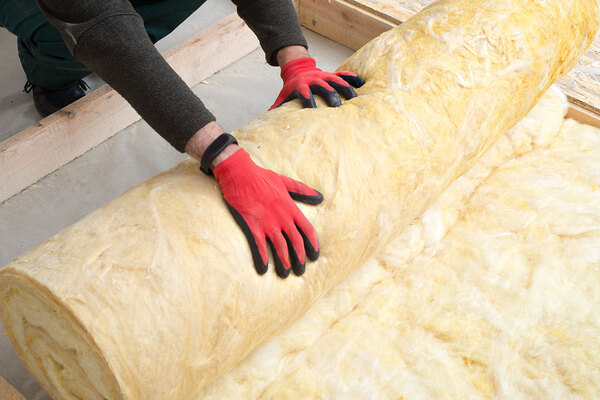
Insulation is critical. Proper insulation solutions have to be designed and fitted correctly to ensure their effectiveness. Badly fitted insulation is no solution at all as heat escapes like water from a leaky bucket. On its own, insulation isn’t enough. With our other complementary measures, it won’t reduce the heating demand as much as we need.
It’s an often misunderstood that a building’s main store of heat is the air that it contains. Insulation is the protective barrier that helps to hold the heat in place, but if the air is escaping then the heat is lost with it. Up to 40% of a building’s energy can be lost through air leakage or drafts.
Leaks, and the commensurate heat loss, is measured in air changes per hour (ACH), which illustrates good or bad performance ie fewer changes is better.
ACH is simply the number of times that all of the air contained in a room is replaced with entirely new air from outside within an hour. Five air changes per hour means a room’s entire air volume is replaced by colder air from outside five times in one hour.
Presuming the same insulation levels, a home with a rating of 10 ACH will require more energy for heating than one with one or two ACH. The greater the ACH, the greater the cost of heating, because there’s more air to heat.
“The investment decisions we take now will have an immediate impact on people’s lives, and that impact will be felt for years to come”
If we want to drive down the kWh mp2, we need to design retrofit solutions that insulate our homes and reduce the warm air escaping. In a market where energy costs are rising steeply, significant levels of air loss in a building (high ACH) can be considered as wasteful as throwing pound notes out the door.
Where we will inevitably lose some warm air, it can be replaced with fresh warm air through the use of mechanical ventilation (circulating fresh, dry, warm air will promote a healthy internal environment).
Action like this is complex and not without risk. But if we accept this action is essential (and it is), then we also have to accept that the work needs to be carried out properly. We need our professionals to rise to the challenge.
Architects, engineers and surveyors all have parts to play. We need collaborative assessment and design to meet the needs identified in the assessment. This is how we mitigate risk of ineffective work.
But our professionals need more from us, too. Social landlords need to understand the landscape before they reach out for help with intervention. Getting to grips with the fundamentals of building physics is the first step. Understanding their own assets and the challenges they want to overcome will enable them to ask for the right support and find the right solutions.
In the social housing profession, we’re in charge of our part of the system. The investment decisions we take now will have an immediate impact on people’s lives, and that impact will be felt for years to come.
If we demand more from the system, we can improve the quality of life our tenants lead and we can stimulate change in the industry.
We’ve seen it work before Wilmcote House in Portsmouth. The Leti Retrofit Guide (section six, archetype case studies, page 122) shows the modelled numbers: pre-retrofit: 188 kWh/m2/yr and post-retrofit: 23 kWh/m2/yr.
There’s no reason this can’t be repeated or normalised. We just need to better understand what to ask for.
Duncan Smith, chief operating officer, Association for Environment Conscious Building; board member, Chartered Institute of Housing Scotland; affairs director at Passivhaus Trust
Sign up for our asset management and sustainability newsletter

Already have an account? Click here to manage your newsletters
Sign up to The Retrofit Challenge Summit

A must-attend one-day summit for all those involved in the large-scale retrofitting of UK homes.
Join us on 24 March 2022 at the second annual Retrofit Challenge Summit, which will equip you with knowledge to fund, plan, procure and deliver retrofit projects at pace, at scale and right first time.
Related stories





9 takeaways from HOMES UK 2026