ao link

You are viewing 1 of your 1 free articles

The homelessness strategy recognises the link between homelessness and ill health, so why does it fall short on addressing it?

The government’s Homelessness Strategy introduces several promising ambitions to jointly address health and homelessness, but risks not going far enough, writes Cat Tottie, policy manager at Homeless Link


Linked InTwitterFacebookeCard
Sharelines

LinkedIn IHThe government’s Homelessness Strategy introduces several promising ambitions to jointly address health and homelessness, but risks not going far enough, writes Cat Tottie, policy manager at Homeless Link #UKhousing

We’ve long known that homelessness causes and is caused by ill health, but Homeless Link’s Unhealthy State of Homelessness 2025 report spells out just how severe the issue is.

It reveals worsening health outcomes and widening healthcare inequalities, while identifying health conditions that commonly pre- and post-date homelessness. The report further draws links between types of homelessness, accommodation options and severity of health issues.

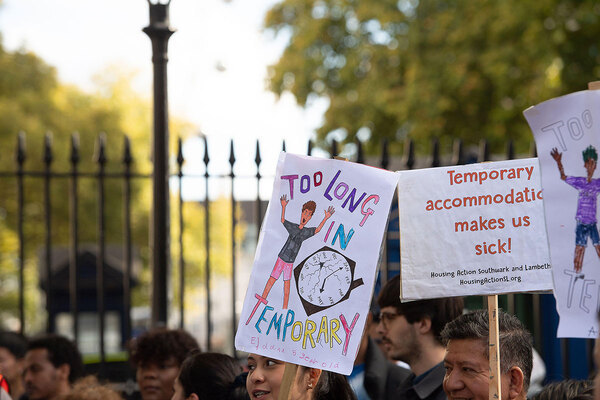
Notably, over 80% of people experiencing homelessness report multiple physical health issues, up from 73% in 2014. Among the diagnosed conditions are chronic breathing problems, heart problems and cancer, meaning thousands of people are dealing with debilitating illnesses while sleeping rough, in hostels or in temporary accommodation.

Shockingly, nearly 60% of people received a physical health diagnosis before becoming homeless. This includes three-quarters of people with epilepsy and high proportions of people with traumatic brain injury and diabetes, highlighting the uncomfortable truth that ill health is a key driver of homelessness.


Read more

Paula Barker: how Labour can ‘get our sh*t together’ on homelessnessPaula Barker: how Labour can ‘get our sh*t together’ on homelessness
The government’s homelessness strategy still misses the specific needs of womenThe government’s homelessness strategy still misses the specific needs of women
Where are the gaps in the homelessness strategy?Where are the gaps in the homelessness strategy?

Determined to bring about change, we have been advocating for the role of the health and social care system as an integral partner in homelessness prevention to ensure unwell people at risk of homelessness are supported early on. We’ve also consistently called for adequate investment in effective accommodation and support for everyone who needs it, to avoid the vicious cycle of homelessness and worsening health.

Thankfully, we may not have to wait long to see the beginnings of this change. The new Homelessness Strategy introduces fundamental ambitions including cross-government targets to reduce the number of people leaving hospitals and other public institutions into homelessness, reviewing specialist intermediate care service funding and compelling services to collaborate to prevent homelessness.

“The strategy must address the fundamental changes needed rather than trying to dress up the same old system”

The government also intends to invest in supported housing services and provide programmes to support people experiencing multiple disadvantages, mental health issues and substance use. The focus on young people is also welcome; as youth homelessness is a risk factor for homelessness later in life, action here will prevent future ill health.

However, when one considers our report, and in particular the understanding that preventing homelessness is preventing severe physical and mental ill health, the strategy risks falling short. It must address the fundamental changes needed rather than trying to dress up the same old system.

Government should be stronger in investing in universal prevention measures to alleviate poverty, ensuring housing affordability through a fit-for-purpose Local Housing Allowance and benefits that cover essentials.

While the importance of supported housing is recognised, we had hoped for greater investment in ensuring an adequate supply of effective support and accommodation for homelessness prevention and recovery. Our research demonstrates the unequivocal need to get this right. Half of people sleeping rough reported declining health over the previous 12 months, but this reduced to 27% for people living in supported accommodation.

Currently, inadequate support means people become so unwell that expensive health interventions are often the only option. In many cases, this can be prevented with safe, affordable housing and earlier access to mental health and social support.

We also need to be bolder on the level of buy-in and responsibility from the health system. The strategy’s link-up with the NHS 10 Year Health Plan is promising, providing the opportunity for neighbourhood health centres to collaborate on homelessness prevention.

However, the Plan itself barely mentions inclusion health, and there is a huge risk that this creates yet another setting where people experiencing homelessness are excluded. Thankfully, we can learn from the many specialist inclusion health services already getting it right across the country.

“The Homelessness Strategy acknowledges the interconnected nature of ill health and homelessness and puts some measures in place to address this, but more work is needed in the detail to ensure it does not merely provide sticking plasters”

It’s worth noting here that people experiencing homelessness face significant barriers when accessing health support, making collaboration across services vital. People experiencing homelessness also bear a heavier burden when health systems are in crisis, such as in dentistry. Our report shows that dental problems are the most common and the fastest growing physical health issue, with fewer people able to register with a dentist or receive routine treatment.

Although co-occurring mental health and drug or alcohol use issues have increased the most since our last data collection, and despite overwhelming evidence that Housing First successfully supports people with the most complex overlapping needs, the Homelessness Strategy has a Housing First-shaped hole.

There is no investment in maintaining existing provision, let alone in establishing a national Housing First programme – undoubtedly a missed opportunity to help meet the target of halving long-term rough sleeping.

Instead, we have the £56m multiple disadvantage programme, which replaces the existing Changing Futures programme. While welcome, this is likely to be a drop in the ocean of what’s needed and insufficient to deliver system-wide change. Similarly, new dual diagnosis support is positive, but without early intervention this will once again force people into crisis before they can access support, by which time their needs may be even greater.

So, yes, the Homelessness Strategy acknowledges the interconnected nature of ill health and homelessness and puts some measures in place to address this, but more work is needed in the detail to ensure it does not merely provide sticking plasters. It must fully grasp the magnitude of the issue and create proper system change to break the cycle of homelessness, or risk leaving thousands of people in our society inadequately supported with deteriorating health, untreated needs and a real risk of early death.

Cat Tottie, policy manager, Homeless Link


Sign up to Inside Housing’s Homelessness newsletter


Sign up to Inside Housing’s Homelessness newsletter, a fortnightly round-up of the key news and insight for stories on homelessness and rough sleeping.

Click here to register and receive the Homelessness newsletter straight to your inbox.

And subscribe to Inside Housing by clicking here.

Already have an account? Click here to manage your newsletters.

Linked InTwitterFacebookeCard
Add New Comment
You must be logged in to comment.