You are viewing 1 of your 1 free articles
The potential of rural affordable housing remains uptapped
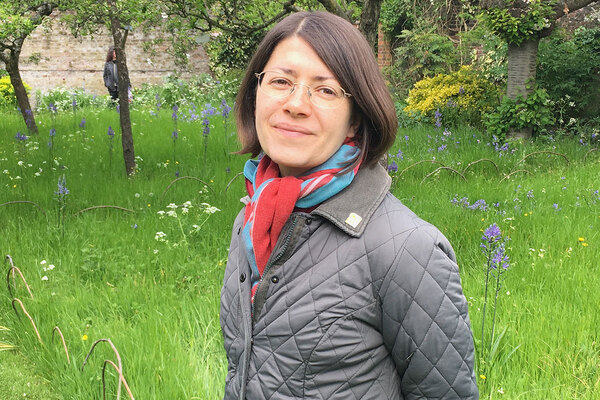
Our new research will inform calls for action on rural housing delivery, writes Aileen Edmunds, chief executive of the Longleigh Foundation



Aileen Edmunds is chief executive of the Longleigh Foundation
 Our new research will inform calls for action on rural housing delivery, writes Aileen Edmunds, chief executive of the Longleigh Foundation #UKhousing
At Longleigh, we have a close-up view of the growing rural housing crisis and have commissioned a major new research report because we believe that affordable housing in rural communities is not just a policy issue, it’s a justice issue.
It’s about who gets to stay, who gets pushed out, and whether our rural towns and villages can remain places where people live, work and belong, before these communities disappear completely.
Independent studies show that rural affordable housing projects stimulate job creation, boost tax revenues and ease pressure on the NHS and welfare systems.
But this potential remains untapped due to longstanding obstacles such as land availability, planning delays, funding gaps and under-valued rural housing enablers. One interviewee we spoke to called the rural housing enabler “the key piece of infrastructure to ensure delivery”, yet many of those roles are part-time, precarious and under threat.
Read more
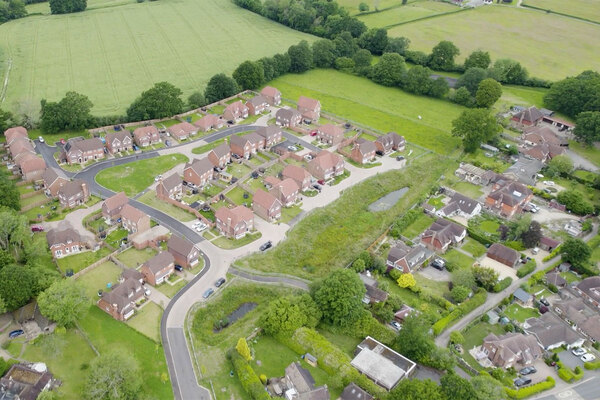
We know the statistics. Rural areas are less affordable, they build fewer affordable homes per capita, and they’re seeing rising homelessness and depopulation of younger generations. But statistics alone don’t change policy; stories, insight and evidence do.
So, thanks to funding from Stonewater and the Fusion21 Foundation, we commissioned rural housing experts at the University of Liverpool and UCL to determine practical solutions that address identified barriers to rural delivery.
The research confirms what we suspected: rural affordable housing is being held back, not by lack of will but by a fragmented and fragile system.
We carried out 21 expert interviews and found that local authorities are operating with threadbare planning departments and housing associations are unable to make schemes stack up. We also heard from landowners, rural enablers and communities alike – they want to act, but are too often blocked or burned out by complexity, inconsistency and uncertainty.
The research details 10 key recommendations, including:
- The need to undertake a feasibility study and consultation into the introduction of Community Right to Buy land for social and affordable rural housing
- The reinstatement of the Community Housing Fund to kick-start stalled schemes and back community-led models
- Long-term funding for rural housing enablers
It also lends weight to the Country Land and Business Association’s proposal for a planning passport for affordable housing on rural exception Sites.
We know that there will be no rural ringfence in the new Affordable Homes Programme, which is disappointing. But let’s be clear: this research offers more than a plea for funding, it offers a strategy for smarter delivery and for how national policy can support local capacity.
If we can’t secure a ringfence, then we must secure recognition. Recognition that rural delivery needs tailored approaches, that housing need in Northumberland or Norfolk doesn’t look like housing need in London or Leeds, and that levelling up must include the countryside, not just the cities.
There’s something in this report for every level of government and housing delivery. For central government: a call to treat rural areas as distinct, not just as statistical leftovers.
“This isn’t just about building more; it’s about building better, in places where homes make the difference between decline and renewal”
For local authorities: a push to unlock the potential of exception sites and to better use the tools they already have.
For housing associations and developers: a challenge to adapt models to deliver at smaller, more dispersed scales. For community organisations: a validation that with the right support, their leadership can transform what’s possible. For rural residents: a recognition that their voices matter.
This research validates what many have long felt – that their needs are real, their contributions are vital and that affordable homes are not a threat to rural life, but essential to its future.
We heard about families priced out of the villages they’ve lived in for generations, young people forced to leave to afford a roof over their head and about older tenants facing isolation because there are no smaller, accessible homes nearby. At Longleigh, we have also heard from tenants who have stayed in abusive relationships because they don’t have friends and family nearby to flee to as they couldn’t afford to stay. These aren’t rare anomalies, they’re everyday realities.
This isn’t just about building more; it’s about building better, in places where homes make the difference between decline and renewal. We don’t expect every recommendation to be taken up tomorrow, but we do want this research to support and build on the conversations many are already having.
Aileen Edmunds, chief executive, Longleigh Foundation
Sign up for our development and finance newsletter

Already have an account? Click here to manage your newsletters
Related stories