Tenants evacuated over structural concerns threaten legal action amid remediation uncertainty
Tenants evacuated from a block of flats in east London last year due to structural safety concerns are threatening group legal action against landlord Notting Hill Genesis (NHG).


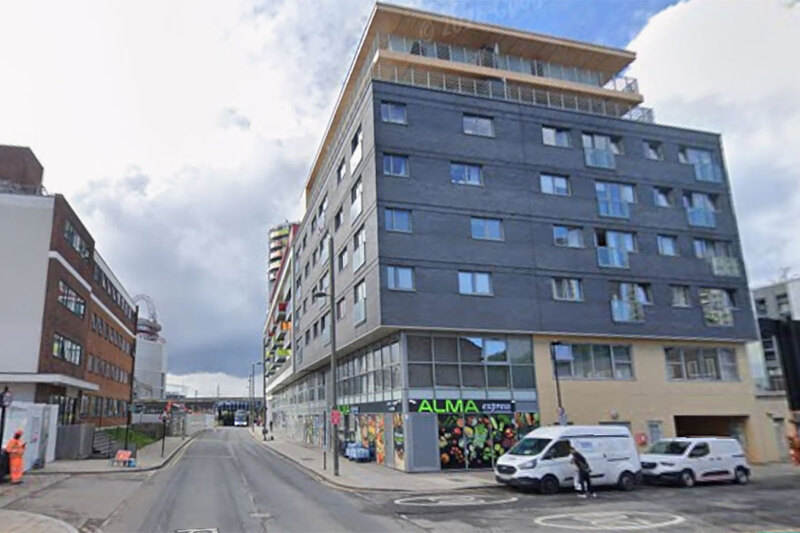 Tenants evacuated over structural concerns threaten legal action amid remediation uncertainty #UKhousingTenants evacuated from a block in east London last year due to structural safety concerns are threatening group legal action against landlord Notting Hill Genesis #UKhousing
A letter of claim for disrepair has been sent to NHG from 40 social housing tenants of Sapphire Court, a 131-flat block on the Stratford Halo Estate that was built in 2011 at the heart of the Olympic Village.
These residents were among hundreds moved from their homes into temporary accommodation last year, with some given just hours to leave.
The mass evacuation was triggered by the discovery of cracks in concrete transfer slabs across four blocks on the development, a safety issue that is currently under investigation by the Building Safety Regulator (BSR) and the Ministry of Housing, Communities and Local Government.
The claim letter, sent in November and seen by Inside Housing, said the cracked transfer slabs are structural defects in breach of the Defective Premises Act 1972.
Read more
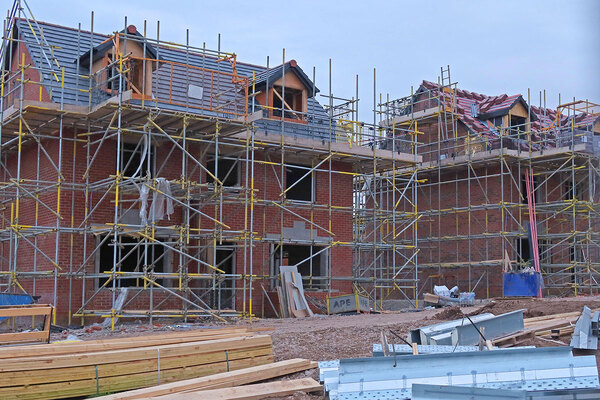
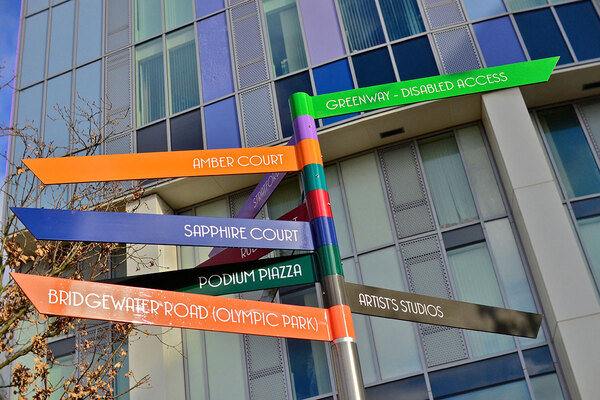
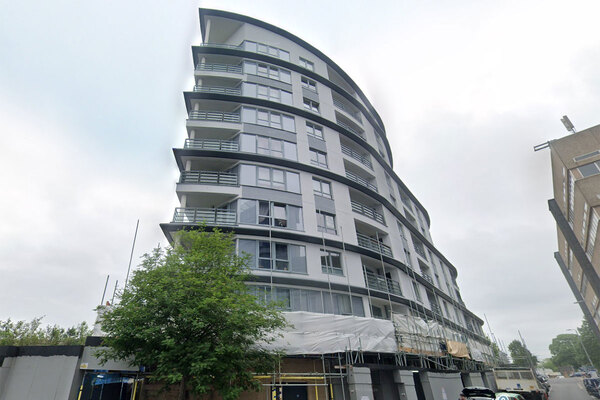
The tenants claimed they have had cracks in their properties throughout their tenancies, which in some cases “let water in”. They also reported an unusually large incidence of window glass cracking “without apparent cause”.
“Lapis Mews and Sapphire Court was built to your order. The work was not done in a workmanlike or professional manner with proper materials so that it was fit for human habitation when completed,” said the letter sent by Anthony Gold Solicitors.
In an update last week, NHG confirmed that “propping” work will be carried out at three other blocks – Amber, Ruby and Opal courts – affected by the transfer slab issue, with remediation scheduled to start this year.
However, the future of Sapphire Court, which has “distinct issues”, including transfer slabs on multiple floors, is still uncertain. In its most recent update, the landlord said investigations are “still ongoing”.
In a Q&A published online, following a public meeting on 27 January, one resident asked whether the block can be fixed.
In response, NHG pointed to advice from its third-party engineer. It stated: “In theory, anything can be fixed, but that the consequences, timing and practical application have to be considered – in particular, the question of whether your homes could continue to be lived in in the same way as before.”
Eleanor Solomon, a partner in housing and property litigation at Anthony Gold, said: “We act for 40 tenants in Sapphire Court in a claim for disrepair and breach of quiet enjoyment, about the structural issues and other problems with the building.
“Our clients are extremely stressed about the prospect of being in temporary accommodation for years. It is hugely disrupting for them, especially for disabled residents.
“Our clients have no faith that the works will be completed by the end of 2027 and many of them do not ever wish to return home.”
The issues at the Stratford Halo Estate first emerged in January 2025 when NHG was contacted by AECOM, an engineering firm that acquired URS Corporation, the original structural engineers for the development.
AECOM had carried out a desktop review of projects designed by URS in response to the Building Safety Act, which flagged up the need for “further investigations”.
An intrusive inspection in August identified potential concerns with the transfer slab in specific areas of Sapphire Court, due to signs of cracking on the slab edge.
There were also concerns about “knock-out panels” close to the slab edge and a desktop assessment of the building load the column was carrying found that utilisation levels were “higher than applicable” in building codes.
This led to 26 households in Lapis Mews block being relocated to temporary accommodation. A further group of tenants was moved out of Sapphire Court in November, then residents in the other three blocks were evacuated just days before Christmas. The 43-storey Halo Tower and Warton Court, another building on the estate, are not affected.
Shortly after the evacuation at Stratford Halo, the BSR issued a warning over transfer slabs and the risk of “punching shear”. If a slab and the reinforcement are not strong enough for the load being carried, there is a risk that the column could “punch” through the slab and potentially cause collapse.
A spokesperson for NHG said: “We first informed residents about defects in the building structure when we had to make the first difficult decision to ask residents to move to temporary accommodation on safety grounds on 21 August 2025.
“We have shared with them all the information we are able to about the issues identified at Sapphire Court, including at a detailed online briefing meeting with the original structural engineers in September 2025.
“We and our structural engineering advisors Pell Frischmann have shared with our residents that in theory, anything can be fixed – but that the consequences, timing, and practical application need to be considered.
Last week, the housing association’s decant process was criticised by the Stratford and Bow MP Uma Kumaran, who attended the public meeting held for residents of affected blocks.
In a letter to NHG chief executive Patrick Franco, Ms Kumaran accused the landlord of disorganisation and said residents are receiving “inconsistent and unclear” communication, with different households being told different information.
A spokesperson for NHG maintains that the landlord has been “communicating transparently and openly” with its residents at all times and it is keen to have a “constructive dialogue” with Ms Kumaran.
“Our ask, on behalf of Stratford Halo residents, is that the MP holds the original structural engineer to account, asking them to remediate as soon as possible and get residents back home,” the spokesperson said.
A spokesperson for AECOM said: “The original structural engineer of the Stratford Halo development was URS. URS was subsequently acquired by AECOM in 2014.
“As part of AECOM’s ongoing commitment to health and safety and in light of the Building Safety Act, AECOM reviewed the original URS design and notified NHG as building owner and principle accountable person of potential structural issues in certain lower-rise buildings at the development.
“Our engineers have worked and continue to work proactively and diligently alongside NHG and its appointed engineer on these specific issues, which we understand are a subset of the issues raised by the residents. Health and safety of residents during this process is our top priority.”
Sign up to Inside Housing’s Building and Fire Safety newsletter
Sign up to Inside Housing’s fortnightly Building and Fire Safety newsletter, now including a monthly update on building safety from Inside Housing’s contributing editor Peter Apps.
Already have an account? Click here to manage your newsletters.
Related stories