You are viewing 1 of your 1 free articles

The Thinkhouse Review: as the sector enters 2023, a lot is resting on the shoulders of its leaders
Richard Hyde takes a look at two reports that explain the challenges faced by the housing sector


 Richard Hyde takes a look at two reports that explain the challenges faced by the #UKhousing sector
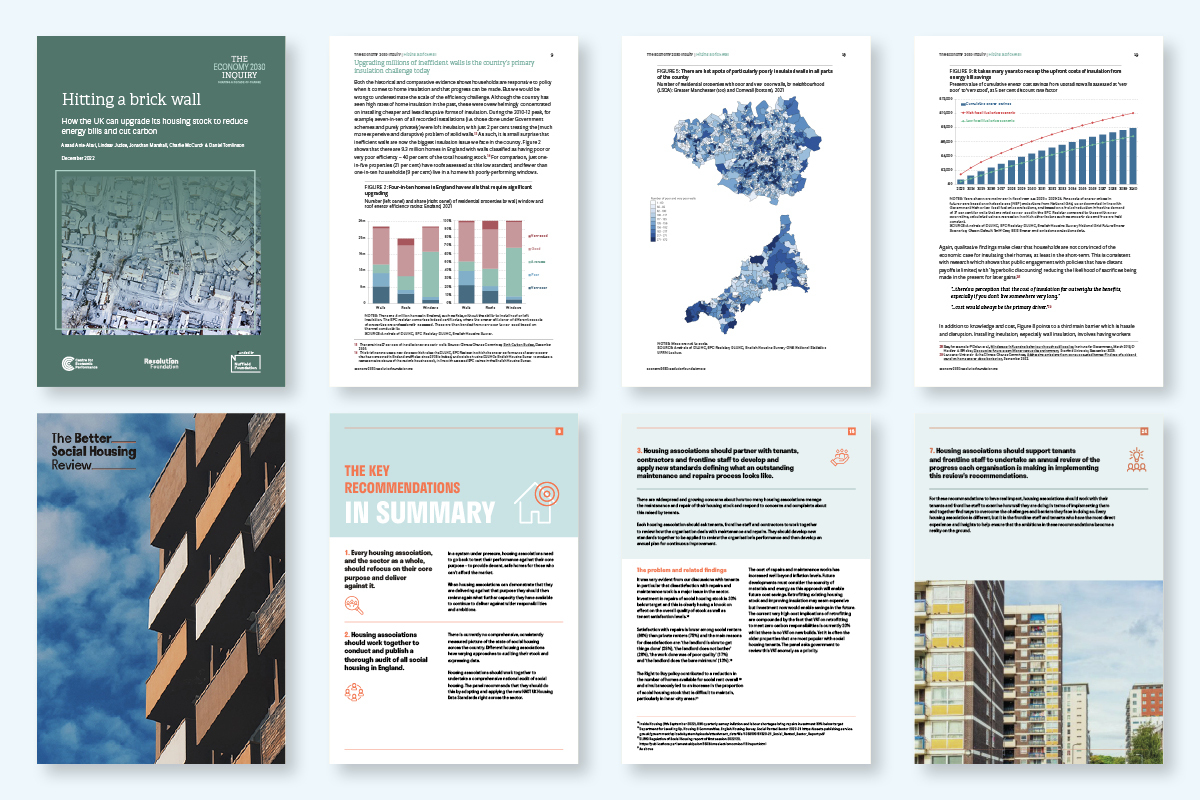
December is usually a quiet month for Thinkhouse.org.uk in terms of new housing research. Nevertheless, the quality of the reports we curated on our site was high and two stood out for me. They succinctly explain, from different viewpoints, the challenges faced by the housing sector.
The first is a tightly focused analysis of the issues related to insulating our housing stock to eliminate building emissions by 2050. The task that this brings to the sector is on top of many other external pressures such as the cost of living crisis, building safety, the rent cap and post-pandemic strains. My second report sets out why there is a fundamental need, even when faced with these headwinds, for the social housing sector to improve the quality of its homes.
Read more



Hitting a brick wall by The Economy 2030 Inquiry is a collaboration between the Resolution Foundation and the Centre for Economic Performance at the London School of Economics, funded by the Nuffield Foundation.
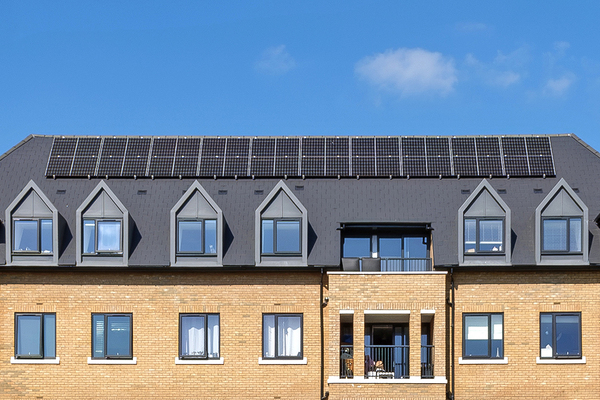
Emissions from buildings must be halved by 2035, and near eliminated by 2050, if our net zero targets are to be attained (according to the Climate Change Committee). Furthermore, the energy crisis has hastened the need to act.
Families living in poorly insulated properties consume an extra 58% more gas a year than they would in a home that meets the government’s Energy Performance Certificate (EPC) target of a C rating. Badly insulated homes mean higher emissions, greater reliance on imported fuels, bigger bills and – especially worrying – cold homes.
Those cold homes are in the poorest neighbourhoods, which contain 40% of the homes with inefficient walls.
“Badly insulated homes mean higher emissions, greater reliance on imported fuels, bigger bills and – especially worrying – cold homes”
Many residents in the social housing sector live in better-insulated homes than those in the private rented sector, having benefited from Decent Homes Standard investment in the fabric of their buildings over the past couple of decades.
However, there are still 1.4 million socially rented properties that have an EPC rating of D or below. The report estimates that upgrading all these homes to a C rating would cost between £7.5bn and £12.5bn.
The report demonstrates that it takes many years to recoup insulation costs through lower energy bills (insulating walls often requires significant upfront investment) but concludes that if policymakers get tough and offer incentives, change can happen. It warns that this does not come cheap and if not targeted sensibly (perhaps in a similar way to social care) could cost a staggering £60bn, across all housing tenures.
The Better Social Housing Review was set up by the National Housing Federation and the Chartered Institute of Housing to examine issues relating to the quality of social housing, and is therefore not unrelated to the problem of cold homes as well as building safety, damp, mould, leaks, inadequate ventilation, pests, overcrowding and more. Inspired and informed by best practice, it also focuses on culture and responsiveness to tenants’ concerns and complaints.
There are seven recommendations, among which is a proposal for the sector to work to a new standard that assesses housing quality and service experience and suggests that there should be a sector-wide adoption of the HACT UK Housing Data Standards. This would strengthen scrutiny and accountability, allow for informed comparisons across housing associations, give all tenants a quality benchmark and promote much easier sharing of good practice.
Conducting a national audit based on these standards would establish the true state of social housing in England and could be used to inform policy and practice and create a powerful case for targeted support from, and engagement with, government on increasing the quality of social housing, including the upgrading of insulation.
“Responding to tenants’ concerns and complaints, the report recommends creating community hubs and to have staff members and other agencies available to meet tenants at known times”
In terms of cold homes and net zero, the report calls for the current 20% VAT on retrofitting (vs 0% on new builds) to be reduced so that it becomes as economically viable for a housing provider to bring an existing home up to standard as it is to build from scratch.
Responding to tenants’ concerns and complaints, the report recommends creating community hubs and to have staff members and other agencies available to meet tenants at known times. Hubs could tap into and make connections with other local services such as after-school clubs, libraries, crèches, shared working spaces, training and skills programmes, furniture exchanges, repairs workshops, community gardens, and many other ideas that benefit the community.
This approach does not necessarily require substantial financial investment, but the positive impacts on health, well-being, opportunity, life satisfaction and increased social cohesion represent substantial social value – a value that must be captured by housing associations in any assessment of return on investments.
I like the practical suggestions in the Better Social Housing Review. The steps suggested provide a sensible framework that will help the delivery of the costly but much-needed improvements that are central to the Economy 2030 report. This reduces the environmental challenges that will otherwise fall on the shoulders of future generations.
Richard Hyde, chair, Thinkhouse Editorial Panel; and chair, Solihull Community Housing and Housemark
Sign up for our Week in Housing newsletter
Already have an account? Click here to manage your newsletters
Related stories