You are viewing 1 of your 1 free articles
True housing justice must include those with No Recourse to Public Funds
We must not forget that thousands of people are excluded from basic support because of their immigration status, writes Margaret-Ann Brünjes, chief executive at Homeless Network Scotland



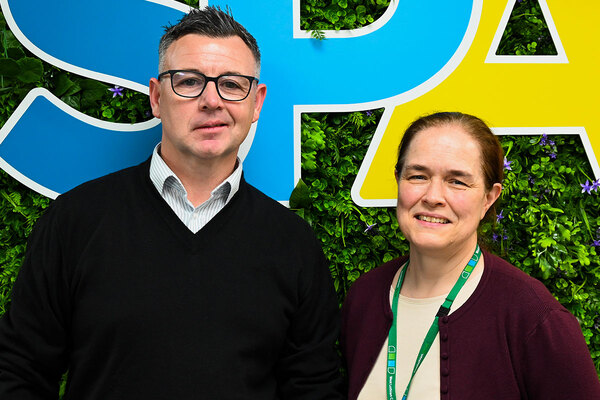
Margaret-Ann Brünjes is chief executive of Homeless Network Scotland
 We must not forget that thousands of people are excluded from basic support because of their immigration status, writes Margaret-Ann Brünjes, chief executive at Homeless Network Scotland #UKhousing
At a time when political will feels fragile and public services are stretched to breaking point, it’s more important than ever to champion approaches that genuinely work – especially for those facing the deepest disadvantage.
While headlines rightly focus on rising homelessness, spiralling numbers stuck in temporary accommodation or the chronic housing supply crisis, there’s a quieter emergency playing out beneath the surface: thousands of people excluded from basic support because of their immigration status.
Launched in 2021 as an action-learning partnership, Fair Way Scotland was designed to prevent destitution among people subject to No Recourse to Public Funds or restricted eligibility for mainstream services. It exists because people fleeing persecution and seeking sanctuary in Scotland deserve more than survival – they deserve dignity, safety and a clear path to rebuild and live their lives.
Read more


An independent evaluation by Heriot-Watt University demonstrates its real impact. When people first connected, 93% were destitute; nearly one in five were sleeping rough at that moment, and over half had experienced rough sleeping in the previous year. A further 17% had fled accommodation because they felt unsafe.
By providing access to specialist casework, legal advice, community-based accommodation and modest weekly cash payments of £60, the programme helped people to meet their basic needs, escape or avoid rough sleeping and advance their immigration cases.
People receiving support for longer had better outcomes – meaning less rough sleeping, safer housing and greater progress on immigration status. A little bit of stability, it turns out, goes a very long way.
“Our ultimate goal is to test and demonstrate what works, then support the shift toward sustainable public systems that prevent destitution altogether”
Fair Way Scotland’s success rests on strong collaboration between third sector partners, local authorities and the Scottish government – a collaboration that has positioned Scotland as a UK leader in preventing and alleviating immigration-related destitution.
As an action-learning initiative, our ultimate goal is to test and demonstrate what works, then support the shift toward sustainable public systems that prevent destitution altogether – reducing over time the need for charitable interventions.
Each year we support around 1,000 people, yet an estimated 4,000 individuals in this group remain at risk of destitution annually.
We are not seeking indefinite growth through more funding. Instead, we urge – and stand ready to help – the Scottish government, the Convention of Scottish Local Authorities (COSLA) and Scottish councils to scale up the strong foundations that have already been built, using devolved powers more confidently to extend basic safety nets, widen access to legal advice, establish hardship funds and provide safe places for people to stay.
We have published a roadmap, grounded in legal analysis, showing how this can be achieved. Implementing its recommendations would transform outcomes for this group and contribute to the broader vision of housing justice: the straightforward but powerful principle that safe, suitable homes for everyone benefit individuals, families, children and communities – and society as a whole.
“Our work demonstrates what happens when organisations work together, pool resources and design support that reflects real lives rather than bureaucratic silos”
This vision is articulated in the Housing Justice manifesto from the Everyone Home collective and All in for Change. It calls for co-ordinated action across five areas: building far more social housing, better co-ordinated services, investing smartly, locking in rights and ensuring equity for people facing the greatest barriers.
Our work demonstrates what happens when organisations work together, pool resources and design support that reflects real lives rather than bureaucratic silos. It also shows the power of using devolved powers to choose dignity and fairness – even where UK immigration rules deliberately create destitution.
But fundamentally, housing justice depends on housing supply. Research commissioned by the Chartered Institute of Housing in Scotland, Shelter Scotland and the Scottish Federation of Housing Associations shows that Scotland needs at least 15,693 new social homes each year to meaningfully reduce homelessness.
Without that scale of delivery, providers of housing and support on the frontline will be forced into impossible choices between disadvantaged groups – and more people will be pushed into unsuitable, unsafe accommodation.
We don’t need to start from scratch. The evidence is robust, the legal powers exist and an effective delivery model is proven. What’s missing is the political decision to act at the necessary scale. That requires co-ordinated investment and leadership from the Scottish government, COSLA, local councils, housing associations and funders – alongside continued pressure on the UK government to stop manufacturing destitution through immigration policy.
Housing justice is a big idea, and it starts with some of Scotland’s most excluded and disadvantaged people. Because when we end destitution and secure homes for the most excluded, we strengthen housing justice for all of us.
Margaret-Ann Brünjes, chief executive, Homeless Network Scotland
Sign up to Inside Housing’s Care and Support newsletter
Sign up to Inside Housing’s Care and Support newsletter, a fortnightly bulletin featuring care and support news and analysis.
Already have an account? Click here to manage your newsletters.
Related stories