You are viewing 1 of your 1 free articles
Northern Ireland launches warm homes strategy with plans to invest £150m
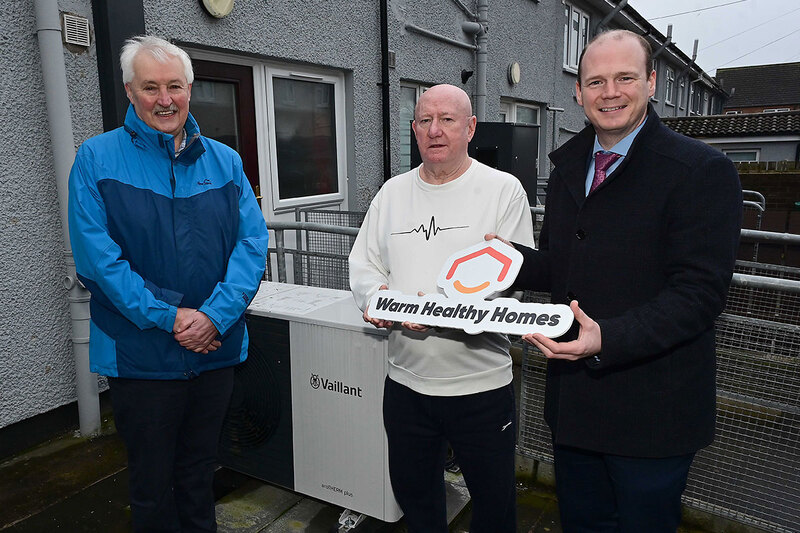
Gordon Lyons, Northern Ireland’s communities minister, has announced a new strategy to tackle fuel poverty, including an investment of £150m in improving the energy efficiency of homes.


 Northern Ireland launches warm homes strategy with plans to invest £150m #UKhousing
The Warm Healthy Homes Strategy is a 10-year plan that aims to lift households out of fuel poverty by making homes more energy efficient, strengthening consumer protections, and increasing advice and emergency support capacity.
As part of this strategy, Mr Lyons said he will introduce a new Warm Healthy Homes Fund from March next year, which will provide £150m in grants for energy efficiency improvements over its first five years.
These investments will take a “whole-house approach”, according to the minister, integrating insulation, heating upgrades, ventilation and tailored advice.
Read more


“By reducing energy demand at source, this will deliver permanent reductions in household energy costs,” Mr Lyons added.
The minister said he will seek support from the Northern Ireland Executive for this funding pot.
This new strategy in Northern Ireland will ensure that “cold, damp homes become a thing of the past”, Mr Lyons said.
It reflects the same priorities as the UK government’s recently announced Warm Homes Plan, including a focus on tackling fuel poverty through more energy-efficient homes.
As well as new funding, the strategy commits over the next 10 years to “track progress through a transparent monitoring framework” by measuring fuel poverty, its impacts on health, the energy efficiency of homes, energy costs, and whether people are “going without to pay their energy bills”.
The minister said the strategy sits alongside the Department for Communities’ Housing Supply Strategy, which was launched in 2024, as well as an ongoing consultation on a new Decent Homes Standard for social housing.
In the strategy document, the government said that it will “demonstrate leadership by improving homes in the social housing sector”, and that the Northern Ireland Housing Executive (NIHE) has “already been improving the energy efficiency of its housing stock”.
It said the updated Decent Homes Standard will be put in place by 2026, and will “take into account improved thermal comfort and, if approved, will recommend a best practice minimum energy efficiency target for all social homes to achieve by 2030”.
The strategy also set an intention to explore potential funding for social housing retrofit, for example by “NIHE stock investment and housing association access to financial transactions capital loan funding to support a pilot project”.
In his announcement, Mr Lyons said: “The strategy sets out a long‑term, cross-government approach to lift households out of fuel poverty and ensure that everyone in Northern Ireland can live in a warm, healthy home.
“Fuel poverty affects close to one-quarter of households here. It is not just an energy issue; it is also a health and economic issue.
“Its consequences, cold and damp homes, are linked to poorer physical and mental health, increased stress and reduced well-being.
“Behind the statistics are real people, families forced to choose between heating and eating, older people living in poorly heated homes, and children whose health and education are affected by damp, cold conditions.”
Mr Lyons said the actions of the new strategy will “improve health outcomes, reduce pressure on health services and cut household energy bills”.
John McMullan, vice-chair of the NIHE, said: “It has been our experience that, by delivering energy efficiency measures, households’ energy costs can be greatly reduced and their comfort is increased.
“Vitally, sustained investment in improving the quality, comfort and performance in housing goes some way to improving the health and well-being of households.
“Therefore, we warmly welcome the Warm Healthy Homes Strategy and the minister’s long‑term commitment to tackling fuel poverty. For our part, the NIHE looks forward to being a key delivery partner for the strategy.”
Sign up to Inside Housing’s Northern Ireland newsletter
Sign up to Inside Housing’s Northern Ireland newsletter, a fortnightly round-up of all the key news and insight affecting the Northern Irish affordable housing sector.
Click here to register and receive the Northern Ireland newsletter straight to your inbox.
And subscribe to Inside Housing by clicking here.
Already have an account? Click here to manage your newsletters.
Related stories