You are viewing 1 of your 1 free articles
An architect’s view
Kate Macintosh designed some of the most celebrated social housing of the 20th century. She talks to Kate Youde about how the legacy of those years is being looked after, and how to solve the housing crisis. Photography by Julian Anderson


 "Kate Macintosh, now aged 81, was one of the council architects that changed Britain’s landscape" Read our exclusive interview #ukhousingAn architect's view: an exclusive interview with architect Kate Macintosh
Theresa May’s decision to lift the cap on council borrowing has everyone thinking of a new era of construction for council housing.
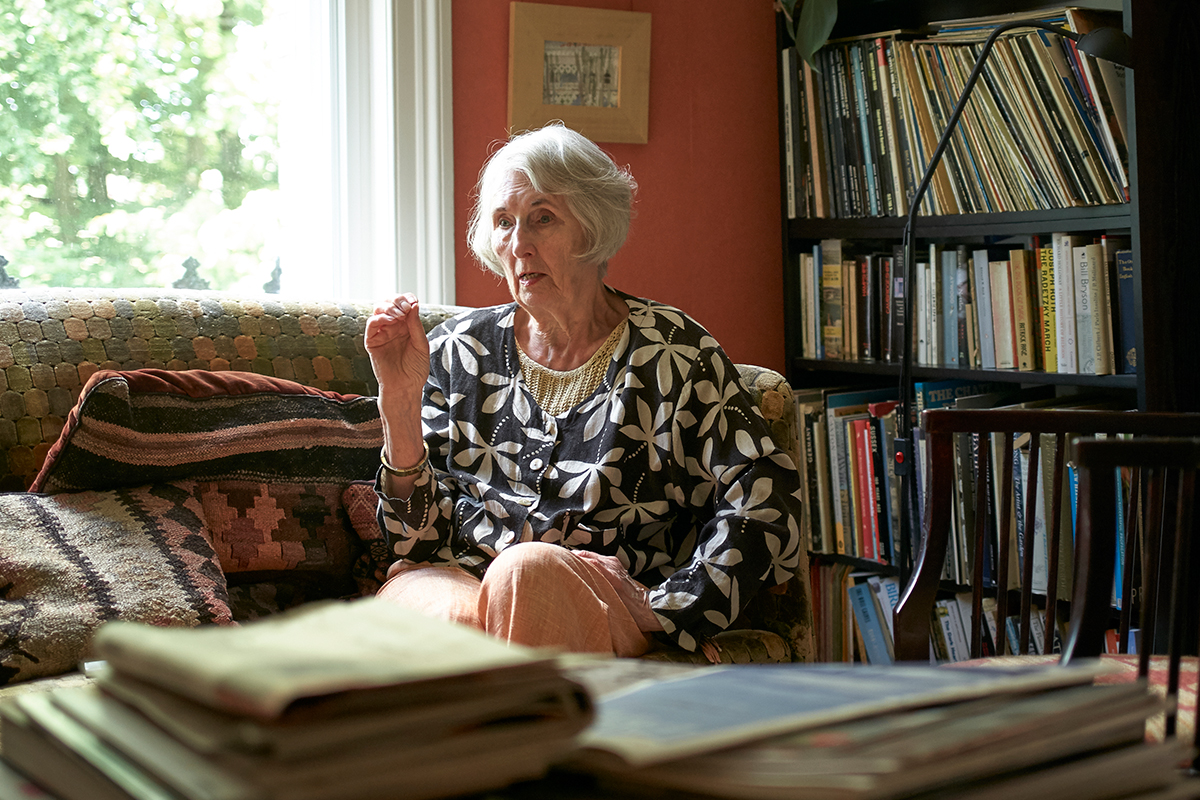
In the heady days of the mid-20th century, councils built thousands of affordable homes and the sort of design which has shaped the country. Kate Macintosh, now aged 81, was one of the council architects that changed Britain’s landscape in those times.
Her puzzle-like Dawson’s Heights Estate in Dulwich, one of the designs which led The Observer to call Ms Macintosh “one of Britain’s great unsung architects of social housing”, remains a landmark of the south London skyline.
So now seems an apt time to ask what Ms Macintosh makes of her legacy, and what she thinks needs to be done to solve the housing crisis. Inside Housing has come to Winchester to visit the retired architect in her Victorian home.
Read more
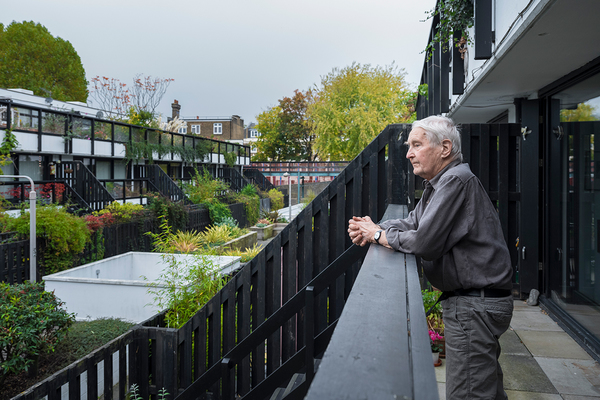


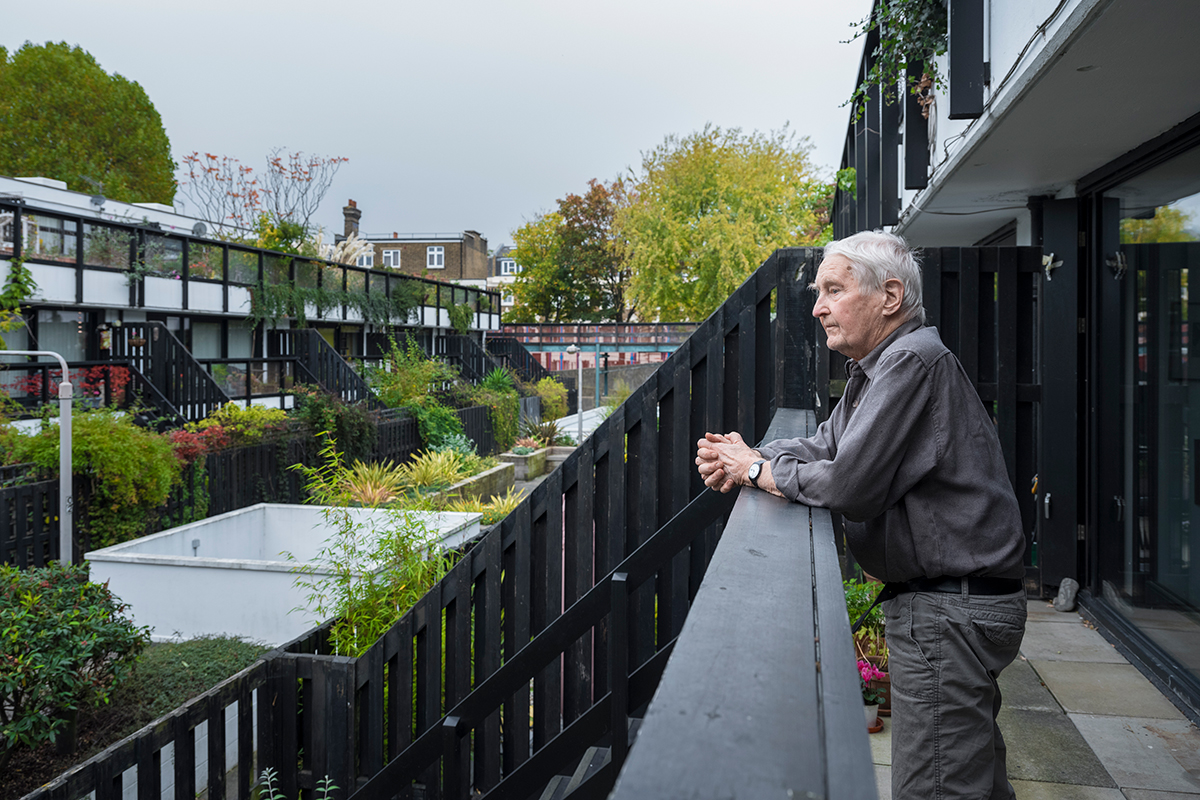
The 81-year-old is warm and welcoming, but also upset. She is frustrated by unfruitful dealings with Lambeth Council after learning it has installed – without planning consent – “great arrays and festoons of pipes” on the outside of a Grade II-listed sheltered housing scheme she designed. “Now the external character of the place is transformed into a quasi-industrial-looking building,” she says, resigned to the fact the damage has been done.
Designed and built between 1968 and 1973 as a series of seven pavilions linked by a covered walkway, Historic England has described the modernist 269 Leigham Court Road – since renamed Macintosh Court in the architect’s honour – as “an exemplary representative of housing for the elderly”.
However, Ms Macintosh says it has been “neglected” and leaks, with its frail older residents subjected to stress and unhealthy living conditions during recent renovation work, including allegations that asbestos has been removed without proper protection (see box ‘Macintosh Court makeover’).
It is unfortunately an apt indicator of how Ms Macintosh feels the legacy of much post-war housing has been handled. She is “absolutely distressed and distraught” by some of the estate regeneration happening in London. “When they knock down and build, as we saw at Heygate [in Southwark], the number of social units which is provided is dramatically reduced,” she says.
Asked what she sees as the biggest issue for architects designing social housing today, she retorts: “Are there very many of them?”
The story of how Ms Macintosh came to design social housing starts when she went to school in Edinburgh, a city with an architectural “lesson on every corner”. Her grandfather was an architect but her left-wing father, Ronald, eschewed the family business in favour of engineering and became head of the direct labour department of the now-defunct Scottish Special Housing Association.
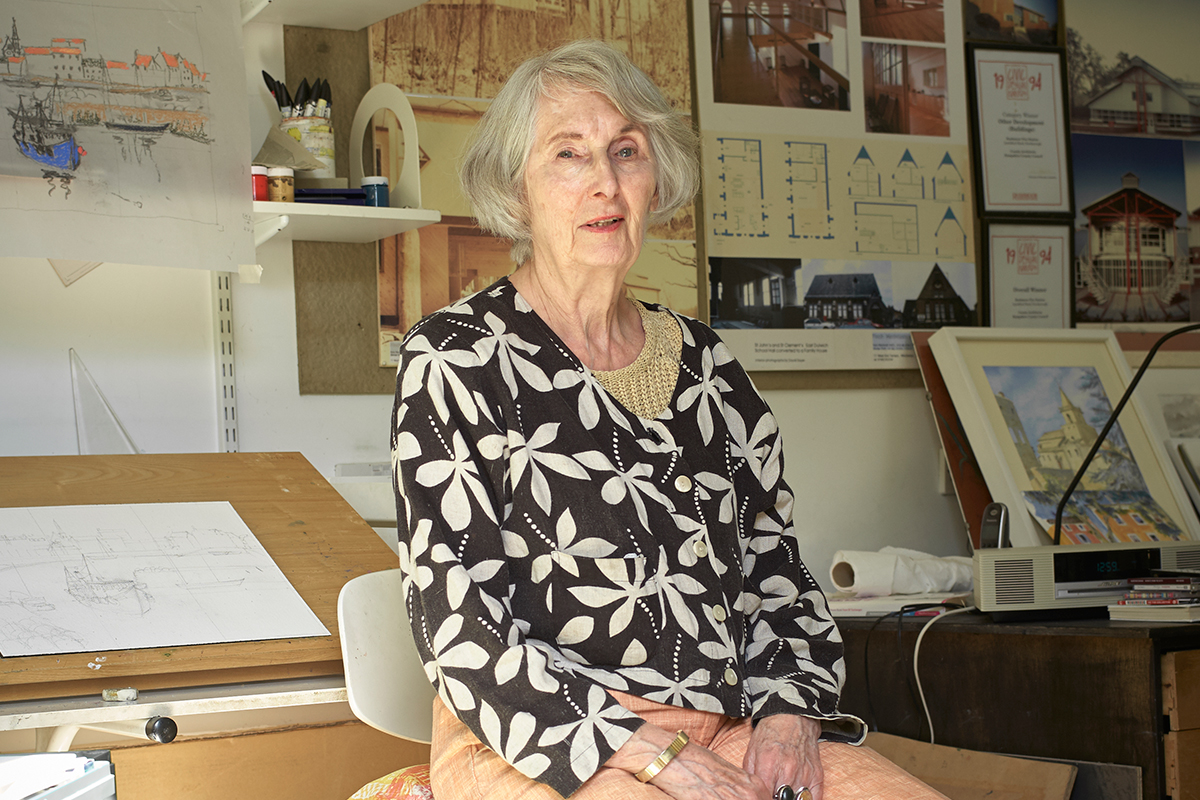
Keen to help rebuild Britain after World War II, her father developed ‘no-fines’ concrete – from which the fine aggregate is eliminated – used for building at scale. “So I grew up with some familiarity of both the social purpose of building and… advancing technology of building,” says Ms Macintosh, sitting on a sofa in her first-floor lounge, where family photographs line the mantelpiece.
It was her father who recommended she study architecture, and she enrolled at the Edinburgh College of Art. After graduating, she went to Poland on a British Council scholarship before heading to Sweden, Denmark and Finland to work, in part because of the presence of prominent women in architecture. “I wanted to get over this syndrome of having to somehow excuse or explain why as a woman I wanted to be an architect, and feel it was just a normal thing to do,” she says.
The proportion of architects in the UK who are women has grown from what Ms Macintosh estimates was a little more than 4% when she graduated in 1961 to 27% in 2017, according to the Architects Registration Board. Ms Macintosh says the “biggest inhibitor” is the lack of good affordable childcare and the long-hours culture, something she says did not exist when half the profession was working in the public sector.
Macintosh Court makeover
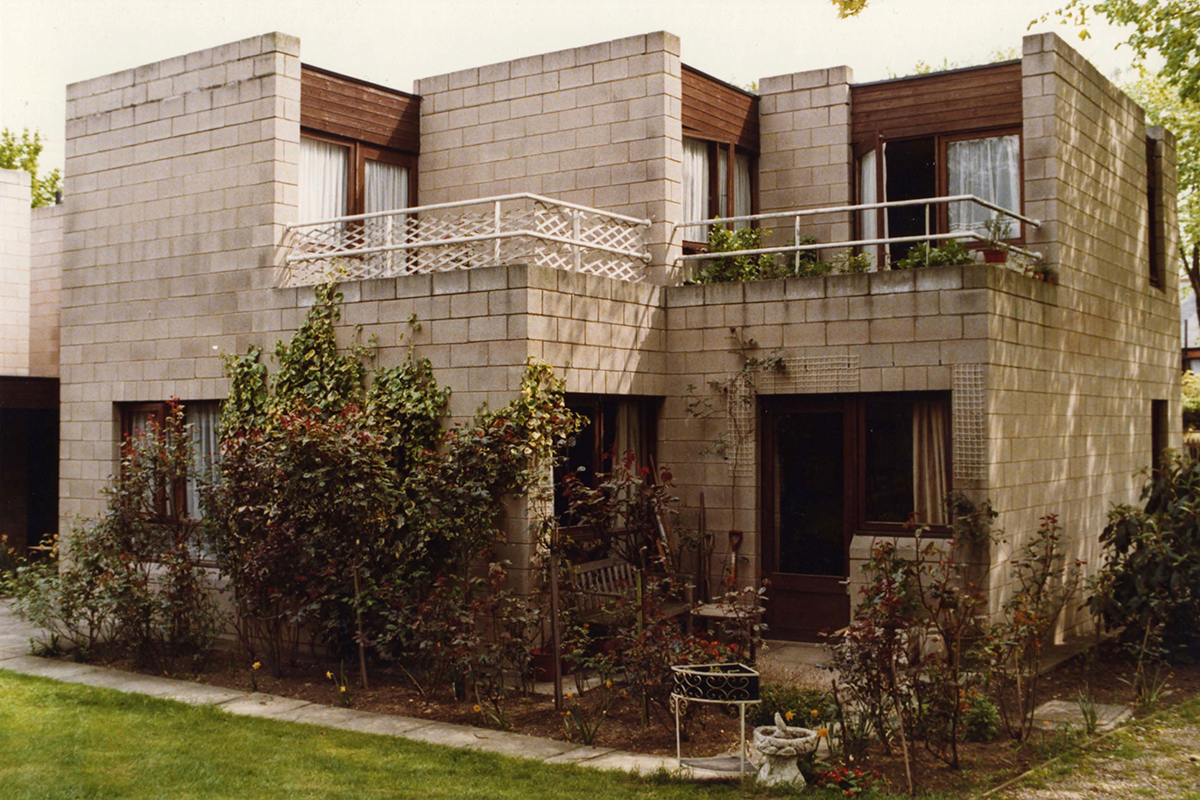
Macintosh Court, which was originally called Leigham Court Road
Lambeth Council is investing up to £2.5m in bringing Macintosh Court up to the Lambeth Housing Standard.
A spokesperson says: “There has been a breach in gaining planning approvals to external pipe runs on this listed building and the council has apologised for that. It was agreed that current works will be completed to prevent any disruption to the central heating/hot water supply.
“The council will work with planning to gain retrospective planning permission, and clarify whether any external pipe runs need to be reconfigured. If this is required, works will take place at the end of the heating season next year.”
The spokesperson says residents have been consulted throughout, with many pleased with their new bathrooms and kitchens, although they acknowledge “concerns have been raised about some of the work conducted”. They add that all work to remove asbestos was undertaken in accordance with regulations and relevant safety standards. “It must be stressed that at no time were residents put at risk.”

A refurbishment project at Macintosh Court installed pipework over the building’s exterior
On her return from Scandinavia, Ms Macintosh worked briefly for Denys Lasdun on the team designing the National Theatre in London, before taking a job with Southwark Council. It was here that, in her late 20s, she designed Dawson’s Heights (now owned by 27,000-home Southern Housing Group) with its stepped blocks akin to an ancient Mesopotamian ziggurat temple.
While tower blocks are a good solution in some situations, she feels the design naturally tends to isolate residents because of the single entrance. “And certainly these enormously high towers which are popping up all over London are not ecologically sound, they’re not desirable from a
townscape point of view,” says Ms Macintosh, who is softly and deliberately spoken, choosing her words carefully. “They’re pretty damn disastrous.”
At Dawson’s Heights, she wanted to design a scheme where residents could have as much privacy as they desired but where there was “encouragement to bond and socialise”.
“I devised this interlocking method of arranging the buildings so that there was a two-bedroom, a three-bedroom and a one-bedroom maisonette all using the same walkway,” she says. “My theory being that families of different sizes and indeed different ages have compensatory needs, so that hopefully you have got a young married couple without kids who are willing to babysit for someone else who’s got four kids, or there might be an elderly person who finds it difficult to go shopping and then a singleton might be willing to help her out, and so on.”
Historic England recognised this “skilful planning” when in 2011 it recommended the south-east London “landmark” for Grade II listing, a recommendation that was rejected.
The issue with council housebuilding today, Ms Macintosh suggests, comes down to land. When we meet in September, Ms Macintosh, who believes local authorities are “being scapegoated by central government as the fall guys for their cruel and inhumane policies”, tells Inside Housing that councils need to be able to borrow to build and the UK should follow New Zealand’s lead in restricting foreign investors. It is “nonsense” to suggest the housing crisis will be solved by “build, build, build”, she adds. “In fact, we don’t have a shortage of accommodation; we have an acute maldistribution of accommodation.”
A couple of weeks later, Theresa May used the Conservative Party conference to lift the cap on how much councils can borrow to build homes and increase stamp duty for foreign investors buying property in the UK.
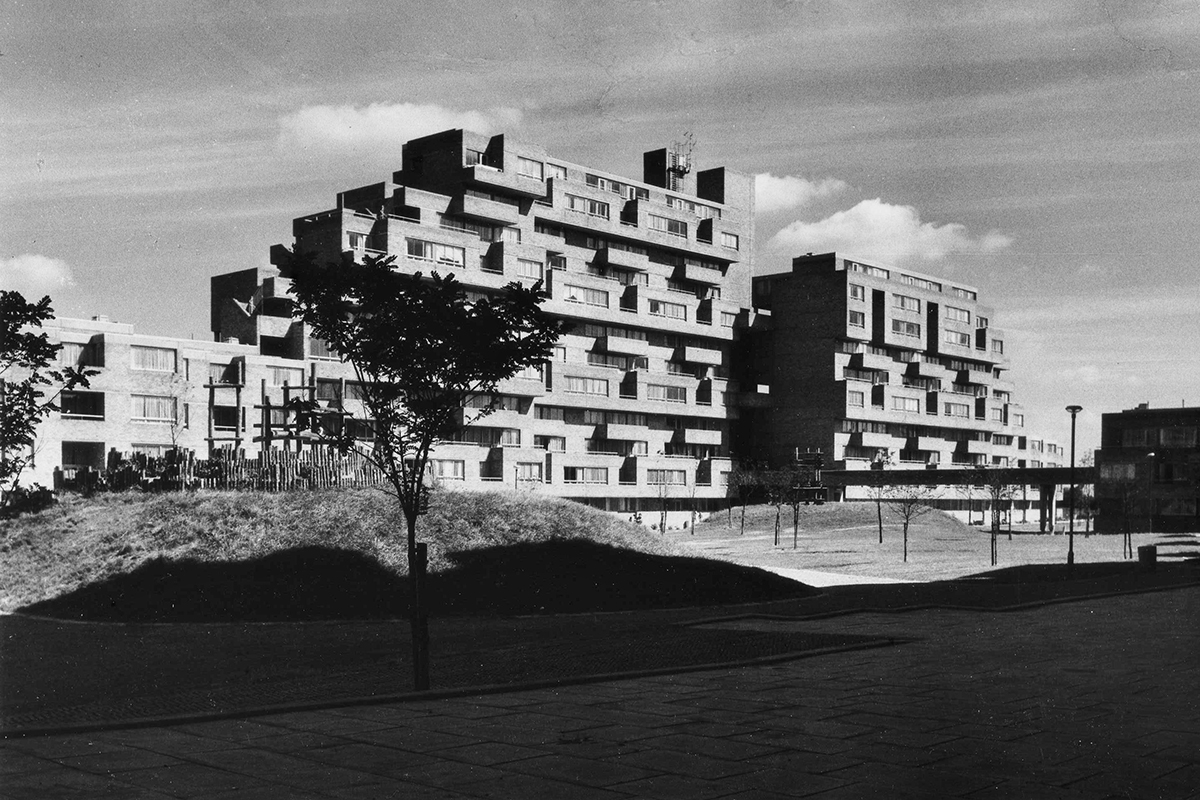
Dawson’s Heights Estate in Dulwich, south London
Ms Macintosh will be hoping that the prime minister adopts her other suggestions for addressing the housing crisis, which include ending Right to Buy, as has been done in Scotland, and imposing “land value taxation to stop land hoarding”. She would also like to see equalised VAT across renovation, extension and new build to allow “a genuine cost-benefit analysis” of whether it is worth investing in an existing structure, and thus avoiding social disruption, or rebuilding. “[At the moment] it’s 20% financial incentive to demolish and rebuild because new housing is zero-rated,” she says.
Ms Macintosh is emphatic: “Housing has to be regarded as a human right. It’s even more fundamental than health, education or anything else because you can’t even start to think about looking for a decent job if you haven’t got a roof over your head.”
Her late partner George Finch also believed in the transformative power of social housing and designed ‘point blocks’ – slender high-rise blocks which fit into smaller sites – for Lambeth at a time of acute housing and land shortage after World War II. His notable works include Lambeth Towers, opposite the Imperial War Museum, and the Cotton Gardens Estate.
The couple, whose watercolour paintings from holidays in France and Italy line the staircase up to the lounge, met in the late 1960s. “We fell in love in Wellington boots and hard hats on a building site,” says Ms Macintosh. Their son, Sean, followed them into architecture.
In her own career, after working for Southwark and Lambeth, “unsung” Ms Macintosh designed public buildings for East Sussex and Hampshire county councils before a stint in private practice. Does she feel her work has been overlooked? “Well at the moment I feel I’m on a roll actually,” she laughs. “It would be nice if Dawson’s Heights got listed but, given the abuses that are being visited on Macintosh Court, it doesn’t necessarily offer a lot of valuable protection.”
Related stories