You are viewing 1 of your 1 free articles
House builder in talks with lenders to relax covenants due to economic uncertainty
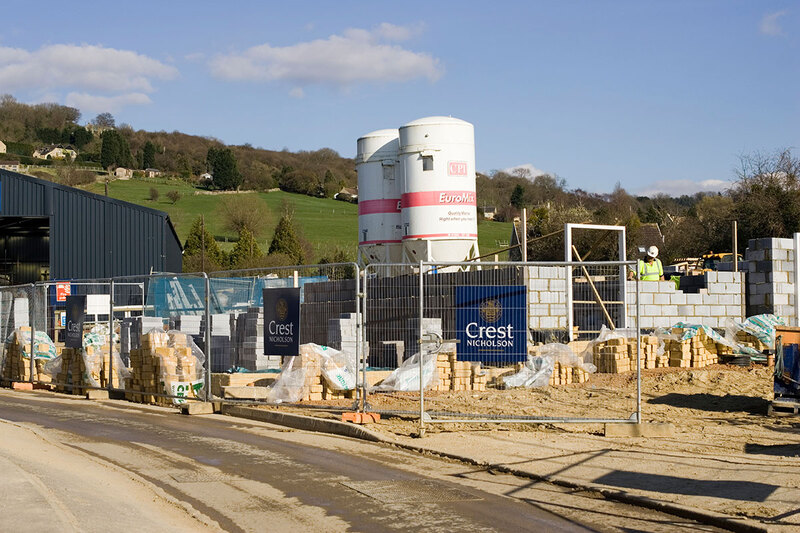
House builder Crest Nicholson is in discussions with lenders to relax its covenants as a result of economic uncertainty.


 House builder in talks with lenders to relax covenants due to economic uncertainty #UKhousing
In a trading update this week, the firm said it expects to see lower profitability this year due to the increase in “macro-uncertainty”.
Crest Nicholson said the ongoing conflict in the Middle East is contributing to the expectation of “a more prolonged higher interest rate environment, renewed cost pressures and a deterioration in consumer confidence”.
It has seen early indicators of this impact, including a reduction in new sales enquiries and visitor levels, as well as land buyers becoming “more cautious in the face of the uncertain outlook”.
“As a result of these early indicators, the group is acting quickly and decisively to prioritise cash and balance sheet strength whilst the period of uncertainty persists,” the trading update said.
Read more

The house builder has revised its guidance based on the assumption that the current economic uncertainty is likely to continue for at least the remainder of its financial year, until the end of October.
It has reduced its sales volume expectations to 1,400-1,500 units, down from 1,550-1,700 units.
As a result of the higher energy costs, the FTSE 250 firm has also “built in an expectation of higher build costs in the balance of the financial year”.
The trading update continued: “The group remains confident that it is well positioned to navigate the economic uncertainty. However, as a consequence of lower expected profitability, it is in the early stages of seeking temporary banking covenant relaxation.
“Discussions with the group’s lenders have commenced and a further update will be provided in due course.”
Earlier this year, the house builder confirmed the closure of a divisional office, triggering around 50 redundancies, as it revealed plans to target the “mid-premium market”.
Martyn Clark, Crest Nicholson chief executive officer, said the firm remains committed to its strategy of becoming a “leading player in the mid-premium housing market”.
He added: “However, it is increasingly clear that the current macroeconomic uncertainty is contributing to the prospect of a more prolonged higher interest rate environment, renewed cost pressures and a deterioration in consumer confidence.
“Therefore, in the near term the right and prudent course of action is to adapt quickly to the challenges presented by the current trading environment and focus on prioritising cash generation and optimising our balance sheet position.
“We are doing what needs to be done to navigate this uncertainty to best position the business to deliver the attractive medium-term opportunity.”
Sign up to Inside Housing’s Development and Finance newsletter
Sign up to Inside Housing’s weekly Development and Finance newsletter, featuring a round-up of business, development and regeneration news and analysis.
Already have an account? Click here to manage your newsletters.
Related stories