Country life
Rural housing enablers can play a vital role in giving communities the homes they need. But with pressure on budgets, the role is under threat. Should we care? Simon Brandon spent the day with Wiltshire-based enabler Carol Southall to find out


Nestled in the lea of Salisbury Plain, Broughton Gifford is a typically charming Wiltshire village. Its high hedges, twisty lanes and soft Bath stone are postcard-perfect - all of which makes the place sought-after and, as such, unaffordable for local people wanting to buy a home in the area.
According to property search engine Nestoria, the average price for a two-bedroom home in the village this year is £180,000 - between eight and nine times the local median household income. It is the same story across the south west as Dr Stuart Burgess, the government’s rural advocate, not for the first time highlighted this year, saying local people throughout England continue to be priced out of their own neighbourhoods (Inside Housing, 5 March).

Source: Simon Brandon
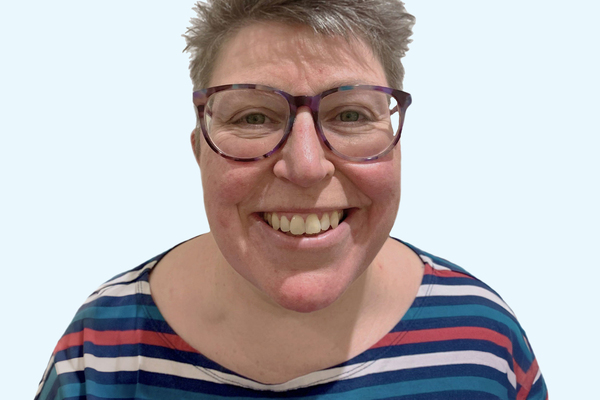
Sally Hawkins, 39, lives with her children in a three-bedroom house she rents from Selwood Housing Association
Sally Hawkins, a 39-year-old mother of three, has lived in Broughton Gifford her whole life. But after her marriage broke up last year, she found herself unable to afford to stay within the community in which she had grown up. ‘I was going to have to move,’ she says.
That move never happened. Today Ms Hawkins rents a three-bedroom home near the centre of Broughton Gifford from Selwood Housing Association in a brand new development of 10 properties. ‘I can’t fault it at all,’ she says proudly. ‘I was very lucky to get this - it would have devastated me if I had had to leave.’
Wiltshire’s rural housing enabler Carol Southall beams. ‘It’s people like Sally that I’m here to help,’ she says. ‘If Selwood had tried to do it itself, it could have taken forever.’
Ms Southall, 55, is one of eight rural housing enablers working in the south-west. Each is tasked with helping to meet affordable housing need. And each is effectively an outside agent who can bring all the parties involved in a development together, facilitate communication between them and, in Ms Southall’s words, keep pushing until things happen.
On a mission
But Ms Southall is one of a dying breed. Rural housing enablers have fallen victim to squeezed budgets and the looming general election makes their future less certain still. Would spending a day with Ms Southall convince me that this is a role worth preserving?
She certainly knows her patch well. Ms Southall grew up on Salisbury Plain and has spent 25 years in housing, the past six in her current job - although perhaps mission is a more appropriate description.
Ms Southall talks about her role with apparently boundless energy and zeal: ‘I know I’m passionate,’ she says, almost apologetically. But it’s that passion that drives her work and since government funding for the rural housing enabler programme was cut off two years ago it has proved an even more vital resource.

Ms Southall is based at Wiltshire’s Rural Community Council, which employs her as the county’s village hall advisor. That takes up half her working week; the other half is now paid for by contributions from housing associations, by consultancy work and by being, she says, ‘very frugal’.
Previously, Ms Southall received £50,000 a year from the Department of Environment, Farming and Rural Affairs, which covered her salary and other costs. Now she gets between £10,000 and £15,000 a year from housing associations and tries to make up the rest of the ‘considerable shortfall’ through consultancy work.
The rural housing enabler’s role is perhaps best characterised by its independence. Ms Southall describes herself as the ‘honest broker’, a phrase also used to explain her role by Paul Walsh, development director at Selwood Housing.
Any new rural development brings several groups together whose agendas might seem to be at cross-purposes: village communities, landowners, planners, those in housing need, parish councils and developers. It’s not surprising that mutual suspicion can creep in and slow the process down.
‘Landowners might think our offer for their land is a bit of a try-on,’ says Mr Walsh. ‘There really is a concern among people there; it’s their pension or their children’s future. But here you’ve got someone who is not an agent for them or for us who can say “this is what your land is really worth”… it’s about reassurance.’
Still, Mr Walsh says that current uncertainty over Wiltshire Council’s housing strategy, amongst other things, means he’s unable to reassure Ms Southall that his organisation will continue to contribute funds to the RHE programme. ‘We don’t know yet,’ he says. ‘We’ll have to look at what is needed in the next couple of years.’
Sticking power
For now though, each new project begins with a housing needs survey. Ms Southall sends questionnaires to each household in a given village, regularly receiving around 30 per cent back - ‘usually from those in housing need and from ‘nimbys’,’ she says with a chuckle. The next step is to apply the glue.
‘I can find the land, I can talk to the landowner, I can talk to a social landlord, I can organise the housing needs survey and I can talk to the parish council,’ Ms Southall says.
Many small affordable developments are built on so-called exception sites - parcels of land that are not earmarked in local development frameworks, but which can be granted planning permission with a few strings attached: the housing must remain affordable in perpetuity and residents must have a local connection. But villagers might not be aware of these conditions and it’s the rural housing enabler who has the authority to provide explanation and reassurance.
‘Because I’m a housing professional, I can answer any questions thrown at me,’ says Ms Southall. Villagers do worry about outsiders moving in, she explains: ‘They say, “What about all the druggies?” and I say “Well you’re not getting any druggies from Bristol. If you’ve got any in the village, you’ll keep them”.’
Community ties
For many villagers, however, a lack of new housing is a much greater worry than unwanted newcomers. Broughton Gifford and Melksham, the closest market town and Ms Hawkins’ likely destination had she moved, are only five miles apart. It’s barely a 10-minute car journey but in the countryside that distance matters. Splitting families and friends can be disastrous for those who depend on each other for care and support. The bus service between Broughton Gifford and Melksham is limited, stopping before 6pm each day - and it was suspended entirely last year as the route flooded regularly during heavy rain, making travel between the two almost impossible.
There are cultural differences between town and countryside, too. ‘We [locals] are very parochial. We’ve got five market towns in west Wiltshire - if you are a Melksham person you don’t want to live in Trowbridge,’ Ms Southall explains. ‘It’s vital to understand these people - [my role] doesn’t work otherwise.’
And ‘these people’ are not, on the whole, opposed to rural development. Nimbyism does exist, but Ms Southall all but shrugs it off. These days, she says, most parish councillors are unable to buy their offspring properties in their villages; rural people understand the need for more houses. And the bottom-up nature of the enabling process, which involves community consultation before planning permission is sought, means local concerns are heard from the beginning. According to Ms Southall, the biggest challenge to rural affordable housing development is, in fact, the planners themselves.
Satisfying planning committees is usually a case of ticking boxes, she explains: is there a bus stop close by, are the shops close enough? But this one-size-fits-all approach doesn’t recognise the fact that rural people may not have the same criteria. ‘You can have a thriving village hall and nothing else there [in the village],’ Ms Southall argues. ‘People look after each other — they all know each other. It works! It’s the people that are important.’
Until planning departments change their requirements, Ms Southall says she will continue to conduct housing needs surveys for villages that she knows will not meet planning criteria. By amassing this evidence of housing need, she hopes to build a case for changing those conditions in the future.
The future for enablers
That future is a murky place for England’s rural housing enablers. Asked whether she is confident about the prospects for the rural housing enabler programme, Ms Southall presses her lips together for a moment.
‘No,’ she say firmly. ‘We need to innovate.’ It is a rare note of pessimism from someone whose job ultimately depends on plenty of optimism for its success. The programme does not feature in the rural policies of either the Conservatives or the Liberal Democrats, and rural housing enablers were conspicuously absent from Matthew Taylor MP’s July 2008 review of rural affordable housing. Meanwhile the latest rural housing initiative, announced by Defra and the Communities and Local Government department in November last year and launched by housing minister John Healey in February, advocates a masterplanning approach to villages rather than the piecemeal developments with which Ms Southall and her colleagues have been concerned (Inside Housing, 26 February).
But Ms Southall still believes in her role, even if the government has changed its focus.
‘You’ve got to remain there for the parishes,’ she says. ‘But we have to work really, really hard to try and achieve it.’ Ms Hawkins, and many others like her, will hope that she does.
Money worries
Although rural housing enablers have been at work since the early 1990s, the scale of the programme was greatly increased in 2001 by the now defunct Countryside Agency.
The core funding provided by the CA - £1.5 million a year until March 2008 - underpinned the enablers’ independence and therefore the trust in them that is so crucial to their efficacy. Local authorities contributed an additional £1.1 million a year to the scheme.
The CA was dissolved in 2006. Its parent body, the Department for the Environment, Farming and Rural Affairs, agreed to keep funding the RHE programme for its originally agreed term. This ended, along with the funding, in 2008.
‘We picked up the shortfall after the demise of the CA - it was always going to be a short-term solution,’ says a DEFRA spokesperson.
The effect on the service was drastic. ‘We really struggle now,’ Ms Southall admits. ‘We have lost a lot of rural housing enablers. There has been a vast turnover due to the funding problems.’ According to Action with Communities in Rural England, there are now 43 RHEs across England compared with 60 two years ago.
In Wiltshire, the local council has provided no funding at all since becoming a unitary authority last year. ‘[In cost cutting terms] I was a quick win,’ says Ms Southall.
Related stories