



You are viewing 1 of your 1 free articles
Domestic homicide: what can housing learn when the worst happens?
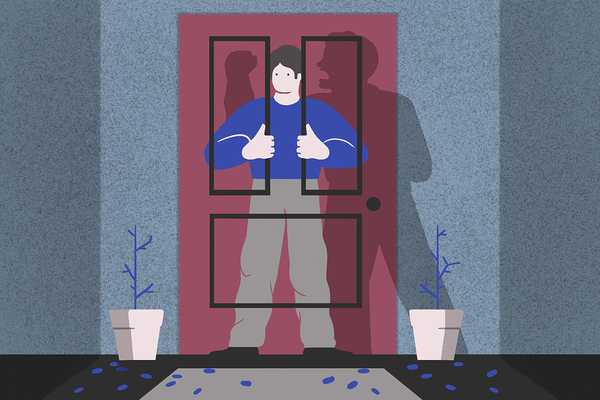
Domestic homicide reviews, which examine cases of murder and suicide that involved domestic abuse, contain vital learning for social landlords. Inside Housing analysed every review since 2017 that contain recommendations for the sector – 76 in total – to pull out the crucial lessons for housing teams. Katharine Swindells reports. Illustration by Bea Crespo


 Domestic homicide: what can housing learn when the worst happens? #UKhousingInside Housing analysed 76 domestic homicide reviews to pull out key learnings for the sector. Katharine Swindells reports #UKhousing
Content warning: this article contains details of murder, suicide, domestic abuse, drug use, and other themes that may be upsetting for readers.
“I am so grateful for the life I have without him… Now I am able to do things I want to do, things to keep me busy and a chance to do the things I dreamt and imagined with all my children, building my own independence.” These were the words of Marie* in July 2014, when she was pregnant and living in a women’s refuge, and her abusive ex-partner Lee* was in prison awaiting sentencing. He had been arrested on suspicion of rape, unlawful imprisonment and threat to kill.
When the police found Marie, she weighed five-and-a-half stone – starved, gaunt and trembling. But in the few months since Lee’s arrest, Marie had been clean from drugs, and was excited about her future and the baby. As she said: “I am looking forward to having my own home eventually, to decorate it and bring up my child in a happy and safe place.”
But Lee was given a suspended sentence and released with no restraining order. Marie stopped engaging with support and health services and four days after the birth, her child was removed into foster care.
Read more
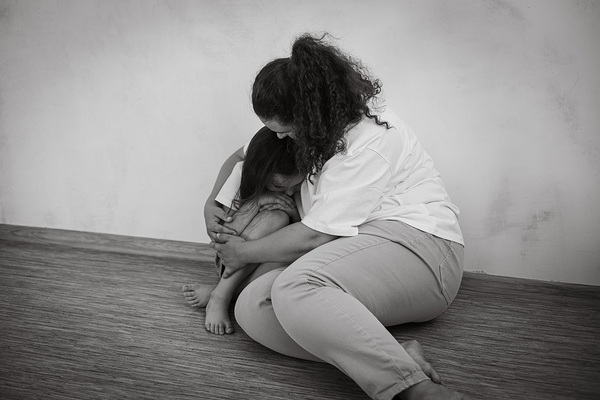

Marie became a Sandwell Council tenant, but while over the years she was flagged for financial assistance, anti-social behaviour and drugs complaints, the council’s housing department did not make the connection that her boyfriend was Lee, the same man who had been charged with abuse against her a few years before. Housing officers were warned that he was violent and aggressive, but did not note the potential risk to Marie.
In November 2018, housing staff assisted the police in a drugs raid on the property, during which weapons were found. But, again, the danger to Marie was not considered. In December 2018, Marie’s sister called the police because Marie had not shown up for their family Christmas. When the police forced entry to Marie’s flat, they discovered her body. She was 33 years old. Lee pleaded guilty to murder and was sentenced in late 2019.
Marie’s story is taken from the domestic homicide review, commissioned by the Safer Sandwell Partnership following her death. Inside Housing read her story as part of our analysis of 76 public domestic homicide reviews to find learnings for the social housing and homelessness sector.
A domestic homicide review is a statutory multi-agency process taken after a death (either killing or suicide) that has, or appears to have, resulted from violence, abuse or neglect by their intimate partner, relative or household member.
Also known as a ‘domestic abuse-related death review’, or DARDR, the review is undertaken by the local community safety partnership with an independent chair to examine all statutory agencies which had contact with the victim or perpetrator and look at the history of abuse. The goal of a review is to identify lessons learned for statutory agencies and reduce the risk of future such tragedies.
The reviews, which are published online, produce learnings and recommendations for, most commonly, the police, adult social care, NHS trusts, mental health services and other organisations. In many cases, the reviews find missed opportunities where social housing providers and homelessness services could or should have acted differently, as is the case with Marie. The goal of this is not to drag up traumatic memories for communities, or to name and shame housing providers, but to identify opportunities for learning.
“Someone’s death is a tragedy, but that learning can be disseminated and embedded to support everybody, to prevent repetition and to highlight good practice,” says Cherryl Henry-Leach, chief executive of the charity Standing Together Against Domestic Abuse, who also acts as an independent chair for domestic homicide reviews.
Out of around 200 public domestic homicide reviews for deaths between 2017 and the present, 76 victims (38%) had been logged as having a ‘housing vulnerability’. Inside Housing analysed all 76 of these reviews. We found that 42% were suicide or an overdose with a history of abuse in the victim’s life and 55% were a homicide, nearly three-quarters of which were intimate partner homicide. More than half of the cases involved drugs or alcohol abuse or addiction by either the victim or perpetrator.
More than three-quarters of the victims were women. Among the 12 homicides of men, the majority of perpetrators were male family members, such as a brother, father or son, and four were killed by a female partner. In all of these four cases, there is evidence that the man who was killed had perpetrated abuse against the woman, or they were both abusive to each other.
We found that nearly two-thirds (49) of cases had lessons specifically for the social housing and homelessness sector.
We categorised these learnings into four key themes:
In this article, Inside Housing will explore each of these themes.
Ms Henry-Leach has been working in the domestic abuse sector for a long time – “what feels like since the ark was built”, as she puts it. First she worked in frontline roles, then later as deputy chief executive of the Advocacy After Fatal Domestic Abuse organisation, and now she is chief executive of Standing Together Against Domestic Abuse.
“As a DHR [domestic homicide review] chair, we’re probably the last people to formally showcase the victim’s journey,” she states. “It’s a huge responsibility, and one that I forever find challenging but also humbling.”
The purpose of a domestic homicide review is, she says, to establish what changes agencies need to make to mitigate the risk of a similar event happening again. As a review chair, Ms Henry-Leach says her role is to help the panel avoid “hindsight bias” and embrace the learnings of the process.
“Having been a frontline practitioner myself, sometimes it’s really hard for practitioners to see beyond your role,” she explains. “So having that experience front and centre when I’m leading on reviews also helps me move away from that blame culture and the hindsight bias.”
Dr Kelly Henderson is co-founder of the Domestic Abuse Housing Alliance (DAHA), a specialist organisation supporting housing providers to improve their response to domestic abuse. She says social housing can play a crucial role in recognising domestic abuse and preventing domestic homicide.
“We’re in the ideal space because we are in people’s properties and we develop rapport with people, they often trust us more than statutory agencies,” she says. “It’s that early recognition that’s required, so if we spot something going on, we’re ideally placed to make a difference.”
1. Organisational awareness and understanding of domestic abuse policies
Two-thirds of the domestic homicide reviews which Inside Housing examined found that the housing organisation involved needed better training, policies and awareness around identifying domestic abuse.
“I’d like housing providers to have the confidence to do referrals on professional judgement, just that gut feeling that things are wrong,” says Nicki Clarke, head of housing at Standing Together Against Domestic Abuse.
This is a key finding across dozens of the reviews, that staff did not use “professional curiosity” to probe deeper and uncover the abuse occurring.
Ms Henry-Leach says there is “silence that is levered over a victim of abuse through coercive control”, meaning training is crucial to enable staff to recognise signs of potential domestic abuse, even if the victim is denying or minimising it.
Training would also help housing professionals to understand fear, says Sarah Ellis, a barrister and forensic criminologist who provides training on domestic homicide to housing providers. Domestic abuse victims do not only experience immediate fear but also constant chronic fear, she explains, which affects the way they might interact with professionals.
“One of the obstacles or challenges as housing professionals is that victims can be not just unhelpful and uncooperative, but they can be openly hostile,” Ms Ellis says. “It’s important for housing professionals to understand that’s actually a really normal, natural response because this person is living in chronic fear and is trying to maintain their own safety.”
Amy’s story
Amy was killed by her partner at her home in October 2018.
“Amy was a funny girl, bubbly and fun to be around. She loved her children,” her family shared with the domestic homicide review, which was carried out by the St Helens Community Safety Partnership.
How was the risk to Amy missed? What were the learnings for the housing provider?
Click here to read Inside Housing’s analysis of Amy’s story.
Staff should be able to ask questions sensitively, be aware of what support is available both internally and externally, and the organisation should have the proper policies and reporting mechanisms in place for staff members who are concerned about a tenant. This should not only be for housing officers, but across all staff who interact with residents.
“It’s often gas safety contractors or repair guys who see something, so it’s really important they have very clear pathways for reporting these things,” says Ms Ellis, who provides training on a tool called the Domestic Homicide Timeline. “They need to have that freedom to say, ‘This is what I saw’, without any fear of criticism of sticking your nose in, or being fearful that they got the wrong end of the stick. It’s better to report it and be wrong, than not to report it at all.”
The domestic homicide timeline, Ms Ellis says, is a very useful framework for professionals trying to tackle domestic abuse, including in housing. Based on analysis of hundreds of intimate partner homicide cases, the timeline sets out eight psychological stages of a perpetrator, which lead to homicide.
The timeline begins with the perpetrator’s pre-relationship history of abuse, into a fast-developing relationship and the beginning of the coercive control. After a trigger threatens the control, there is an escalation, which can then move to planning and carrying out a homicide.
Click here to read our explainer on the Domestic Homicide Timeline.
The police and other services may not see the victim until stage three or even stage four of this timeline, when the relationship is dominated by abuse and control, Ms Ellis explains. “But housing professionals have a unique position because they can get in right at stage one, which most professionals can’t.”
Pre-tenancy checks and knowledge of local households may give professionals that vital insight.
Understanding this timeline is also crucial, says Dr Henderson, because it also teaches housing providers that when the victim has been separated from the perpetrator, it does not mean that the risk has passed.
“You might think, ‘Oh great, someone’s had a management move. Job done,’ and then we are kind of easing off the gas because we think, ‘Now they’ve left that abusive person, they should be really safe,’” she says. “But in fact that is when the danger is really high because that is when it moves to the escalation and homicidal ideation stage.”
2. Cross-departmental awareness and information-sharing
Training staff to better understand domestic abuse only goes so far. The domestic homicide reviews also demonstrate the need for strong communication and information-sharing within the housing provider, such as between the anti-social behaviour, arrears and eviction teams. More than a third of the cases Inside Housing analysed cite this as a learning.
Often, domestic abuse victims are not recognised as such, explains Louisa Steele, multiple disadvantage and homelessness programme manager at Standing Together Against Domestic Abuse. “They’re not really seen as survivors – they’re seen as addicts, they’re seen as problems. They’re not really seen as credible victims.”
Such was the case of Marie, whose story opened this article. The domestic homicide review said: “There was not enough professional curiosity in relation to Marie.” Marie was flagged to housing services multiple times as needing financial assistance.
In the summer of 2016, a housing officer visited the property and raised concerns that Marie did not have any gas and did not have a cooker or washing machine. The officer accepted Marie’s explanations that she was using the local laundrette and eating sandwiches and fast food. Later that summer, an ambulance was called to Marie’s home for an accidental overdose.
When Marie applied for a housing transfer, despite previously disclosing that she was a victim of domestic violence, the landlord did not make the connection that her current relationship was with the same man who had been charged with abuse against her a few years before. Lee’s criminal convictions were not noted, which would have caused more consideration of his tenancy application.
When complaints were made against the couple around drugs and anti-social behaviour, the review found that “she [Marie] was treated as a perpetrator of anti-social behaviour, rather than being considered a victim of domestic abuse”.
According to the review, in the years following Marie’s murder, Sandwell Metropolitan Borough Council’s housing and communities directorate started a rolling training programme to assist frontline housing staff to recognise the signs of domestic abuse. In June 2019, the housing and communities directorate achieved accreditation with DAHA. Sandwell Council did not respond to Inside Housing’s request for comment.
“I’ve worked on a couple of reviews where anti-social behaviour has been seen, but actually it’s been domestic abuse,” says Ms Henry-Leach of Standing Together Against Domestic Abuse. “Why have those rent arrears accrued, is there economic abuse? It’s important that we start picking up those subtle dynamics.”
A crucial element of this is in record-keeping, Ms Henry-Leach states, making sure that all case notes are thorough and avoid assumptions or stigmatising. “It’s about making sure it’s clear and avoiding language that can impact on how somebody else who’s picking up that case a few weeks later will perceive that victim,” she explains.
“So rather than, ‘Victim not willing to engage’, flip that narrative to ‘She felt unable’ and that could, in my professional opinion, be a result of coercive control’.”
Sajwa’s story
Sajwa was killed by her brother at his home in January 2019. The review into her death, carried out by Tower Hamlets Community Safety Partnership, highlighted that a better cross-organisational approach could have highlighted warning signs.
Her partner Rahim shared with the domestic homicide review that Sajwa was “very, very intelligent”, caring, compassionate, “very strong” and “responsible”. Sajwa took on a lot of responsibility as she looked after both her brothers because she was the eldest sibling.
Click here to read Inside Housing’s analysis of Sajwa’s story.
3. Multi-agency working with local services
In 43% of the cases Inside Housing analysed, the housing provider did not engage in strong multi-agency working with the police, NHS and other services.
“No one can truly help the survivor unless you’re all working together, sharing information and wrapping around,” says Ms Clarke of Standing Together Against Domestic Abuse. “It’s about doing your bit, so that’s key to all of the work that we do with the providers.”
In fact, some of the reviews found that despite multi-agency involvement, the housing provider had no awareness of the risk to their tenant at all.
For example, there is the case of Peter*, whose family described him as “a quiet man with a big heart, who would do anything for anyone, but this left him open to manipulation by people he considered friends”.
In his late 50s, Peter had a long history of alcohol dependence, as well as psychotic symptoms and dementia. He was receiving regular support from the NHS high-impact substance misuse team, with weekly home visits.
This team identified his poor self-care and that he was regularly a victim of cuckooing. During one home visit, Peter told his care co-ordinator that a man had been staying at his flat for the past two months, kept the only front-door key around his neck and was sleeping in the only bedroom. Three days later, Peter was found dead in his home, murdered by that man.
Despite the high level of involvement by the council and other support services, Peter’s housing association, ForHousing, did not know about his situation. While this may indicate a need for greater engagement by housing officers, the review panel highlighted that the community mental health team missed an opportunity to actively engage with housing.
The domestic homicide review concluded: “Involving social landlords is useful in these situations and… might potentially have improved co-ordination of services, as there is support and help available that was not considered in this case.”
“Domestic homicide reviews, and all reviews relating to the safeguarding of our tenants, provide important learning for all parties,” says Martyn Hague, executive director of customer at ForHousing.
Amber’s story
Amber died by suicide in September 2021, following abuse by her partner in the homeless accommodation where they both lived.
Amber’s father told the review into her death: “Amber was a free spirit and loved all music… from classical to drum and bass. She always had aspirations… she talked about wanting a career in clothes and fashion design.”
The review by the Safer Somerset Partnership looked at whether a multi-agency approach could have recognised the risk to her life.
Click here to read Inside Housing’s analysis of Amber’s story.
ForHousing has recently achieved the DAHA accreditation, which is a structured process designed to improve landlords’ responses to domestic abuse. Mr Hague says the accreditation process “found that we were active participants in safeguarding and multi-agency information-sharing forums, and have strong links with external partners”.
“We’ve got eyes and ears in our properties, which would be really beneficial for other partners,” says Dr Henderson, co-founder of DAHA. “But often [housing] is only brought to the table when it’s a crisis point when, actually, this has been going on for a year.”
4. Understanding demographic, cultural or personal factors that might impact a victim seeking help
Experts say organisations should also think about other factors that might affect how a victim or perpetrator interacts with their service, such as ethnicity, nationality, LGBTQ+ identity, age or disability.
Inside Housing’s analysis found that in one in seven of the domestic homicide reviews, the victim was Black, Asian or from a minority ethnic background, including Eastern European. A number of cases also featured fears around immigration control or struggles with a language barrier. In a fifth of cases, the victim was part of another marginalised demographic, such as being disabled or LGBTQ+.
Twelve per cent of the learnings for the housing sector specifically related to the victim or perpetrator’s marginalised identity.
For example, Dianne*, a woman in her 70s, presented to Scarborough Council in 2018 as needing help with re-housing due to a breakdown in the relationship with her “friend” Margaret, with whom she held a joint tenancy. Mixed records about the fact that Margaret was Dianne’s partner meant the case was not identified as domestic abuse.
The domestic homicide review found that because both the victim and perpetrator were older women in an LGBTQ+ relationship, signs pointing to the imminent risk to Dianne’s life may have been missed. When Dianne told officers and agencies that she did not think she was at risk of physical danger, she was taken at her word, which she might not have been if the perpetrator were a man.
Margaret killed Dianne less than four months after Dianne first approached Scarborough Council.
Scarborough Council no longer exists, so Inside Housing reached out to newly formed North Yorkshire Council, which said it is working towards the DAHA accreditation.
Olga and Viktor’s story
Olga and Viktor were murdered by their son at their home in May 2019. Why did no one realise the danger they were in?
“Olga and Viktor were very kind and gentle,” Sofia, who was a close friend, told the Safer Kensington and Chelsea Partnership as part of the domestic homicide review.
She said: “Our children reminded me of when there were moorhens in the pond with five chicks, Olga and Viktor went to feed them daily. One day a chick was missing, and they searched and found it in the filter and brought it back. The chick lived after that.”
Click here to read Inside Housing’s analysis of Olga and Viktor’s story.
Domestic abuse policies and processes must allow for the way people with different identities and backgrounds might experience domestic abuse in different ways and experience different barriers when seeking support. Staff must also be mindful of the ways in which unconscious bias might affect their interactions with domestic abuse victims.
“We should all, as professionals, be responsible to identify abuse or the potential of abuse occurring,” says Ms Henry-Leach. “You need an open mindset to think about, ‘Is this potentially abuse?’ And then if it could be, ‘How do I have that sensitive conversation?’”
*Domestic homicide reviews usually use pseudonyms for the people involved in the case to ensure confidentiality. Inside Housing has used the same names, as these are often chosen by the victim’s family. In the case of Dianne, Dianne is the victim’s real name, used in the review as specifically requested by her family, as they felt strongly that they would like her to be remembered.
The perpetrator is identified by a pseudonym. In the case of Marie, the perpetrator was merely referred to in the review as ‘the perpetrator’, so Inside Housing assigned the pseudonym ‘Lee’ to avoid confusion.
Sign up to Inside Housing’s Best of In-Depth newsletter
Sign up to Inside Housing’s Best of In-Depth newsletter, a weekly compilation of our best features and comment.
Already have an account? Click here to manage your newsletters.
Related stories