Driven to despair
When 33-year-old Suzanne Dow killed herself in 2011 after years of abuse from her neighbour, major faults in the way local authorities dealt with vulnerable tenants were uncovered. Two years later, Keith Cooper finds out whether any lessons have been learned


‘He pointed at me, calling me a “f***ing slag” and said: “Suzie you’d better f***ing watch yourself”.’ So begins an obviously anxious email from Suzanne Dow, alerting a housing officer to yet another verbal attack from a tenant of a neighbouring social home. ‘I do not feel safe in my house,’ she continues. ‘I am at my wits’ end.’
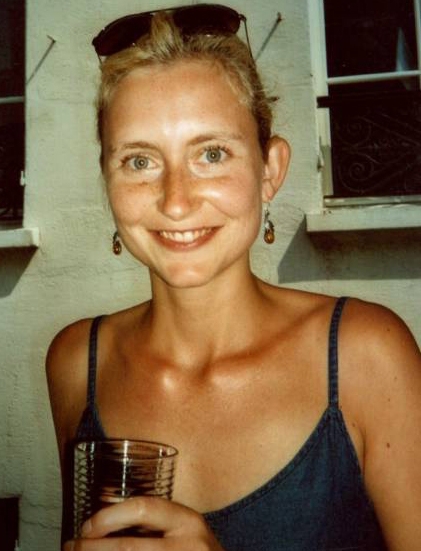
Tragically, this final phrase turned out to be all too prophetic. In just under a month, Dr Dow, an Oxford-educated academic, much loved by colleagues and friends, killed herself by overdosing on pills. She was 33.
At an inquest this year, the coroner laid into that housing officer’s employer, Broxtowe Council, in Nottinghamshire. Its efforts to deal with Dr Dow’s neighbours’ persistent anti-social behaviour – and that of visitors to the house – were condemned as ‘idle, empty threats’ as she ordered the authority to take action to avoid similar tragedies.
Immediately after the hearing, Broxtowe insisted it only discovered ‘the extent of Dr Dow’s vulnerability’ – she had a previous history of mental health problems, including suicide attempts – two weeks before her death on 4 October, 2011. Emails released to Inside Housing under the Freedom of Information Act, however, raise serious questions about the authority’s account of events leading up to her suicide.
Our investigation also uncovers other worrying and far-reaching findings. Despite big pushes to better identify vulnerable victims after the high-profile suicide of Fiona Pilkington in 2007, good practice remains patchy among both social landlords and police. Councils’ and housing associations’ performance has been largely unchecked since 2010. And reports prepared for new police and crime commissioners have uncovered case after case of distressed ASB victims, forced to endure years of suffering because of ‘foot-dragging’ landlords.
So how should councils and housing associations detect the vulnerability of ASB victims? And what lessons can and have been learned from the Suzanne Dow case?
Fighting to be heard
One very clear lesson is that ASB victims still struggle to get their concerns and state of mind taken seriously, despite the post-Pilkington reform. ASB should not be dismissed as ‘trivial’, a Home Office report from 2011, states. ‘[It] has a huge impact on victims’ quality of life.’
Dr Dow, a homeowner, had been plagued by persistent ASB by neighbours from a next-door property since moving into her home in June 2008. Nottinghamshire Police had twice arrested and charged one of her neighbours with threatening behaviour. When telephone wires to her house were cut in 2010, police dropped the case after two weeks after failing to find witnesses.
Her contact with Broxtowe Council escalated in early August 2011, almost two months before the authority claims it became aware of the ‘extent of her vulnerability’ via a letter, received on 21 September. But emails seen by Inside Housing show Dr Dow had alerted housing officers to her vulnerable state no fewer than six times prior to this official recognition.
Numerous complaints
In her first email to a housing officer on 3 August, Dr Dow complains of abusive language from her neighbour, stones thrown at her open window and shouts of ‘when I found what c**t has called the police they’ll be sorry’. It ends with the explicit alert: ‘I feel very vulnerable and desperate about this situation’.

The second email is sent two weeks later, while she still awaits a response. ‘As you know, I have been despairing of this situation. Every time I set foot [in my own garden] I am subject to a barrage of abuse. Could you at least acknowledge receipt of my emails?’
Her tone becomes even more desperate in early September. ‘I really don’t think I ought to have to put up with this for any longer,’ she says on 3 September. A week later: ‘I am at my wits’ end’. Another one ends: ‘My life is being made unbearable by this situation and it is having a serious effect on my health, [both] mental and physical.’ Such language should have immediately triggered alarm bells and a thorough assessment of her vulnerability status, one victim support expert says.
Just one day later – a week before official recognition of the extent of Dr Dow’s difficulties – the authority’s housing officer directly acknowledges the seriousness of her suffering in an email. ‘I understand that this situation is causing you unnecessary distress and anguish,’ it says. Her case had even been discussed with management, the officer adds in an email. This was no case of an isolated officer acting alone.
So why did Broxtowe fail to respond to the alarm bells clanging in these emails?
Passing the buck
In its response, the authority appears to play down its responsibility by pointing out Dr Dow’s previous mental health problems. The inquest revealed she had been abused as a child, previously attempted suicide twice, and had been sectioned, Broxtowe says. Dr Dow had also suffered a recent relationship break-up, according to Nottinghamshire Police. ‘The coroner has not found that the council’s actions led to the suicide but rather it was Dr Dow’s unfortunate personal history that was the direct cause of death,’ a spokesperson for Broxtowe says.
The authority does admit, however, that it had been unaware of Dr Dow’s mental health problems until the inquest. Despite repeated and explicit emails alerting the authority to her vulnerable state, no proper assessment of her situation appears to have been carried out. The importance of such checks were one of the chief lessons supposedly learned in the fallout from the 2007 Fiona Pilkington case. Such assessments are now widely regarded as essential practice and could well have picked up her personal and mental health problems.
Since Dr Dow’s suicide, Broxtowe claims to have introduced ‘wide-ranging’ changes. Housing officers now have extra time, training and a new ‘matrix’ to help them identify vulnerable people. A computerised recording system has been installed to track ASB incidents. Residents can expect an ‘efficient service’ which prioritises the ‘issues of vulnerable people,’ it said in a statement.
Such improvements are commonly triggered by tragedies such as this. Our investigation however indicates that social landlords and police forces have some way to go if the risk of more tragedies is to be reduced. A wide-ranging review of ASB by Nottinghamshire Police last year uncovered case after case of vulnerable victims let down by ‘foot-dragging’ landlords.
A common problem
Many bore striking similarities to Dr Dow’s situation. Immediate neighbours were found to be principal perpetrators of bad behaviour including loud music, foul language and harassment. Victims’ health became badly affected, leaving them ‘feeling suicidal’ or ‘suffering long-term depression,’ the review states. ‘Many cited lack of sleep, feeling house-bound and feelings of hopelessness.’
The reviewers were taken aback by the victims’ spontaneous outpourings of grief during review hearings. ‘A number of them became very emotional, crying and needing to leave the room before being able to recompose themselves,’ the official report states. ‘There were others who were highly emotional, raising their voices almost in despair of their circumstances and lack of hope.’
In one case, a victim only found peace by moving home after 12 years of poor sleep and bad health brought on by her neighbour’s ASB. Such an extreme means of escape is not an option for all victims, according to Olwen Edwards, divisional manager for Nottinghamshire at Victim Support, who was involved in the review.
‘If you are in council housing you have the option to be moved but in private housing you have to sell your house.’ And even then, sellers can become trapped in their homes, says Ms Edwards, as sales are effectively blighted by legal obligations to warn buyers of problem neighbours.
No escape
Such was Dr Dow’s situation, according to an official complaint letter she sent Broxtowe the month before she died. ‘I would move house if I could, but have already been advised by an estate agent that my house is all but unsaleable given the neighbours,’ it stated. ‘I find this situation to be intolerable.’
With all apparent means of escape blocked off, Dr Dow believed her only hope was for her next-door neighbour to be evicted. This idea was resisted by the housing department, which stuck slavishly to its step-by-step ‘traffic light’ warning system. ‘We only apply to the court for possession of a property when every other single attempt we have tried fails,’ a housing officer told Dr Dow in an email, five days after police had arrested and charged a neighbour for threatening behaviour for the second time.

Suzanne Dow said she was at her wits’ end in an email to Broxtowe Council on 10 September 2011, less than a month before she killed herself
‘As a housing provider, we are here to provide homes for people, not to take them away unless the circumstances are severe,’ the email adds.
But not every social landlord is shy to take tough action when vulnerable residents are at risk. Richmond Housing Partnership, as part of a government sponsored trial, has developed what it claims to be a truly ‘victim-centred’ approach which is applied to every complaint (see box: the Richmond approach).
All new callers are immediately assessed on a ‘risk assessment matrix’ and automatically labelled vulnerable when the ASB is personal or repetitive, the textbook hallmarks of vulnerability. These victims are then interviewed in their homes by officers. Case histories are reviewed and their vulnerability and support networks checked.
This more intensive approach to vulnerability checks appears not to be the norm among social landlords or the police, however. Eamon Lynch, managing director of the Social Landlords Crime and Nuisance Group, admits RHP is at the ‘upper end of the curve’ of good practice. Just 30 out of 300 large, general needs landlords have put their vulnerability assessments through his group’s accreditation service.
Exactly how well social landlords perform on vulnerability checks is, however, a so-called ‘known unknown’. No organisation has kept track of its performance in this area since the government axed housing inspections in 2010. It is now ‘nigh on impossible to get a picture across the sector’ of how well social landlords identify vulnerability, Mr Lynch admits. ‘The Broxtowe example is clear evidence that this is something that needs to be continuously pushed and developed,’ he adds. The otherwise well-respected survey of landlords’ ASB performance by consultancy Housemark includes no measure of vulnerability detection or assessment, despite recognising its relevance.
By contrast, scrutiny of the police service has increased and found good reason to continue. In 2010, the Stop the rot report by HM Inspectorate of Constabulary admitted to a series of ‘systemic problems’ in the way the forces tackled ASB. Since then each force’s performance has been subjected to rigorous checks. This first found just 16 out of 43 forces effectively identified vulnerability.
Little improvement
But despite a massive push, the majority of forces across England and Wales are still failing. The inspectorate’s latest commissioned assessment from this year ranked Nottinghamshire, where Broxtowe is based, as one of seven which are ‘poor’ at pinpointing vulnerable complainants. The majority of 32 ranked ‘fair’, and just two out of the 43 were found to be ‘excellent’.
With such a mediocre performance in the police service and no one keeping tabs on the landlords, the chances of avoiding another ASB-related suicide look slim.
If the string of ‘wits’ end’ pleas of a highly articulate academic cannot convince her local authority, what chance does any one else have? At times, the clear window of opportunity will be muddier and narrower than the nine weeks of explicit email correspondence on which Broxtowe failed to seize.
As Victim Support’s Ms Edwards advises: ‘If you don’t listen to people when they indicate they are at their wits’ end, you may miss your opportunity to get them back from the abyss.’ For when the vulnerable get serious about suicide, they stop complaining.
The Richmond approach
One of the chief difficulties of taking legal action against so-called ‘neighbourly’ anti-social behaviour is gathering evidence.
Richmond Housing Partnership has devised a clever method of dealing with this: by carrying out a ‘risk assessment matrix’ on each victim. These create quantifiable accounts of the ASB’s impact.
‘It is very useful for us if we are going to court for an emergency injunction application,’ says Andrew Nowakowski, anti-social behaviour advisor at RHP. ‘The judge has to take into account offending behaviour’s effect on the victim.’
Using this system, the partnership has secured emergency injunctions in 24 hours to temporarily ban anti-social tenants from their homes.
What’s more, RHP has saved itself thousands on lawyers’ bills by training its housing officers to secure the injunctions themselves.

Related stories