You are viewing 1 of your 1 free articles
Obituary: Alan Kilburn
“He always insisted to tenants that they lived in ‘our house, but your home’”: James Tickell and Matthew Kilburn pay tribute to Alan Kilburn, Matthew’s father and a long-standing chief executive of Home Group, who passed away last month


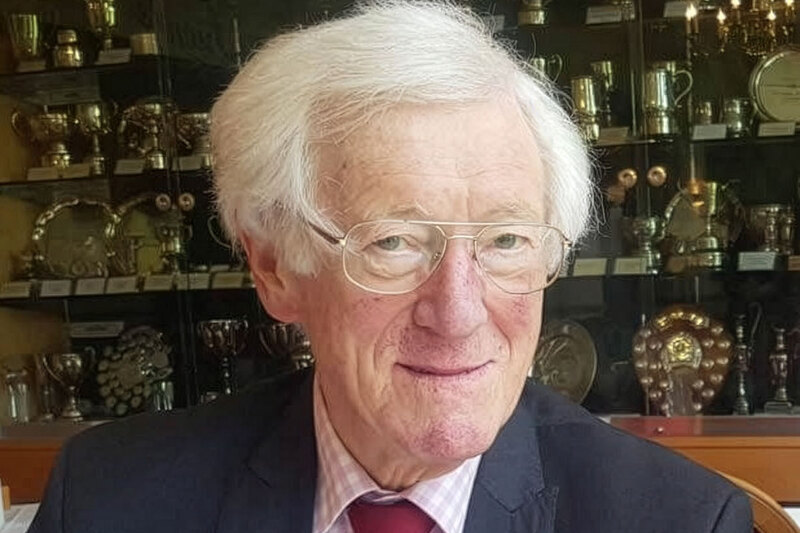 Obituary: Alan Kilburn #UKhousing“He always insisted to tenants that they lived in ‘our house, but your home’”: James Tickell and Matthew Kilburn pay tribute to Alan Kilburn #UKhousing
Alan Kilburn died on 9 September 2025, aged 89. He enjoyed a career of seven decades in social housing, during which he became one of the most influential people to shape the sector.
Alan was the eldest of three children of Edward (Eddie) Kilburn, a labourer, and Ethel, née Doidge, a housekeeper and cleaner. Alan was born on 15 April 1936 in Old Shotton, County Durham, and grew up in the small lodge of Shotton Hall.
Later, his father became a stableman at East Durham Co-operative Dairies and the family moved to a dairy house in the nearby village of Wingate, where Alan attended Wellfield AJ Dawson Grammar School.
At the end of 1952, Alan joined the housing department of Peterlee Development Corporation. He began training in housing management the following year.
His propensity for teamwork was nurtured at Peterlee and in the many sports he played in his youth and afterwards, especially cricket, football and rugby, as well as table tennis and golf.
Read more
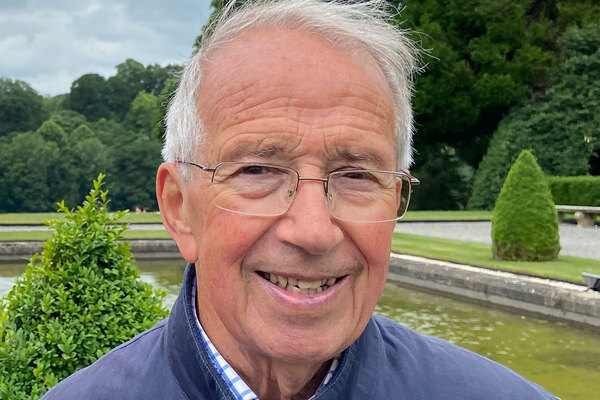
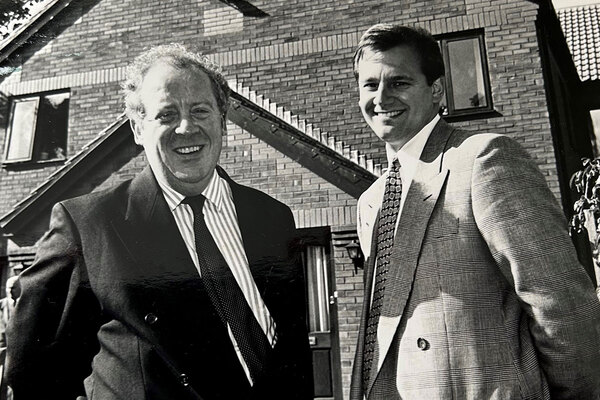
Alan was a local preacher in the Methodist Church for many years. Through the church, he met Doreen Gratton from Thornley, another village in County Durham. They married in 1963.
Alan then worked successively as a housing manager at Ashington, Knottingley and Felling urban district councils before joining Newcastle upon Tyne City Council as assistant director of housing in 1969.
He was recognised as a strong communicator, making public appearances to explain major redevelopment projects, such as the Byker Wall.
In 1973, he joined a housing association for the first time, becoming northern regional director at North British. In 1974, he returned to local government as deputy director of housing at Nottingham.
In 1976, Alan returned to the North East of England as chief executive of the North Eastern Housing Association (NEHA) and its sister organisation North Housing Group (NHG). NEHA had been set up in 1935 to provide housing for working-class people in deprived areas of the North East.
NHG took advantage of powers to buy and develop land granted to associations by the Housing Act 1974. In 1980, the two organisations merged into North Housing, which was then the largest housing association in Britain.
Alan led North Housing in a series of major regeneration projects, including the renovation of Georgian terraces in the St Thomas district in Newcastle city centre.
Alan always insisted to tenants that they lived in “our house, but your home” – an attitude which underpinned his relationships with tenant and community associations.
Alan also served for several years at the Chartered Institute of Housing. He was president from 1982 to 1983 and established strong connections with the institute’s branch in Hong Kong.
He contributed to the Duke of Edinburgh’s Inquiry into British Housing in 1985, and later introduced Prince Philip to tenants at Deckham in Gateshead.
A major challenge for Alan at North Housing was the drastic reduction of government grants during the 1980s. His response to an apparently insurmountable barrier was always “we will find a way”. He led North Housing as it raised £65m on the stock exchange, the first association to raise private finance to support social housing.
This pioneering, and at the time controversial, step opened the way for the wider private funding of housing associations, which now stands well in excess of £120bn, enabling the creation of new homes for many hundreds of thousands of people in need across the UK.
It also encouraged North Housing to expand beyond its roots in the North East and Cumbria, changing its name to Home Group in 1995.
As well as these professional successes, those who worked with or for Alan remember his kindness to them and his support for their own personal development. When things went wrong, as they sometimes must do, he was never one to point the finger of blame; rather he would focus on sorting out whatever the difficulty was.
He was always at ease talking with tenants, service users and frontline staff. His leadership style was based on humility and listening, never on ego or grandstanding.
Alan will surely stand out as a visionary and a truly kind leader. Countless thousands of people live in warm, decent homes as a direct result of his life’s work. Many hundreds of former colleagues remember him with great respect and affection.
Alan was appointed OBE in 1990. He retired in 1998, but remained active as a non-executive director at commercial house builder Barratt, a board member of the North of England Civic Trust and the Northern Rock Foundation. From 2003 to 2010, he was chair of housing association William Sutton Trust, subsequently Affinity Sutton.
Alan was one of the founders of Azure Charitable Foundation, a charity established in Cramlington, Northumberland, to provide training and employment opportunities for disabled people. He only retired as vice-chair in 2022. By this time, he was caring at home for his wife Doreen, who had been diagnosed with Alzheimer’s disease in 2014, with the support of his children Matthew and Jessica.
He is survived by wife Doreen, children Matthew and Jessica, and his sister Margaret.

Related stories