You are viewing 1 of your 1 free articles
Passport patrol for renting a home
Midland residents will soon have to produce passports and immigration documents in order to rent a home in the private or social rented sector. Dawn Foster looks at how this will hit vulnerable tenants and social landlords


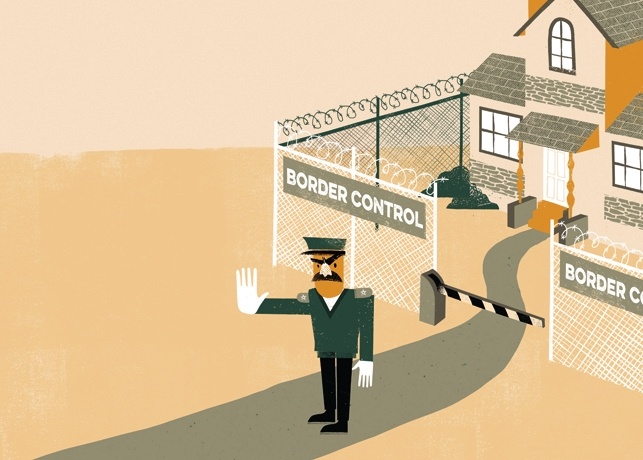
Source: Chris Madden
From 1 December, tenants looking to rent in the private rented sector, or in housing associations through councils, in five parts of the Midlands will be in for a surprise - before they can collect the keys for their new flat or house, they’ll need to produce their passport or immigration documents. The Home Office is piloting a scheme in Birmingham, Dudley, Wolverhampton, Walsall and Sandwell that will require landlords to check the immigration status of new tenants - or face fines of thousands of pounds.
The five areas, the Home Office says, were chosen because of their demographically diverse population. If it works in the Midlands, it should work anywhere in the country, the argument goes.
Once the pilot begins, landlords will be required to check documentation before finalising a let – this could be a British passport, or immigration documentation. The Home Office has set up a helpline and an online form that can be submitted with tenant details if the landlord suspects they do not have a right to remain in the UK. The Home Office says it will respond with more details to each submission within two days. Landlords will be required to keep copies of the documents on file for one year after the end of the tenancy. Landlords who are found to have let to an undocumented migrant will be fined up to £3,000 per tenant.
So should landlords be doing work that ordinarily falls to the UK Border Agency? And how is the pilot likely to affect the housing sector?
Paper trail
Since the pilot was announced in early September, many people have expressed concern about the unexpected or indirect consequences the scheme could have.
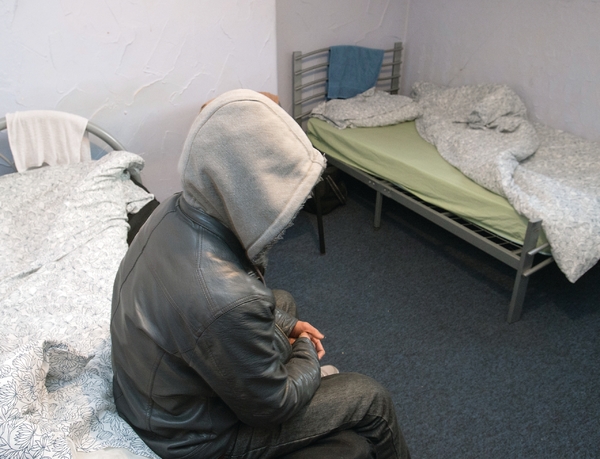
Homeless people, some of the most vulnerable in society, often lose track of their documents and identification. Leading haphazard and dangerous lives, many homeless people have lost passports, driving licences, and even documentation that confirms indefinite leave to remain in the country.

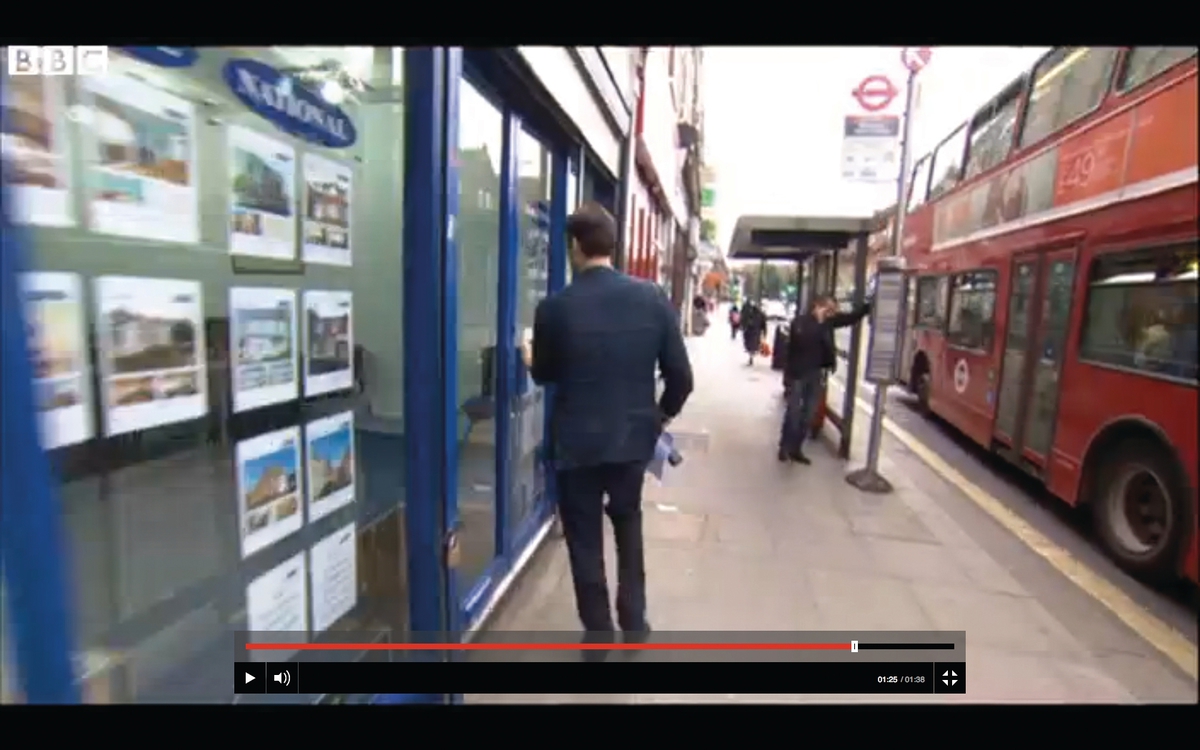
A BBC London documentary uncovered racial discrimination in the private rented sector
Matt Downie, director of policy and external affairs at homelessness charity Crisis, says: ‘It is hard enough for homeless people to find a place to live and we are concerned that asking them to prove their immigration status to landlords could make matters worse.
Homeless people’s documents often get lost or stolen during periods of moving around or when sleeping rough and replacements can be expensive. In today’s high pressured rental market, landlords are unlikely to wait for a tenant to produce the required documents, choosing instead to rent to someone who can immediately provide the evidence.’
Additional expense
To replace a British passport costs £72.50 – to replace a British passport when you have no fixed address, an individual needs to pay for the one day express service, since they can’t have it delivered to a ‘home’. That service costs £128, with a set of passport photos £5 on top, not including travel to one of the seven regional passport service centres dotted around the country.
That sum represents a week’s worth of rent for a struggling homeless person, £130 in the Midlands according to a 2013 survey by estate agency chain LSL Property Services,. It’s also a sum that is out of reach for a lot of individuals on the lowest incomes. The government have applied exemptions for hostels and emergency shelters, but homeless people could fall between the gaps as they try to move from temporary accommodation to a more secure tenancy. According to data from the 2011 census, 19% of adult Britons do not own a passport, accounting for 9.5 million people.
‘We welcome measures to make it easier for people to prove their identity, as well the exemptions for hostels and emergency shelters,’ Mr Downie says. ‘However, more needs to be done to protect homeless people and we will be working closely with the government to make sure this happens.’
But there are other people who may also find it difficult to rent when these regulations come in. BBC London screened an undercover investigation into the private rental market in 2013, and found that black and Asian tenants who approached letting agents were told flats were already let, or that the estate agent had no suitable properties. The same investigation showed letting agents agreeing to only refer white British tenants if the landlord requested this.
There is concern in the sector that landlords who are told they will face legal action if they are found to have let to an individual without indefinite leave to remain are more likely to avoid tenants who may expose them to this risk. In turn, that means they are more likely to let to British tenants, and that racial profiling could become more common.
Discrimination risk
Chartered Institute of Housing (CIH) policy adviser John Perry says: ‘We’re concerned that this measure will make it much harder for non-British people to access housing even when they have a legal right to live in the UK.
‘Checking immigration status is complicated so landlords may shy away from letting to anyone they believe not to be British. Discrimination laws will not protect these people.
‘We are particularly concerned about the impact on people who rely on private renting. For many people, private renting is the only housing option, and if this is removed homelessness and destitution may follow. In trying to take a stance against illegal immigration, the government could cause significant housing problems for people who are here legally.’
In theory, the pilot shouldn’t directly impact on housing associations. But in practice, many are worried that the scheme will have an impact on housing throughout the region, and that housing associations will be expected to pick up the pieces. ‘We’ve always done the tenancy checks, with passports or birth certificates. What worries us is the potential increase in homelessness. How will this impact on the services local authorities offer? So we’ll be monitoring homelessness and destitution with the council,’ Ravinder Kaur, community cohesion manager at 30,000-home WM Housing says.

A BBC London documentary uncovered racial discrimination in the private rented sector
In social housing, the duty to check immigration status should fall to the council that refer tenants to associations. It’s unclear what will happen, should the council fail to check biometric passes and passports before referring, however
Ms Kaur also points out that if more people in the Midlands are refused housing in the private rented sector, destitution will increase, and the strain on housing association and council waiting lists will ramp up homelessness rates in the region. ‘It’s a double-edged sword. If you’re a rogue landlord, you’ll turn a blind eye. Our concerns are about destitution that can result from this. As a large housing provider, we do a lot of work locally to help homelessness, providing sleeping bags, working with faith services. But we’re worried this may impact on community cohesion especially in the winter months. People won’t just go underground, they’ll go elsewhere if they’re not going to get rehoused. So we’ll need to see what happens.’
A positive step
Other housing associations are less concerned, though. ‘As a registered provider we have always undertaken these checks so this is nothing new for us. We have always wanted to ensure that anyone taking one of our tenancies has a legal right to do so and if they do whether they can sustain it,’ says David Taylor, deputy director of customer and communities for Midland Heart. ‘We think it is a positive step that private landlords are also required to make these checks as it is an added check and balance to prevent people being exploited by landlords that offer sub-standard homes and it will mean that vulnerable individuals will be directed to the right services to get the help and support they need.”
Housing and homelessness has become an increasing problem in the regions marked for the pilot.
Increasing pressure
Sandwell Council recently lost a court case defending their revised rules on council tax relief, which restricted help with council tax payments to those with an unbroken residency in the area for five years or more. The High Court found this discriminated against vulnerable people, such as domestic violence victims, and those with complex mental health conditions who were regularly referred to services outside of the borough.
Sandwell Council told the court that the residency rule had been applied in an attempt to mitigate the effects of government cuts on central funding and removal of support for council tax benefit schemes. The influx of low income tenants from London and the south east due to the benefit cap was also cited as a huge problem for Sandwell, as demand for services and benefits increased, while funding from the government was slashed.
The prospect of more tenants being shut out from the private rented sector, and therefore needing council or social housing tenancies, threatens an already precarious funding situation.
The National Housing Federation (NHF) also points out one unexpected consequence which could undermine the government’s own advice on housing. The proposed immigration check duty would also fall on individual householders renting out rooms to lodgers in their homes.
Contradictory advice
Throughout the implementation of the bedroom tax, the government has advocated letting out spare rooms to lodgers, to avoid under-occupancy and shortfalls in benefits causing rent arrears for those affected. Under the pilot, anyone accepting a lodger who turns out not to have the necessary immigration clearance could land someone claiming housing benefit with a £3,000 penalty for letting out their room.
The NHF says in a policy statement on its website that, in its view, the duty ‘will be almost impossible to enforce’ due to the huge variation in the way tenancies and lettings are entered into across the UK, and that it does not agree in principle that landlords should have a duty to check the immigration status of tenants which should be the responsibility of the UK Border Agency, and the home office. The pilot should show the feasibility of the policy, and whether it’s practically workable.
‘The right to rent checks are quick and simple, but will make it more difficult for immigration offenders to stay in the country,’ immigration minister James Brokenshire says. ‘Landlords in the West Midlands will have all the advice and support they need in advance of the checks going live on 1 December.’
Mr Perry says the CIH is working with the government to keep a close watch on potential fallout from the trial, and wider implications if it’s adopted as national policy: ‘We have arranged a meeting with the Home Office as well as representatives from migrant advice groups and local authorities with landlord and tenant relationships, to express our concerns and to discuss how potential discrimination can be monitored,’ he says.
For now, housing associations will be watching and waiting to see what problems or benefits the pilot will unearth. But tenants across the region can expect far more scrutiny when househunting.
New duties
Landlords must:
- Check passports or biometric data of each adult tenant.
- Keep records on file for at least one year after the end of the tenancy.
- Call the government hotline if they are unable to ascertain immigration status of tenants.
Penalties for non-compliance:
- Landlord or letting agent who has not received an advisory letter or notice of liability within the past three years: £1,000 (per undocumented adult migrant).
- Landlord or letting agent who has received an advisory letter or notice of liability within the past three years: £3,000 (per undocumented adult migrant).
Source: Home Office
Exemptions
- Social housing rented to tenants nominated by the local authority
- Accommodation provided to employees.
- Tourist accommodation such as hotels and guest houses where the person is staying less than three months.
- Properties let under short term business or holiday lets (less than three months).
- Properties rented for commercial use (shops, offices, etc).
- Hostels and refuges providing crisis accommodation to homeless and other vulnerable people.
- Hospital accommodation of patients, hospices, and care homes.
- University / college halls of residence, boarding schools and children’s homes.
Source: Home Office





Related stories