ao link

You are viewing 1 of your 1 free articles

Sally Thomas on the changing landscape of housing in Scotland as she steps down from SFHA

Sally Thomas is stepping down as chief executive of the Scottish Federation of Housing Associations. Ellie Brown catches up with her about what she has managed to achieve in the role, the differences between the Scottish and English sectors, and learning from the ministers she has been lobbying

Linked InTwitterFacebookeCard
Sally Thomas
Sally Thomas has been chief executive of the Scottish Federation of Housing Associations for nearly a decade
Sharelines

LinkedIn IHSally Thomas on the changing landscape of housing in Scotland as she steps down from SFHA #UKhousing

Scotland’s housing sector has had a rollercoaster few years.

As a policy area, housing is arguably more prominent than ever, with Holyrood both declaring a housing emergency and creating a cabinet secretary for housing.

But only two years ago, the Scottish government cut 26% from the affordable housebuilding programme, rocking the sector. This was later reversed, but the move’s impact is still being felt, with new starts on social housing falling by 14% according to the latest government statistics.

New policies have also emerged, from requirements to meet the Scottish equivalent of Passivhaus standards to the widespread changes set to be brought in by the Housing Bill, including expanded tenants’ rights and a duty to prevent homelessness.

As chief executive of the Scottish Federation of Housing Associations (SFHA) for nearly a decade, Sally Thomas has had full view of these changes.


Read more

All new homes in Scotland should meet common design standard for accessibility needs, says SFHAAll new homes in Scotland should meet common design standard for accessibility needs, says SFHA
Dispatches from ScotlandDispatches from Scotland
How will the new SFHA chief keep housing on the agenda for Scotland’s election?How will the new SFHA chief keep housing on the agenda for Scotland’s election?
Scottish Federation of Housing Associations appoints new chief executiveScottish Federation of Housing Associations appoints new chief executive

Not only is she in constant contact with social landlords – 98% of the country’s housing associations are now members of the group she leads – but her job also involves lobbying on their behalf through meetings with the ministers making decisions. 

As she prepares to step down from the role, Inside Housing is catching up with her to find out her views on the sector’s recent changes in Scotland and England and what drove her to join the sector. Our conversation took place earlier this year, before the Scottish government’s new housing emergency action plan, which confirmed the administration’s commitment to multi-year funding, a move welcomed by Ms Thomas.

Ms Thomas has led the SFHA for nearly a fifth of its life. The organisation was set up in 1975 just a year after the Housing Act, to represent the newly formed housing associations and co-operatives.  

Its role does go beyond lobbying: members are enticed to join by offers of access to resources and services, events and networking opportunities such as the annual conference in Glasgow, and forums where they can share good practice. 

But much of its work is focused on driving change, ranging from briefing MSPs, working on developing policy and leading campaigns. And, for Ms Thomas, the group’s rise in standing with Holyrood has been notable.

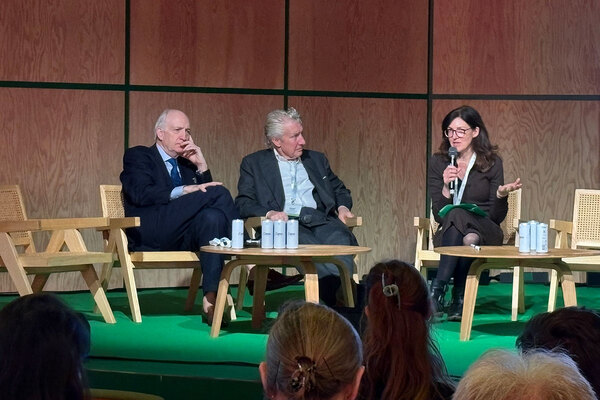
“We’re much more important in terms of government setting policy than we were eight years ago,” she says, when we catch up during a break at the group’s annual conference in Glasgow earlier this year. 

“We’re now, if not the first point of call, then certainly [one of] the first three points of call in terms of setting government policy on social, affordable housing.”

Among the group’s achievements? Making sure social and affordable housing is not subject to new rent control measures being brought in and reversing the government cut to the affordable homes budget made in 2023. 

She says the latter was “huge”, adding: “Cutting the budget is just absolute sabotage really… not just in terms of affordable [housing], of providing homes, but in terms of achieving poverty targets, in terms of economic growth, in terms of everything.” 

Perhaps one indicator of the SFHA’s strengthened role was the keynote speaker at their conference in Glasgow this year.

In his address to a packed hall of delegates, first minister John Swinney made sure to reference meeting Ms Thomas and other social housing figures not long after he was appointed to the role last year. 

He said their hour-long discussion in Bute House “helped enormously” in giving him a sense of the housing challenges that needed to be tackled and their significance. In the months since, funding for affordable housebuilding has been fully restored and housing boosted to a role in the Scottish cabinet rather than a ministerial post. 

For Ms Thomas, meetings with ministers have helped her with the “huge learning curve” she faced taking on the role. “I had certain skills in terms of negotiation, debating, discussing, but they were quite basic, they weren’t as honed, as sophisticated, as practiced as they needed to be,” she admits.

“I learned a lot from the ministers themselves, in terms of how they reacted to how I talked to them, and what I presented to them, and the challenges and solutions that I brought forward.”

Building relationships of trust and respect were key and she always tried to strike a balance between being challenging but never confrontational or aggressive, she adds. 

But during her tenure, the political context has changed, including the formation and collapse of a minority agreement between the SNP and the Greens. Ms Thomas says the coalition was “groundbreaking” at the time despite it being clear from the outside that it was difficult politically. 

Its legacy is a broader and deeper focus on energy and net zero – she says has continued beyond the break-up of the agreement. A more recent shift in the political landscape was the SNP’s declaration of a “housing emergency” last year.

Ms Thomas is clear that while this in itself did not unlock any money, policies or legislation, it was “probably better to declare one than not” and the government had little choice because things were “in such a bad state”. She also believes the government’s understanding of social and affordable housing’s role has increased in recent months, which she can see in what John Swinney says and how he talks about it. 

But she is not uncritical of the administration’s approach, adding: “I think what the government has struggled with is translating that into action, where to put its attention and its resources to make the biggest impact the most quickly.”

This lack of a clear focus also comes up when asked about the challenges facing Scotland’s social landlords. 

Ms Thomas cites the increasing burden on housing associations of legislation, regulation and compliance, as well as a general lack of certainty and soaring costs, as the main hurdles they face. Although it is “not all bad” – health and safety is important – there are questions over funding and resources, and time constraints.  

“Members talk to me a lot about, well, what are the government’s priorities?” she says. “Everything seems to be important and urgent.”

Sally Thomas at Solon Wandsworth Housing Association
Sally Thomas at Solon Wandsworth Housing Association, which later merged with Wandle

Ms Thomas’ departure from the SFHA is the latest chapter of a decades-long career in housing and community development. She was inspired to join the sector by her father, a town planner. He grew up in poverty in the Welsh Valleys and endured a “dire” housing situation in precarious or unaffordable private rented homes until they got the council house that was their “turning point”.

But it was her own difficulties finding a place to live that were more significant, Ms Thomas says. Unable to buy or rent privately as a new graduate in London, she found a scheme that helped young people in her position by leasing homes in council properties earmarked for demolition.

And it was while renting a tenement flat for £8 per week that she clubbed together with her peers to set up a housing co-op, using government funding to buy and rent properties to their members. This was “absolutely transformational” for her, as she got an affordable home where she could live as long as she wanted, she says now.

Ms Thomas does admit that her housing situation influenced her career in another way: she believed a housing association job came with a flat. Finding out that this wasn’t the case, that “the opposite was true”, did not deter her, however.

After a spell in London, including her first role at Circle 33 Housing Association (now part of Clarion), she moved to the North East, working on regeneration schemes for a consultancy and for social landlords. But her move to Scotland, she has said in a previous interview, was driven by frustration with the constraints social housing faced in England due to a lack of political commitment or proper valuing of it in the culture.

Speaking about this now, Ms Thomas says governments before the current Labour administration did not recognise the importance of social and affordable housing and at points in the past two decades seemed to have been against it. “Housing in England was in a desperate situation, social housing in particular,” she says. 

“I mean woefully insufficient money, attention, profile, understanding, appreciation on the part of really all [recent] governments prior to the current one.

“So it’s great to see that the current Labour government has broken the mould of that and does recognise housing, and particularly social [and] affordable housing, as being absolutely fundamental to solving all of the country’s problems, socially, economically, environmentally even.”

She cites the Spending Review and money to back up policies boosting housebuilding as evidence of this, though she says there could be more public awareness of the significance of what the government is doing. 

But while England’s social housing sector has undergone a reversal of fortunes, it seems unlikely Ms Thomas will be tempted back; despite her passion for her work, she plans to spend less time on this area of her life after stepping down.

“My plans are to do more of the things that I love doing outside work,” she says. “To create the space for me to think about what it is I want to do next.

“I’ve loved this job, and I still love it, but it’s so intense and it’s so demanding that I just don’t have the time… the space that I need to really think about what I want to do with the next phase of my life.”

But Ms Thomas is clear that she does not want to lose what her work has meant to her. “Because it’s really been a huge part of my identity and a huge way in which I’ve been able to express my values.”

If there are any regrets that will haunt her, these include not achieving 100% membership at the SFHA – “it still irks” – and the time it took to get the group its current status with the government.

She says more, however, about the things she will miss: “Being at the centre of something and the excitement and the interest and the knockbacks and, you know, all of it, really.”

Tributes from across the sector

Some of the key players in Scotland’s social housing sector have paid tribute to Ms Thomas’ work leading the SFHA. 

Alison Watson, director of Shelter Scotland, said: “We extend our heartfelt thanks and best wishes to Sally as she embarks on her next chapter after eight dedicated years with SFHA.

“Throughout her time as CEO, she has been a passionate advocate for ensuring everyone has access to somewhere safe and affordable to call home.

“Her leadership and commitment were vital when SFHA, alongside Shelter Scotland and other organisations, came together to call for urgent action on Scotland’s housing emergency. This was a defining moment, and Sally played a pivotal role in persuading Scottish ministers to reverse the £200m cut to the affordable housing budget. 

“We are deeply grateful for her unwavering contribution to tackling the housing emergency.”

Kelly Brown, director at Places for People Scotland, said: “Under Sally’s leadership, SFHA has become the voice of housing associations in Scotland, with a strong and collaborative voice. Navigating such a diverse membership is no small feat, and Sally has done so with remarkable skill and dedication.

“Her work has elevated SFHA into a vital resource for our sector, from policy development to high-quality events that bring us together. We thank Sally for her outstanding service and wish her every success in what comes next.”

Callum Chomczuk, national director of the Chartered Institute of Housing (CIH) Scotland, said: “Sally has been a real leader for social housing during her time as chief executive of SFHA. During some fairly challenging periods –including the pandemic, cost of living crisis and political upheaval – she has always been ready to champion the role and power of social housing to improve Scotland.

“She and SFHA have been great partners to CIH Scotland as we continue to work together to improve the housing system and I know she will leave the post with the best wishes of everyone that has worked with her.”

Steven Henderson, chief executive Wheatley Group, said: “It’s been a privilege to work alongside Sally and witness her unwavering commitment to improving social housing in Scotland.

“Since 2017, Sally has transformed SFHA into the leading voice for housing associations and co-operatives, championing investment in affordable homes and action on homelessness and climate change. Her leadership has strengthened the sector, supported over half a million tenants, and helped shape Scotland’s housing future.

“Sally’s vision and leadership have left an indelible mark on the housing sector, and her contributions will continue to benefit countless individuals for years to come.”

Sign up for our Scotland newsletter

Sign up for our Scotland newsletter