ao link

You are viewing 1 of your 1 free articles

‘Step in right direction, but gaps remain’: sector responds to government’s homelessness strategy

The government has unveiled its long-term homelessness strategy, a £3.5bn plan which aims to reduce rough sleeping and focus on prevention. But does it go far enough? Ella Jessel rounds up the sector’s reaction


Linked InTwitterFacebookeCard
A Crisis shop in London
Crisis chief executive Matt Downie said the strategy had “much to be applauded, but some important gaps” (picture: Alamy)
Sharelines

LinkedIn IH‘Step in right direction, but gaps remain’: sector responds to government’s homelessness strategy #UKhousing

LinkedIn IHThe government has unveiled its homelessness strategy, which aims to reduce rough sleeping and focus on prevention. But does it go far enough? Ella Jessel rounds up the sector’s reaction #UKhousing

The government’s long-awaited national homelessness strategy was published today, setting out a blueprint for tackling the deepening crisis.

The central pledges of the £3.5bn National Plan to End Homelessness are to halve rough sleeping and end “thousands more” people becoming homeless by the end of this parliament.

The strategy also promises to end the unlawful use of B&Bs for families and bring forward legislation for a new “duty to collaborate”, requiring public bodies to work together to prevent homelessness.

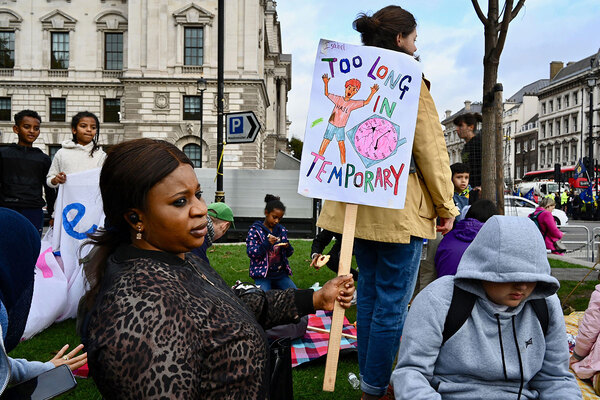
The long-term plan is urgently needed, with rough sleeping on the rise and 130,890 households living in temporary accommodation as of March this year, an increase of 11.5% on the year before.

Housing secretary Steve Reed described the strategy as “bold”, but many leading homelessness charities have said the strategy contains “important gaps” and that the government could have gone further.

Inside Housing rounds up the key reactions from the sector.

Sarah Elliott, chief executive of Shelter, said: “With more than 382,000 people homeless today, the government is doing the right thing by giving this scandal the attention it deserves.

“While the focus on preventing homelessness in its strategy is positive, we still badly need a plan to get the people who are currently stuck in temporary accommodation, or on the streets, into a safe home.

“We applaud the government’s £39bn investment in social and affordable homes, but until a lot more of these social homes are built, one of the only ways to escape homelessness is if you can afford to pay a private rent.

“We know from our frontline services that this is almost impossible to do when housing benefit remains frozen, and that is where the homelessness strategy falls short.

“For the government’s strategy to work, its goal must be to wipe out homelessness in its entirety. This requires unfreezing housing benefit to help people right now, as well as delivering 90,000 new social rent homes a year for 10 years.”

Matt Downie, chief executive of Crisis, said: “Homelessness is an intolerable injustice that prevents far too many people from realising their potential. Today’s strategy is a step in the right direction with much to be applauded, but it does have some important gaps.

“The strategy rightly recognises we all need to play a part if we’re to tackle homelessness. For too long people have been discharged from public institutions into homelessness, and so the new commitments to stop this happening as people leave hospital and prison are very welcome.

“However, to guarantee that homelessness numbers fall, this strategy needs more from other parts of government that address its root causes.

“Housing benefit remains frozen until at least 2030. There is no coherent approach to supporting refugees and stopping them becoming homeless, and we hear no assurances that the new homes the government has pledged to build will be allocated to households experiencing homelessness at the scale required.

“We will work closely with the housing ministry to make the best of the strategy, but there is a long way to go before the government can claim to be meeting its manifesto commitment of a truly cross-government strategy to end homelessness.

“Ministers are taking steps in the right direction, but falling short of what’s desperately needed to end Britain’s homelessness crisis.”

Emma Haddad, chief executive of St Mungo’s, said: “The homelessness strategy published today is a watershed moment and is strongly welcomed by St Mungo’s.

“Homelessness has no place in modern society. The ambition set out today offers the start of a blueprint for ending homelessness and rough sleeping for good.

“The strategy is not perfect and there are areas where the government has already made choices that make ending homelessness harder. We will continue to press for better.

“The failure to unfreeze Local Housing Allowance in the Budget was a missed opportunity and one that should be urgently revisited.”

Simon Gale, chief executive of Justlife, said: We believe temporary accommodation should be short, safe and healthy.

“Today’s strategy finally puts temporary accommodation at the centre of national homelessness policy, after years of decline in quality and rising numbers of families and adults stuck in poor conditions.

“The commitments to improve standards, boost the supply of good-quality temporary homes, introduce a Duty to Collaborate and end the unlawful use of B&Bs for families are important steps.

“The wider £3.5bn investment, including the uplift focused on upgrading temporary accommodation, gives councils a much better chance of improving local provision.

“But the success of this plan will depend entirely on implementation. Prevention is key, but support for people in temporary accommodation is essential to breaking the cycle of homelessness that too many in our country have to face.”

Rick Henderson, chief executive of Homeless Link, said: “When we talk about a homelessness strategy, the statistics and funding, we must remember that we are talking about individual people whose lives have been damaged or even cut short by their lack of access to a safe and affordable home.

“Reform of the homelessness funding system was critical to our joint campaign with Inside Housing, Reset Homelessness, as insufficient and inefficient funding is a central challenge that threatens to undermine the vital work of frontline services whose finances are extremely strained.

“With that in mind, the new funding announced today is welcome, but more fundamental changes to the funding model are needed to ensure the sustainability of crucial services like supported housing and rough sleeping support that offer a lifeline to vulnerable people. We look forward to the upcoming Treasury-led review on funding for homelessness services, announced in the recent Budget, examining these issues.

“Past failures of government to work collaboratively have undermined efforts to reduce homelessness, so the introduction of new legal duties for branches of government to work together on ending and preventing homelessness is a positive step. We will be watching closely to make sure this becomes a reality.

“As the membership body for homelessness organisations in England we are particularly pleased to see the new National Workforce Programme and the recognition it brings to the vital role of frontline homelessness staff and voluntary sector organisations. Without them, none of the government’s ambitions can be achieved.”

Lord John Bird, The Big Issue founder and crossbench peer, said: “While commendable, the record investment piled into the emergency of homelessness last winter barely moved the dial, simply because of the huge number of people still falling into that emergency.

“It’s essential we turn off the tap if we want to stop this crisis overflowing, so the government is right to turn their focus to prevention.

“But this strategy doesn’t go deep enough into unpicking the systemic factors that leave people facing housing insecurity – nor does it direct enough investment in social housing or programmes like Housing First, which succeed in keeping people permanently housed by looking at all the stubborn, complex issues triggered by a life in extreme poverty.

Tom Hunt, chair of the LGA’s inclusive growth committee, said: “This is an ambitious strategy – its goal of ending homelessness for good is admirable. It will help prevent homelessness, and support those who are homeless in finding a home.

“There is still a lot of work to be done to deliver this, and the government needs to ensure that councils are sufficiently funded and empowered to do so.

“Specifically, the government must ensure there is greater accountability to ensure all stakeholders are involved and incentivised to prevent homelessness, ensure that these goals can be delivered, foster collaboration between partners and have evidence-based policy underpinning this.”

Kate Henderson, chief executive of the National Housing Federation, said: “We’re pleased the government has recognised the role of supported housing in reducing homelessness by dedicating funding to support some of those with the most complex needs.

“However, not-for-profit supported housing providers have faced significant cuts to funding for support services, despite increasing costs and demand for their services increasing. The country now faces a significant shortfall of supported homes.

“A financially viable and sustainable supported housing sector is integral to solving this crisis. The sector is committed to working in partnership with the government to build on the opportunities this strategy provides and find solutions to the challenges facing supported housing providers, so that they’re able to fulfil their role in reducing homelessness and help end it for good.”

Dan Dumoulin, director of development and external affairs at Depaul, said: “It’s encouraging to see that the government’s new strategy focuses on preventing homelessness, including plans to explore early intervention work in schools.

“Youth homelessness is rising, and we know that many people who sleep rough first did so before the age of 25. Strong early intervention programmes mean we can prevent today’s children from ever having to sleep rough in the future.

“We also keenly welcome the introduction of a new supported accommodation programme to help 2,500 people get back on their feet. While greater investment is needed, it will still make a significant difference to people whose lives hang in the balance. 

“Depaul UK welcomes this strategy, which is a solid step forward. We hope that the government follows it up with stronger commitments to end homelessness and rough sleeping for good.”

Ligia Teixeira, chief executive of the Centre for Homelessness Impact, said: “There is much in the strategy to welcome.

“It is the first national plan in England to speak to the full spectrum of homelessness, from rough sleeping to hidden forms, unsafe accommodation and the daily churn of families in temporary housing.

“Its emphasis on prevention is especially important: the earlier we act, the more human and financial cost we avoid, and the more we give people the stability from which they can rebuild.

“At the same time, most of its ambitions – reducing long-term rough sleeping, reducing reliance on B&Bs, improving temporary accommodation pathways – operate close to the crisis point. The greater opportunity lies in primary prevention: noticing risk far earlier and addressing the deep-rooted factors that shape vulnerability long before a housing crisis emerges.”

Gavin Smart, chief executive of the Chartered Institute of Housing (CIH), said: “CIH welcomes the new national homelessness strategy and investment in affordable homes.

“But with homelessness at record levels we hoped to see bolder action, including unfreezing housing benefit to support families facing pressure today while new homes are delivered.”

Bonnie Williams, chief executive of Housing Justice, said: “We are pleased to see the launch of the Ending Homelessness in Communities Fund’,which we have been encouraging the government to make available to enable our members to continue the invaluable work they do supporting people in their communities.

“While we are pleased to see the release of the strategy, we would like it to be more holistic and ambitious, with a greater focus on prevention, working with a wider cohort of people experiencing homelessness than those rough sleeping.

“The government needs to be bold and ensure we are still working towards making homelessness rare, brief and non-recurring, and continuing the commitment to deliver social housing at pace. We need long term sustainable solutions to move out of the current crisis.”

Rachel Brennan, director of participation, progression and change at Groundswell, said: “We welcome the commitment to involving people with lived experience in the design and implementation of the strategy.

“When people with lived experience help shape solutions alongside systems and services the solutions are stronger, more compassionate and more effective.

“It is encouraging to see recognition of how closely homelessness is linked to our health and the important shift in ensuring that people are not discharged from hospitals or other services into crisis. The focus on collaboration and cross-sector working is a vital step forward, recognising everyone has a role to play in ending homelessness.”


Sign up to Inside Housing’s Homelessness newsletter


Sign up to Inside Housing’s Homelessness newsletter, a fortnightly round-up of the key news and insight for stories on homelessness and rough sleeping.

Click here to register and receive the Homelessness newsletter straight to your inbox.

And subscribe to Inside Housing by clicking here.

Already have an account? Click here to manage your newsletters.

Linked InTwitterFacebookeCard
Add New Comment
You must be logged in to comment.