Still angry after all these years
Bill Dunster is a man both triumphant and disappointed.


He is also wet: outside the rain is pouring down on Zedfactory, the eco-architecture practice he founded, and on the Bedzed zero carbon development for which he is best known. But inside the vases are filled with wildflowers and tea comes in a real teapot. This is the (sustainable) life.
Mr Dunster is triumphant because the green agenda that he has believed in and argued for over the past 25 years is, at long last, firmly on the construction industry’s agenda.
But he is also disappointed that the sector has been dragged along kicking and screaming, rather than seeing the benefits of sustainability. Mr Dunster has been trying to find ways to build sustainably for many years and is one of the most outspoken advocates of green communities.
He is scathing about those who haven’t made the same efforts. ‘They [the construction sector] haven’t created the market, they did their best to stop it in those barren years. Now there is a market and they are trying to meet it but they still don’t believe in it,’ he says.
But that lip service wouldn’t be a problem if the sector was buckling down and trying to find solutions. Rather, thinks Mr Dunster, it is trying to wriggle out of it while doing its best to make money from it.
‘The industry is on the whole pretty cynical but think what it could do if it really engaged and tried to solve all these problems in an optimistic and hopeful way,’ he says.
‘The entire building industry does the bare minimum it can to avoid breaking the law, and that sets the industry standard. It’s probably the most cynical industry on the planet for that reason. Nobody else rewards their staff for delivering the bare minimum,’ he says.
He won’t be content until everyone puts their heart into finding solutions. The problem is, of course, that many people who are jumping on the zero carbon bandwagon don’t really believe in it.
‘I think the bandwagon is horrendous,’ he sighs. ‘We get the most amazing consultants who have the biggest four-wheel drives you’ve ever seen, jet off all over to the Costa del Dross for their holidays — it’s unbelievable. And yet all of a sudden they are experts in a low carbon future.’
It also means that those ‘experts’ don’t understand the key to living a low carbon lifestyle, which is essential when designing to help people live sustainably. It isn’t just about the buildings, says Mr Dunster.
‘The central idea that we had was – how do you achieve this step change reduction in carbon footprint at the same time as having an overall far higher quality of life,’ he says. This is central to his belief that living an ecolifestyle is a better, more satisfying thing to do — and that most people are making themselves unhappy and unhealthy with their choices.
He doesn’t pull any punches. ‘Most people’s lives are so damn dysfunctional — they probably spend two hours a day commuting when they could work very close or within the same development; they have tremendous problems affording childcare; there’s obesity among children; it’s hard to take exercise; high carbon footprint; high expenditure; dual incomes. It can all be sorted out!’
And he has the solutions: live in a low-carbon or zero-carbon house, buy food out of brown paper bags in the local farmers’ market, cycle to work and go on holiday in Cornwall by train. ‘And you’ve done it! It’s possible. And yet there’s this enormous fuss made. My hypothesis is that none of these things is really a very big deal at all.’
His other theory, a charming one that he comes back to again and again, is that the whole process of finding solutions to these problems is enormous fun. He relishes it and doesn’t understand why others don’t see things the same way. (I have a feeling he thinks they are idiots).
They are fussing round the edges when they could be part of a new dawn. ‘It’s that moment of celebrating and refining a new culture — I’m not saying we’ve got it right, I’m just saying it’s fun and that is what our industry should be about,’ he says.
Of course, it helps that Mr Dunster has been dreaming these dreams since he was small. Most people don’t start thinking about how to improve the built environment when still at school — but he grew up in suburban London and realised that something was being ruined. ‘As a kid, I was absolutely fed up with the way that every orchard and nice bit of green space just got turned into executive homes with double garages. It just gets you down. It still makes me angry now.’
So he’s been following the ecoagenda for more than 25 years and is still committed to it — which makes him seem inspirational to some and difficult to others. He is very scornful of those who don’t share his vision — and developers and other architects come in for particular criticism.
‘If you haven’t got that little tiny bit of dream integrated into your work, you become yet another purveyor of a clone lifestyle. You become a supermarket architect — and there are many of them out there. I think a third of social housing in the UK is designed by about two people and, sadly, it shows,’ he says.
Even an unchallenged belief in the green building sector, repeated at hundreds of conferences every year, is treated with derision. ‘I don’t think Germany and Scandinavia are wonderful. It’s tedious — they are held up because there is so little of note happening here. They make slightly more effort but because their climate is different, the solutions cannot be imported.’
More than that, copying from those countries is actively causing harm, as their needs are totally different from ours. ‘We have to cope with the Scandinavian winter and the Mediterranean summer — not one or the other. That debate has caused a lot of problems, with summer overheating literally being responsible for the slums of the future because they [poorly designed houses] are going to be impossible to stay cool in.’
It also means that we are wasting time looking elsewhere rather than creating our own solutions. That is another reason why Mr Dunster supports the code for sustainable homes: because it is homegrown. ‘For all its imperfections, it’s built on our needs and it can be solved by our industry. If we all muck in and support the government and do it properly, British firms will be exporting components and services to the rest of the world, instead of importing them.’
Surprisingly, the government isn’t among those which come in for contempt — at least it is showing willing. Mr Dunster thinks that the code for sustainable homes has created a level playing field and the government is right to use investment in social housing to kick-start the process.
He doesn’t ask for much more: only that microgeneration shouldn’t require planning permission, and net metering, which is where you get paid slightly more when you produce renewable energy when you export it to the grid, is introduced.
The other thing on his wish list is that ‘some bright philanthropic industrialist will see that the UK house building industry is a mess, buy one of the volume house builders, and put Zedfactory in charge.’
‘We’ll sort it all out,’ he says. I don’t doubt it — and it would be fun to watch it happen. Let’s hope Bill Gates reads Footprint.
On Bedzed
Bedzed was completed in 2002, built by Bill Dunster for Peabody Trust. It is the largest zero carbon community in the country and was the first of its kind. It won many awards but also had problems when the combined heat and power unit broke down and residents had to draw power from the national grid.
‘I don’t claim it’s perfect, I really, really don’t. There is no question that if you phoned me up today and said “do it again”, I could do it better in almost every respect.
‘But just about the only thing that doesn’t work at Bedzed is the combined heat and power plant.
‘It’s the highest tech piece of machinery there because we used a prototype biomass CHP unit 10 years before its time. You can’t use the fact that we tried to do that then to say that this idea doesn’t work today, which is what most people reading about Bedzed would think. I find it very wearing actually.
‘Go and look round most of the housing schemes that were built at the same time, and for the same budget — experiments in modern methods of construction, even done by the same client — look at what you’ve got here. Look at how people are living and what’s been achieved, and ask yourself which you would prefer.
‘I genuinely think this is better in almost all respects. It was an experiment, it was the first time we tried to build on this scale with these ideas. I think it was valid.’
On Ruralzed
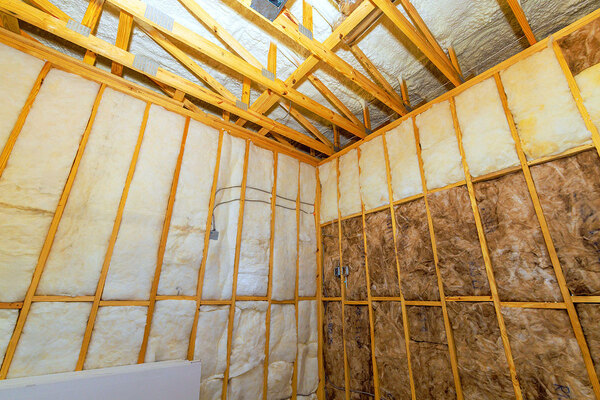
The Ruralzed house was launched earlier this year, designed by Zedfactory, Bill Dunster’s architectural practice. With a clear upgrade path from code level 3 to 6 (and even code level 7 if you add a wind turbine), prices for the timber frame house start at £89,000 and it can be assembled onsite in a few days.
‘The idea is that if you can contemplate building an IKEA sofa, you can probably manage to put together a Ruralzed if you really wanted to. That is a little optimistic, perhaps… but all the difficult bits are prefabricated, all the joints are pre-cut. We’ve reconciled the “low thermal mass” agenda with the “low embodied carbon, must-make-itwood” agenda.
‘Hopefully it looks good, it’s aspirational and affordable. It does all the microgeneration things really well. I feel that if we have a solution that answers 70 per cent of the UK’s sites, then it’s a good solution.
‘It’s hard work, though. It’s almost as though we have to carve a niche in an industry that isn’t interested. For most people, eight out of 10 would prefer to hear that Ruralzed was too expensive or doesn’t work. But if two out of 10 want it…’
Related stories