You are viewing 1 of your 1 free articles
The right kind of home
Patients leaving hospital with unresolved housing issues are costing the NHS hundreds of millions a year. Kate Youde meets one housing provider that is addressing the problem


Video:
features style
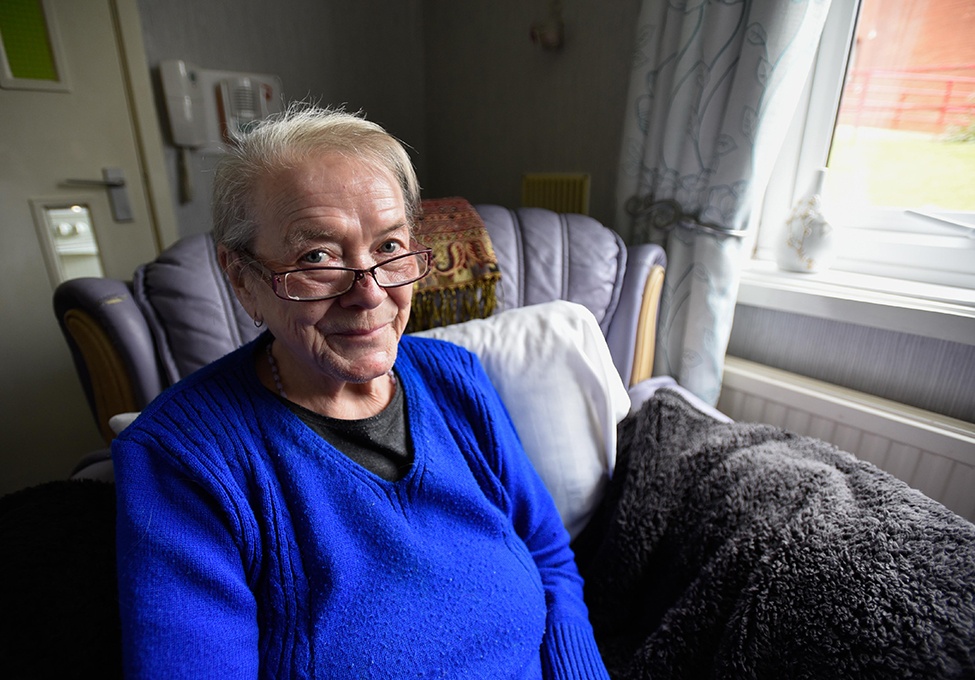
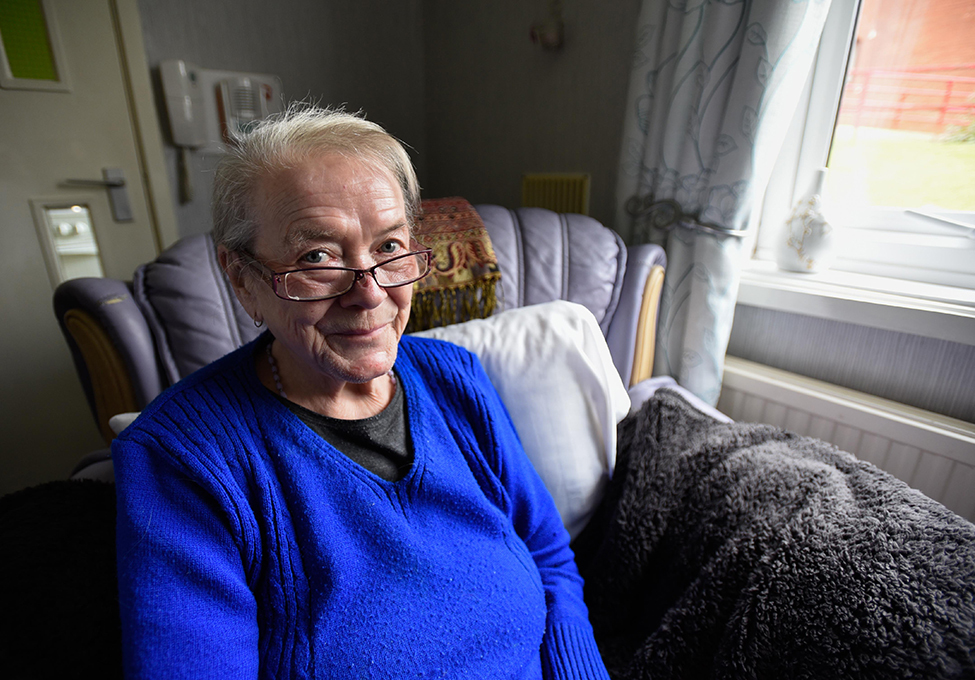
One day in August, Teresa Tipping left her home of 20 years and went to see her doctor. She has not been back since. The following morning, she woke in Royal Oldham Hospital and underwent operations for blocked arteries on both her legs.
As she lay recovering on the ward, she realised her private rent bedsit, with its steps to the bedroom and bathroom and poorly lit side entrance, was ?very unsuitable? now she was less independent. ?I didn?t have what I needed to live there for the rest of my life,? she says.
New family
It was at this time that Ms Tipping received a visitor. Vicky Campbell offers housing advice and support to the hospital?s patients under a ?60,000 18-month pilot, run by First Choice Homes Oldham (FCHO), which aims to reduce delayed discharge due to housing issues.
Video:
Ad slot
?Many housing providers have realised that if they want to achieve their values and deliver what they are established to do, they need to take a much broader view of their tenancy base.?
Domini Gunn, director of health and well-being, Chartered Institute of Housing Consultancy
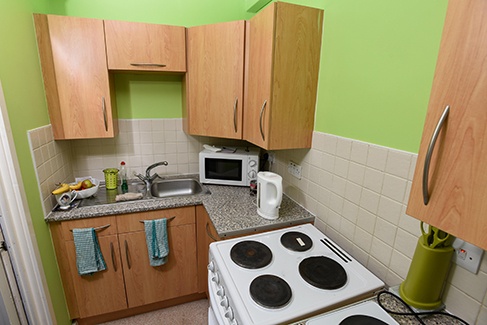
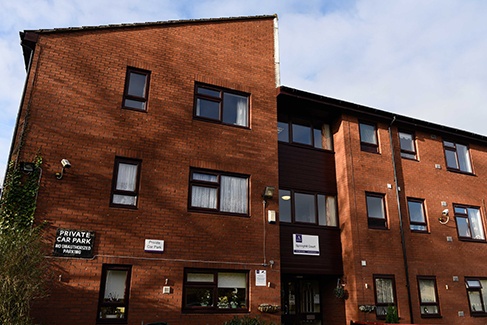
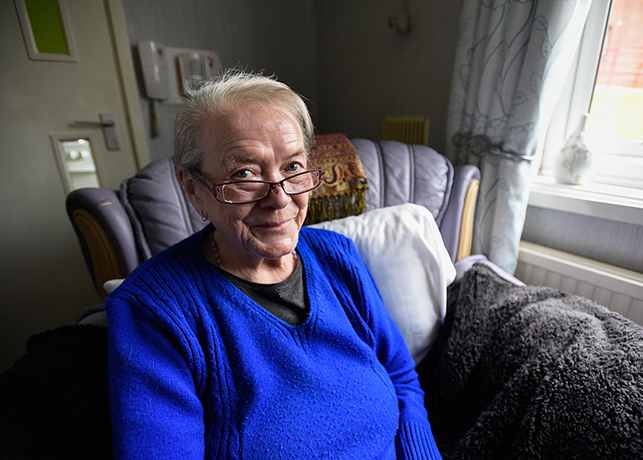
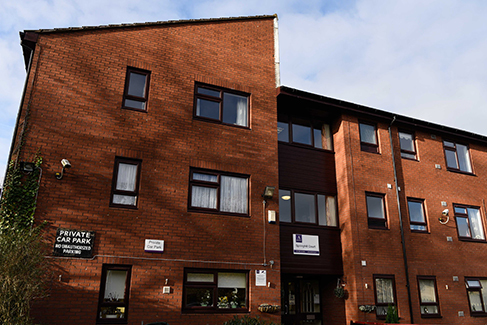
While Ms Tipping was rehabilitating in Medlock Court, a short-stay unit in Lees, east of Oldham, Ms Campbell, a hospital-to-home discharge officer, arranged for Ms Tipping to move into sheltered accommodation run by 35,100-home housing and care provider Anchor (Springhill Court where she now lives ? see picture). When we meet at Medlock Court at the end of September, her legs are wrapped in dressings and she uses a walking frame to make her way into the communal lounge.
?I couldn?t have done it myself,? says Ms Tipping, her County Mayo roots evident in her Irish accent. ?I have no family that could do that for me so Vicky is family at the moment and I think always will be.?
The Oldham scheme is one of an increasing number of hospital discharge projects run by social landlords to address bed-blocking, according to Domini Gunn, director of health and well-being at the Chartered Institute of Housing Consultancy.
?I think many housing providers? have realised that if they want to achieve their values and deliver what they are really established to do, they need to take a much broader view of their tenancy base,? she says.
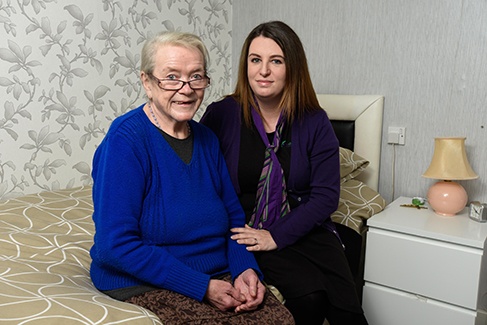
Based with the hospital?s social work team since April, Ms Campbell liaises with other housing providers in Oldham to resolve issues preventing a patient?s safe discharge from either the hospital or three local authority ?step-down units?: Medlock Court, Butler Green in Chadderton and Limecroft in Limeside. These issues could include the need for repairs, adaptations or a deep clean at patients? existing homes.
About half of Ms Campbell?s 48 cases in the first six months involved people who, like Ms Tipping, required rehousing because their accommodation was no longer suitable for their longer-term needs. The service is aimed at people living in social housing, but 55% of cases in the first six months were in the private sector. The majority of those using the service are over 55 (see box: Fresh start).
Minimal information
Only social tenants are eligible for help with repairs and adaptations. FCHO has an agreement with the eight other social landlords in the Oldham Housing Investment Partnership that each pays for minor aids and adaptations (up to ?1,000) for their own tenants.
?Our aim is to improve people?s health and well-being, and I want to be able to measure that.?
Vicky Campbell, hospital-to-home discharge officer, First Choice Homes Oldham
For work costing between ?1,000 and ?8,000, the provider pays half and the council the remainder through a Disabled Facilities Grant. Adaptations costing more than ?8,000 are dealt with on a case-by-case basis.
Ms Campbell aims to contact a patient needing help within 48 hours. She then ensures the required support is in place before they leave hospital or the step-down unit, and follows up with them 30 and 60 days after discharge.
?Our aim is to improve people?s health and well-being, and I want to be able to measure that and their ability to remain in their accommodation and live independently,? she says.
Most referrals come through either the social work team or, increasingly, occupational therapists, but Ms Campbell says the scheme needs clinical staff to identify issues as well. ?It?s a big change for people to think about housing because, rightly so, their priority is treating patients? medical conditions,? she says. ?But [with] this service we are reliant on the early identification of issues people are having.?
Ms Campbell, who has produced service information leaflets for staff and patients, is in talks over including questions about a person?s housing situation in the questionnaire patients fill in on admission to A&E. She also attends three or four ?board rounds? each week ? a daily meeting on a ward at which the clinician, physiotherapist, occupational therapist, social worker and ward discharge co-ordinator discuss patients? progress and whether they are ?medically optimised? (no longer in need of care in an acute setting).
?We have made headway and had some really good successes so far, but I feel there?s still a long way to go.?
Vicky Campbell, hospital-to-home discharge officer, First Choice Homes Oldham
She wants staff to recognise that these represent a good opportunity to raise potential housing issues.
Currently, this information can be ?very minimal?.
?To be fair, we have made headway and had some really good successes so far, but I feel there?s still a long way to go,? she admits. ?We are still developing our offer to the hospital in terms of the service. I think we can only do that by having these referrals and going through these experiences of assessing people to see what the demand is and see how we should be responding and meeting those needs.?
Prior to the pilot, housing issues were identified only at the end of a patient?s stay and ?would start to creep out of the woodwork? when a discharge date was set, says Jo McLeod, Oldham Urgent Care Alliance?s integrated discharge team lead, based at the hospital. This approach led to delays.
However, because the available data tends to identify a delay as being due to an issue other than housing if multiple factors are involved, it is difficult to quantify how many delays are caused by housing.
Ms McLeod says the biggest impact of the pilot will be on the flow of patients through the hospital, helping it meet the government target of 95% of patients in A&E waiting four hours or less. ?It?s about the right person being in the right place at the right time,? she adds.
Nationally, the Audit Commission estimates treating older patients in hospital who no longer need acute care costs the NHS in England about ?820m a year, while 1.15 million bed days were lost to reported delayed transfers of care in 2015.
?If we can keep people in our homes longer, there are financial benefits for us.?
Dave Smith, customer first director, First Choice Homes Oldham
FCHO is paying for its ?60,000 trial itself and is talking to NHS Oldham Clinical Commissioning Group (CCG) and Oldham Council about continued funding beyond the 18 months if the 11,700-home association can provide evidence of the savings to the hospital and adult social care. FCHO is working with the CCG?s business intelligence team on developing a methodology to quantify the savings accurately, based on the average nightly cost of a hospital stay (somewhere between ?250 and ?500).
Dave Smith, customer first director at FCHO, says the scheme meets FCHO?s corporate objective to improve the health and well-being of its customers, and people in Oldham generally. But it?s not just altruism; there?s a financial upside for the landlord as well in maintaining tenancies.
?Tenancy turnover is very costly for us [?3,000 on average],? says Mr Smith. ?So if we can keep people in our homes longer, there are financial benefits for us.?
Key considerations
The pilot also meets a priority of Greater Manchester Housing Providers Group, a coalition of 27 social landlords, including FCHO, which signed a memorandum of understanding with Greater Manchester Combined Authority earlier this year to help deliver the devolution agenda. In April, Greater Manchester took control of its ?6bn health and social care budget.
The group is piloting different models to aid hospital discharge and prevent readmission, based around placing housing workers in hospitals. The 11,000-home arm?s-length management organisation Stockport Homes and 19,500-home association New Charter Group are leading schemes focusing on homeless patients.
The CIH?s Ms Gunn, who advised on the Oldham pilot, says there are key considerations for social landlords running hospital discharge schemes. These include ensuring the service is jointly commissioned by health, housing and social care, having medical staff who know how to get hold of housing workers, identifying housing needs early alongside medical needs in a ?housing and health triage?, and developing sustainable solutions.
?If we want to develop more supported housing that fits with that integrated health and social care model, sometimes we need to demonstrate the breadth of what we do to NHS colleagues to establish a relationship.?
Rachael Byrne, executive director of care and support, Home Group
She suggests that social landlords should seek additional funding ? for example from CCGs ? for services offered to owner-occupiers or private renters. This is because housing associations? revenue comes directly from their tenants but a health offer has to be ?tenancy blind?. She adds: ?Otherwise you have got the poor subsidising the not-so-poor.?
Home Group runs a number of hospital-based projects designed to alleviate bed-blocking, including Home from Hospital. Jointly commissioned by Surrey County Council and four CCGs, the scheme launched in Surrey in October to support the discharge of patients from four acute and half a dozen community hospitals.
Under the ?264,000 contract, support co-ordinators based in the discharge teams of the four main hospitals organise short-term support for patients leaving hospital, such as help with shopping and arranging future medication.
Another rolling 12-month ?130,000 pilot commissioned by Norfolk and Suffolk NHS Foundation Trust, running since 2012, sees four support co-ordinators co-located with the bed management teams on mental health wards on three hospital sites in Norfolk to reduce discharge delays and readmissions.
Rachael Byrne, executive director of care and support at 55,000-home Home Group, says the schemes are about the ?integration of care, health and housing?.
?If we want to develop more supported housing that fits with that integrated health and social care model, sometimes we need to demonstrate the breadth of what we do to NHS colleagues to establish a relationship,? she says.
She adds that, as well as delivering the association?s mission to provide services to the most vulnerable people in its communities, the schemes are a way of ensuring Home Group?s care and support services are ?future focused? and will be ?fit for purpose? when the new funding model for supported housing, which she suggests will promote integration, comes into play in 2019.
But hospital discharge projects are already improving lives. In Oldham, Ms Tipping is full of praise for Ms Campbell?s help. ?She?s saved my life,? she says.
Fresh start
After Dora Cooper fell and broke her neck in May, she could not return to the terraced house she owned and had called home for more than 50 years.
No longer able to look down or tackle stairs, she needed a smaller home on one level.
After six weeks in Salford Royal hospital, the 87-year-old great-grandmother-of-five was transferred to Royal Oldham Hospital and then Medlock Court residential unit for rehabilitation. Staff there introduced her family to Vicky Campbell, First Choice Homes Oldham?s hospital-to-home discharge officer, who arranged for Ms Cooper to move into a bungalow owned by 19,000-home Housing & Care 21.
Her granddaughter, teaching assistant Karen Cooper-Wilson, 37, says the service gave the family ?a voice that?s on your side?.
?It?s made a horrible situation bearable,? she says. ?My gran can look on it now as a fresh start.?
Related stories