You are viewing 1 of your 1 free articles
Tom Murtha’s last stand
After 50 years of being a vocal presence in the sector, Tom Murtha says it’s time to call it a day. Martin Hilditch speaks to the former housing association chief executive-turned-campaigner and asks if this is really the end. Pictures courtesy of Tom Murtha


 Tom Murtha on 50 years in the sector and his last stand #UKhousingAfter 50 years of being a vocal presence in the sector, Tom Murtha says it’s time to call it a day. Martin Hilditch reflects on Mr Murtha’s career and asks if this is really the end #UKhousing
In one way, shape or form, Tom Murtha has been shaking up the social housing sector for 50 years. Now, he says, that is all about to end.
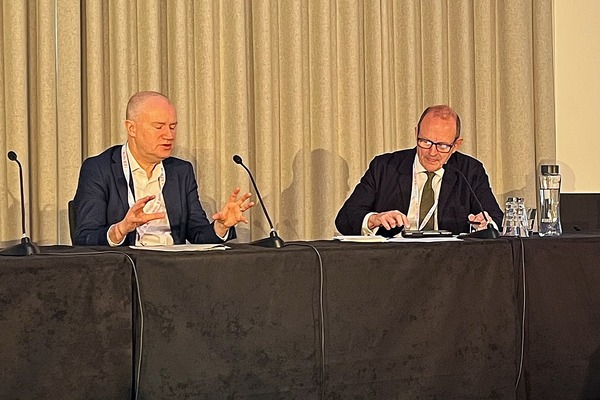
“I decided that my 50th year will be my final year,” he tells me in a meeting at Inside Housing’s office. The next 90 minutes will reveal a man as passionate as ever about the sector, its direction and the politics around it. Nonetheless, he is determined to bow out.
“I’m really keen to say, ‘That’s it’,” he states, before following with a typically unflinching directness. “No matter what I think I’ve got to say and how important it might be, there comes a stage when you’re that old man in the corner who [people say], ‘Oh God, it’s not Tom again, ranting on about something that today he knows nothing about because he hasn’t been directly involved’.”
If this is really the end, and given his obvious passion for the sector, it is difficult to imagine Mr Murtha fading completely from the scene. But he has plenty left to say in this postscript to a career in which campaigning, community and anti-racism have been major themes.
Given the latter is probably the single greatest thread running through his public life, it is an interesting time to step down. As a major Inside Housing survey revealed earlier this year, almost two-thirds of Black, Asian and minority ethnic staff said they have felt fear because of their ethnicity, race, immigrant background or religion in the past year. This rose to 79% among those not born in the UK. Social housing allocation has also become a political focus. These are the kinds of battles Mr Murtha has spent his life running towards.
Read more


If it is time to pass on the baton, however, what better time to reflect on learning from a career that started out in Leicester in the 1970s, in an environment where overt racism was a daily part of life? Today, we want to pick up on any lessons that can help inform future sector campaigning, get his take on where social housing finds itself today and reflect on a high-profile, and at times controversial, career.
Ironically, Mr Murtha only moved into the housing sector because his campaigning in another field had ruffled too many feathers. From a working-class family in Leicester, Mr Murtha left school at 16. He then worked in a factory and hated “every minute of it”, before returning to college to complete his A-levels.
At college he became president of the student union and was “very active in the anti-racism campaign in Leicester” during a time when immigration and the rehousing of Ugandan refugees was the focus of appalling racist rhetoric (and policies). After a degree in history and then a post-graduate teaching course at the then-called Goldsmiths’ College, a career in education awaited. Or so he thought.
“I was applying for teaching jobs and I discovered I wasn’t getting them because I was deemed to be too political, because I’d always been active – I’d always been a campaigner,” Mr Murtha explains.
A career-defining phone call
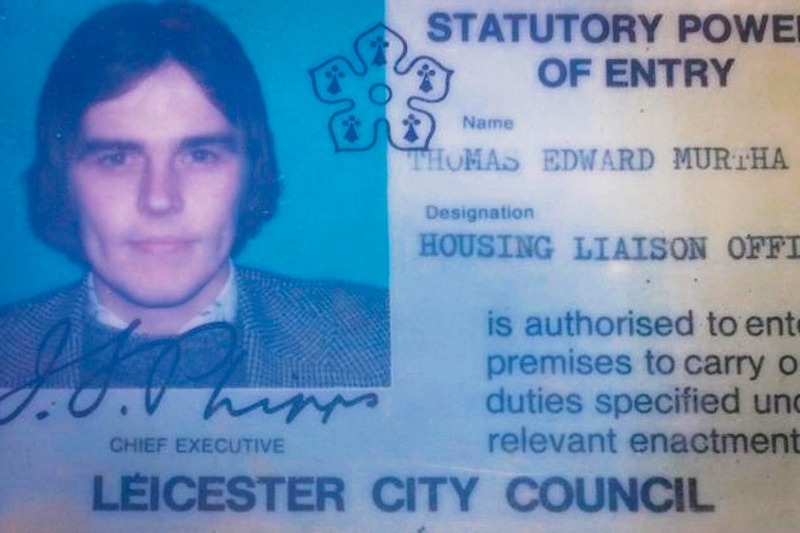
It was in a phone box on his weekly call home to his parents that his life changed. His dad, who worked at Leicester Council, told him there was a job going in its urban renewal department.
It was the start of a happy period in Mr Murtha’s life, working with diverse communities in the inner city of Leicester. Among other things, John Perry, who was head of the department then and is now a policy advisor at the Chartered Institute of Housing, tasked him with bringing together community groups to challenge the council to deliver improvement works on their homes and surroundings.
“It was actually encouraging resident participation,” Mr Murtha says. “So, I went out there and just began to talk to people and encourage them to get involved. I was incredibly naive and I got into trouble with local politicians for stepping on their toes. I got in trouble with the senior officers in the local authority because we were doing things they had never done before – talking to tenants.”
“I didn’t decide to become this radical campaigner. That just happened. I watched what was happening and I became angry that we were moving too far away from where I believe we should be”
Outside of work, Mr Murtha stepped up his campaign against racism, becoming secretary of the anti-racist group in Leicester, “which again didn’t go down too well with some councillors”.
While he was enjoying the job, it was a tough time in many ways. “It was when the National Front was at its strongest. It was quite difficult. Physically, I was challenged. Verbally, I was challenged.”
It was a personal battle in many different ways. Mr Murtha says he and his wife, Vishva Murtha, who had moved from Kenya to the UK as a schoolgirl in the 1960s, faced “lots of problems in the local community”.
For Ms Murtha, it was sadly nothing new. “She faced discrimination all the way through: in schooling, in walking down the street, in getting a house – on every level they faced discrimination. In-your-face shouts of ‘get back home’, using all the words we would never use, through to subtle discrimination.”
Meanwhile, on a professional front, Mr Murtha’s career started to take off. While he was working at a council, it was the growing housing association movement that excited him. At the time, a number of fledgling associations were turning activism into practical action to deliver new housing and work with communities. The Housing Act 1974 further strengthened the movement, enabling housing associations to receive significant public funding to build new homes.
“I thought, actually, the people who are having the most direct impact, that can really bring about change to people’s lives, are the housing associations,” Mr Murtha says.
A job in tenancy management at Coventry Churches Housing Association came up in 1978 and Mr Murtha didn’t look back. The role involved improving homes in the inner city, first in Coventry and then Mr Murtha was put in charge of setting up an office in Leicester.
“I got in trouble with the senior officers in the local authority because we were doing things they had never done before – talking to tenants”
After two years his eyes turned to the national stage, and when a role at the National Federation of Housing Associations (NFHA) – now the National Housing Federation – under then-chief executive Richard (now Lord) Best was advertised, Mr Murtha moved again to become its regional officer for the Midlands in 1980.
Anyone with a passing knowledge of housing history will know that decisions were made by the government at this stage that still affect the sector and people’s life chances today. The Right to Buy was introduced and the NFHA led a successful campaign to stop it being extended to homes owned by charitable housing associations.
‘Biggest disappointment’: not eliminating racism in housing
Race and racism were also high on the agenda, with the 1981 riots in Brixton leading to much national soul-searching. The NFHA set up a working party to look into racism in the sector and Mr Murtha was appointed its secretary. The end result was a report in 1982, called Race and Housing – a cause for concern, which “basically said the sector is racist on employment, on allocations, on provision”.
“It wasn’t even indirect racism,” Mr Murtha states. “The people who worked there, with all their values, they were still racist. The sector wasn’t too happy with that [the report], but Richard backed it.”
Following the report’s publication, Mr Murtha travelled round England “trying to convince people to adopt anti-racist procedures”. Recent reports on race and racism in the sector are a source of frustration, however great their recommendations may be, because “we’re all still saying the same thing”.
“It’s the reason I got so frustrated,” Mr Murtha says. “All of my career since then and now I have worked to eliminate racism from the sector. If you ask me what my biggest disappointment is after 50 years in the sector, it is that we haven’t done that.”
From the Grenfell Tower fire to the death of toddler Awaab Ishak, the ongoing results of that discrimination are very apparent, he states.

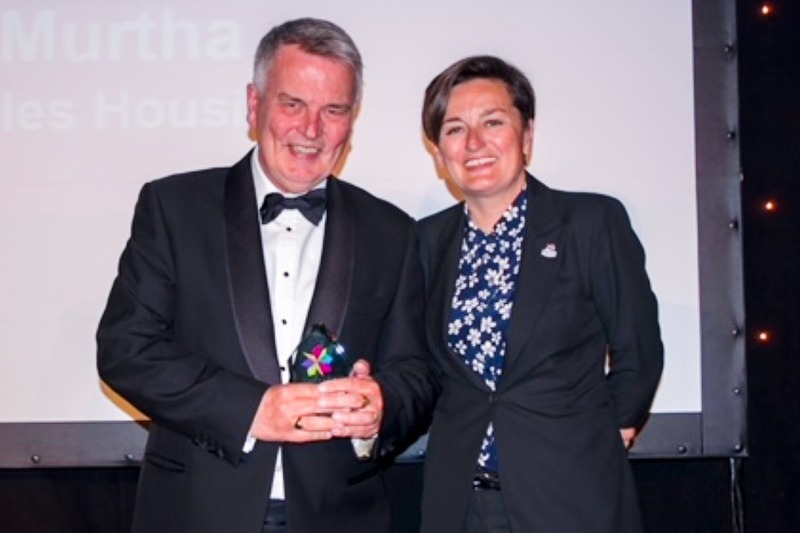
There was progress too, however. A number of Black and minority ethnic housing associations were set up in the 1980s, with Mr Murtha helping to fund several new organisations in the Midlands through his role as chair of the Merseyside Charitable Trust of Housing Associations.
The Housing Corporation also regulated the sector on its approach to diversity. The fact that this is not still part of the regulatory regime is a huge problem, Mr Murtha feels.
After a few years at the NFHA, Mr Murtha was tempted back to work in delivery in a variety of roles, including at Merseyside Improved Houses, which eventually became giant housing association Riverside.
From chief executive to campaigner again
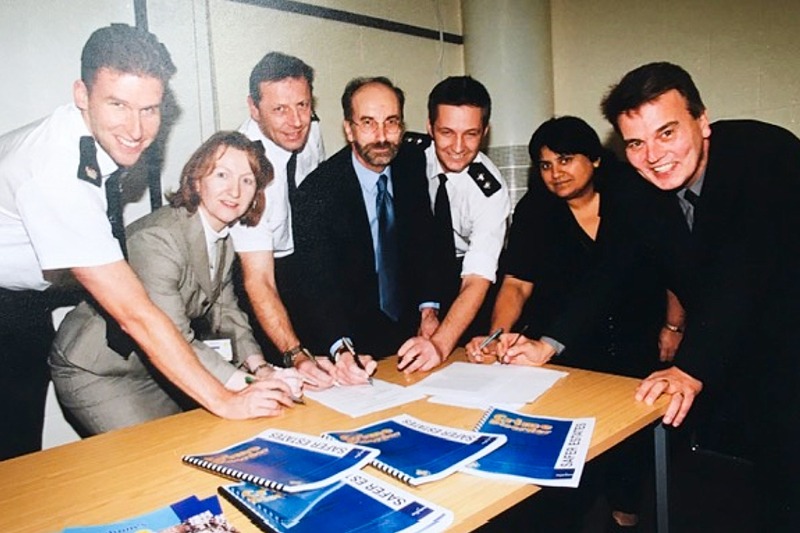
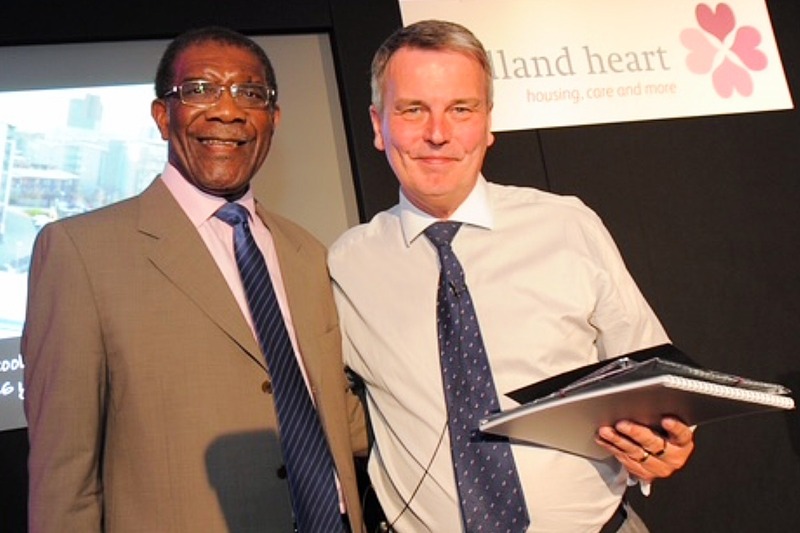
He stepped into his first chief executive role in 1996 at Midland Area (which later became Midland Heart via a merger). This was a tough initial assignment because the association had been placed under regulation a month before he joined, following development fraud. However, in some ways, this was a blessing in disguise.
“They were a mess in every area,” Mr Murtha says. “And when it is so bad, there is only one way to go. If you are a half-decent leader, you are going to lead them in a better direction.”
Hiring a young, up-and-coming team, with a board and staffing team made up of a majority of Black and Asian people, Mr Murtha describes it as “one of the happiest times of my career”.
“It was brilliant, because it was everything I wanted to do in a city: community development, working with local people – all the stuff that really energises me.”
Mr Murtha went on to become chief executive of Keynote Housing Group, leading it up until the merger with Prime Focus that formed Midland Heart in 2006. Initially, this meant taking a step back and becoming chief operating officer at the new landlord before taking over as chief executive – the role he held until he stepped down in 2012.
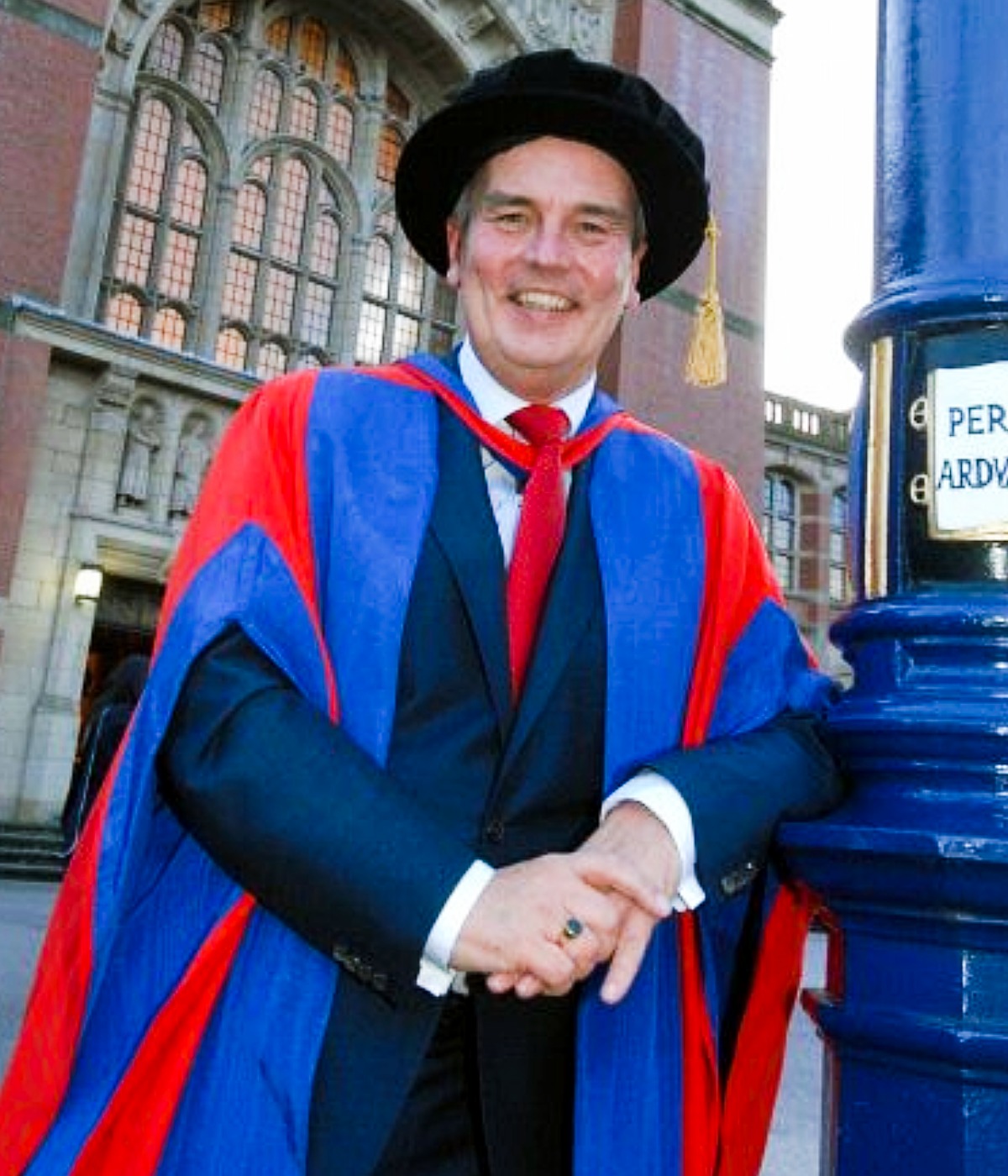
Through mergers and development, these were associations that were growing quickly. People who have followed Mr Murtha’s campaigning career since he stepped down as chief executive will know that some of his criticisms of the sector have been about his feelings that some organisations have grown too big and lost touch with their roots. How does he square the circle?
“I always believed that you could grow, you could get bigger, but you needed to keep the links with your local residents, your local tenants and your local communities,” he says. “I think we failed in the last 20 years by growing so quickly in some areas that the consolidation process was never fully completed before the next merger.”
It should be possible to balance the two, focusing on delivering great services for tenants and building more homes, he says, arguing that Midland Heart slowed development following its formation so it could consolidate the service offered to tenants. “I think you can get the balance right. But I think there’s so many examples of where we didn’t, which is why we’ve had all the regulatory changes and all the issues in the last five years.”
“Are we going to keep allowing that line to go further and further to the right? Or do we say, ‘No, that’s far enough’”
Since stepping down as chief executive in 2012, Mr Murtha has been best known for his campaigning work in the sector. This includes the SHOUT (Social Housing Under Threat) campaign, which kept the flag flying for investment in social rented housing when it was under threat from the coalition and Conservative governments in the mid-2010s, along with the importance of investing in existing homes.
“I didn’t decide to become this radical campaigner,” he says. “That just happened. I watched what was happening and I became angry that we were moving too far away from where I believe we should be.”
At times his vocal challenge of the sector meant that over this period, “my name wasn’t the most popular”, but Mr Murtha feels that in many areas his criticisms have proved on the money.

In a way, this last period of his career represents full circle for a man who jokingly says he “started life as a campaigner, became a chief executive and then became a campaigner again”.
Still, given his obvious ongoing passion, it is quite difficult to imagine Mr Murtha stepping away. Is this really it?
“There comes a time when everyone has to bow out,” he says. “Fifty years seems a good time to do it.”
But if we are going full circle, Mr Murtha started his campaigning life battling racism and attacks on immigrants and asylum seekers. Both are still rife in the sector, as Inside Housing’s aforementioned survey revealed.
The last stand
Mr Murtha is full of criticism for politicians demonising immigration and asylum seekers and the impact this is having.
“If you are Black, if you are Asian, you might not be a new immigrant, but you are still bearing the brunt of that sort of division and hatred and racism,” he states. “We’ve seen it in pockets around the country and we have seen it begin to grow and develop.”
For Mr Murtha there is a moment of truth approaching for housing professionals.
“I think there is a line that we as a sector and individual chief executives and chairs need to understand,” he says. “And are we going to keep allowing that line to go further and further to the right when we start doing things like reporting on Asian people or Black people who live in our homes, work for us? Or do we say, ‘No, that’s far enough’.”
Given the battles that lie ahead, it is difficult to believe Mr Murtha will completely step back from the fray. He insists, however, that this is his last stand.
In which case, does he have any advice for the next generation of housing and anti-racism campaigners?
“You have to be strong to your beliefs,” he says. “In my view, that is crucial and people respect that. You live what you say.”
Given that campaigning is in his blood, walking away might be Mr Murtha’s biggest test yet in following through on his words. There is still much work to be done.
Other recent interviews with housing sector figures
Mark Henderson on leaving Home Group and why housing associations need to strengthen their brand
Two decades ago, Mark Henderson walked through the doors at Home Group with a promise to be “incredible, outrageous, fantastic and brilliant”. Did he succeed, and why does he think housing associations need a stronger brand? Martin Hilditch finds out
SNG boss Mark Washer on how losing out on SAHP funding won’t stop his development vision
Chief executive Mark Washer has bold ambitions for Sovereign Network Group despite it having lost out on its Homes England bid. What does any of that have to do with Slough? Katharine Swindells reports
Homelessness charity Crisis is becoming a landlord. We speak to the new director
As the director of housing at Crisis, Chris Hancock will arguably oversee the most significant upheaval in its 60-year history. Grainne Cuffe reports
What’s next for Britain’s biggest private renters’ campaign group? We speak to new chief executive Holly Williamson
Holly Williamson ran John Healey’s office before he became chancellor. Now, she is leading Generation Rent. Amy Rushton reports
Meet Plaid Cymru’s first-ever housing minister
Siân Gwenllian is the new Welsh housing minister, and the first-ever Plaid Cymru politician to take on the job. Eliza Parr sits down with Ms Gwenllian to find out what Plaid will do differently to Labour
Are you subscribed to Inside Housing?
Inside Housing is the most comprehensive information service for UK housing professionals. Not subscribed yet?
Related stories