You are viewing 1 of your 1 free articles
Around 70% of BSR applications rejected for lack of legally required detail, or withdrawn
Fresh data from the Building Safety Regulator (BSR) has revealed that 69% of applications were rejected because they lacked detail, did not show legal standards would be met, or were withdrawn by the applicant.


 Fresh data from the Building Safety Regulator has revealed that 69% of applications were rejected because they lacked detail, did not show legal standards would be met, or were withdrawn by the applicant #UKhousing
The figure comes from the BSR’s first set of building control approval application data for higher-risk buildings (HRB), which will be published quarterly.
The data for the period between 1 October 2023 and 31 March 2025 revealed that some applications failed to show that the legal standards for aspects like structure, fire safety and quality would be met.
More than three-quarters of new-build applications were deemed invalid, withdrawn or rejected, while 43% of remediation applications were rejected.
Read more
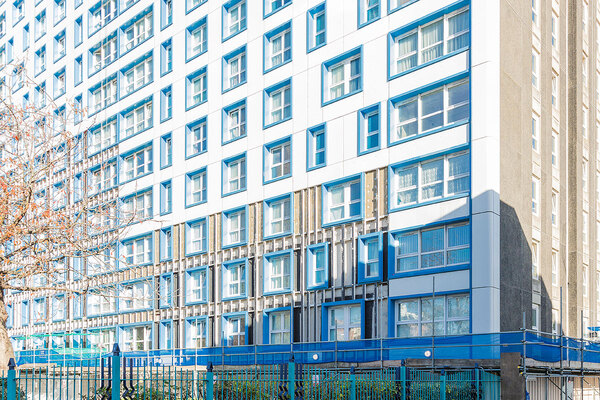
As of 31 March 2025, the median determination time from submission to decision was 25.1 weeks.
The statutory determination period is 12 weeks for new-build HRB works or eight weeks for existing HRB works.
The BSR data showed that, from 1 October 2023 to 31 March 2025, 45% of applications had a decision made within the statutory determination period.
For new-build and remediation applications, this was 44% and 2%, respectively.
The number of open applications as of 31 March 2025 stood at 1,019.
The BSR said it had analysed 42% of failed applications, concluding that 50% of existing buildings applications and 45% of new-build applications were rejected for not complying with building regulations.
For existing buildings, 89% of applications did not contain sufficient detail, while 80% did not meet the legal requirements for that type of work.
For new-build applications, 73% of applications did not meet the legal requirements for approval for work on a new HRB.
Other reasons for rejecting applications included not “adequately” explaining how changes would be managed throughout construction or how it would satisfy golden-thread requirements.
The BSR acknowledged “there are delays in processing applications and we continue to introduce improvements”.
“Recent recruitment activity is having a positive impact on productivity, with the number of decisions doubling (month on month) overall since March. Significantly, the number of decisions made are now exceeding new applications received,” it said.
“We take a pragmatic approach to assessment, as we recognise this is a new system for everyone. Where possible, we engage with applicants to help them navigate the requirements, but industry also needs to play its part to reduce delays,” the BSR added.
The BSR is introducing an innovation unit aimed at fast-tracking new-build applications, as part of several reforms to the organisation announced at the end of last month. It hopes to “speed up the process for around 30,000 new homes in high-rise buildings” for which it has already received applications.
A new remediation enforcement unit is also being established to assess the cladding risk for registered HRBs.
The changes received a mixed response from the sector, with concern remaining about the BSR’s structure and focus.
Sign up for our fire safety newsletter
Already have an account? Click here to manage your newsletters
Related stories