You are viewing 1 of your 1 free articles
Call for ban on homes with worst hazards being deemed suitable as temporary accommodation in Wales
A thinktank says the Welsh government should ban the use of properties with the worst safety hazards from being deemed suitable as temporary housing.


 Call for ban on homes with worst hazards being deemed suitable as temporary accommodation in Wales #UKhousing
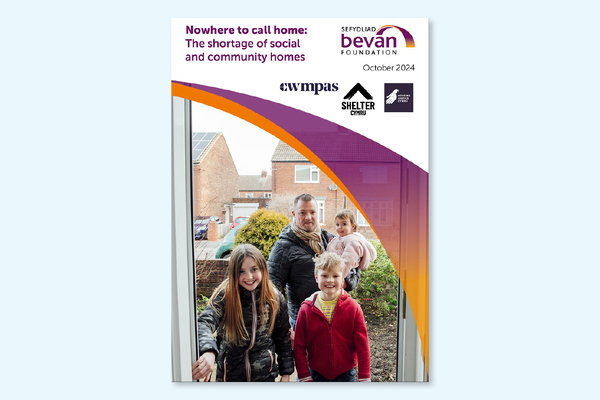
The Bevan Foundation put forward the measure as one way to remove the risk of serious harm to children and families living in unsuitable temporary accommodation.
It comes as a new report by the charity sets out the risk of harm to children’s physical and mental health, education and family life from this type of housing.
Researchers drew on a range of sources including case notes from Shelter Cymru, interviews with over two dozen professionals and in-depth interviews with people who have lived in temporary accommodation.
They found evidence of dangerous overcrowded conditions, “worrying” sleeping arrangements for babies and accommodation in disrepair with limited facilities.
Read more
One health visitor quoted in the report highlighted a council’s use of a hotel that does not have space for a travel cot, telling researchers: “We’re all so aware of SIDS [sudden infant death syndrome] and the fact that co-sleeping can increase the risk of that. Every infant needs a cot to sleep in.”
Other health visitors were worried about the risk to children from the large amount of personal items stored in the small living space provided by temporary accommodation.
“We often see accidents happening because there’s just not enough room for everything and everyone… kids getting burned by hair straighteners is a common one unfortunately,” said one visitor quoted in the report.
Case notes from Shelter Cymru also highlighted problems such as leaking roofs, damp or mould, broken stairs, a lack of lighting and dangerous electrics.
“Examples were particularly prevalent in bed and breakfast placements as well as accommodation in the private rented sector which was being leased by the council,” researchers said.
In their conclusion, the report’s authors set out 12 recommendations, with seven specifically aimed at removing the risk of serious harm.
They urged the Welsh government to change official guidance to ensure that no toddler under the age of two spends a night in temporary housing where no cot has been provided, and to make free and secure storage options available for families moving into this kind of accommodation.
Researchers also called on the government to enforce standards for B&Bs and recommended that Public Health Wales review data to make sure child deaths in temporary accommodation are recorded and learned from.
Freedom of Information requests by Inside Housing showed there were 502 children under the age of five in this type of housing in Wales at the end of March 2025.
As of June, more than 2,600 children under 16 were living in temporary accommodation in the country, according to official figures.
Of these, 327 children were living in B&Bs and hotels, known to be the least suitable type of temporary accommodation, and 158 were in a hostel.
The majority, nearly 1,000, were in council housing, 576 in a private rented sector property and 328 in homes managed by housing associations.
Wendy Dearden, senior policy and research officer at the Bevan Foundation, acknowledged that councils struggle to find suitable housing for homeless families in the current market, but insisted more needs to be done.
She said: “Regulations are in place around the suitability of temporary accommodation, but these are not being enforced.
“Local authorities are working hard in difficult circumstances but there is a systemic culture in both local and Welsh government that ‘we are doing the best that we can’.
“The Bevan Foundation believes that Wales needs to do better when providing for children and families living in the most vulnerable of circumstances.”
Rocio Cifuentes, children’s commissioner for Wales, was more critical, saying children are being “failed”.
She said: “Many children and their families who are experiencing homelessness are living in terrible conditions across Wales.
“Children are being failed, and as this report shows, there is far more we could be doing to keep them safe until their housing situation has been resolved.”
And Katey Jo-Pilling, peer researcher at Shelter Cymru, highlighted the strain that life in temporary housing places on families.
She said: “The stress and worry that temporary accommodation causes for families is palpable when we speak to them.
“Whether it’s that they’re stuck in damp or mouldy homes, that they’re living in a hotel with strangers in the next rooms, or that their family is forced to move two or three times in the space of a few months – children and their parents feel this stress and it impacts every part of their lives.”
In its response to Inside Housing, the Welsh government stressed its focus on prevention, including investment in social housing and funding for projects supporting young people at risk of homelessness.
It cited recent data showing that the majority of dependent children in temporary housing, 73%, are in “traditional homes” in the private or social sector.
The administration also pointed out that more than 9,000 people had been able to move from temporary to permanent housing in the past year.
The Welsh government said: “We are actively tackling homelessness in Wales, and we continue to take a ‘no one left out’ approach so that no one [is] forced to sleep rough.
“Prevention remains the focus and priority to reduce the flow of people needing temporary accommodation – and we are investing almost £220m in homelessness prevention and housing support this year alone.
“Alongside this investment, the recently introduced Homelessness and Social Housing Allocation (Wales) Bill, which is grounded in the insight and expertise of people with lived experience of homelessness, aims to transform the current system in Wales to focus on earlier identification and prevention – providing more tools to support people into longer-term homes.”
Sign up for our Wales newsletter

New to Inside Housing? Click here to register and receive our Wales round-up straight to your inbox
Already have an account? Click here to manage your newsletters
Related stories