Contractors that pay supply chains late could be banned from public contracts
The government is consulting on procurement changes that could see suppliers prevented from bidding on major public contracts if they do not pay their invoices on time.


 Contractors that pay their supply chains late could be banned from public sector jobs #UKhousing
The plan aims to address the “significant problem” of late payments, particularly for small businesses, and is one of a number of proposed amendments to the Procurement Act 2023.
Under changes already brought in earlier this year, firms can be barred from bidding on central government contracts if they do not pay 95% of invoices to their supply chain within 60 days and within an average of 45 days overall.
Read more


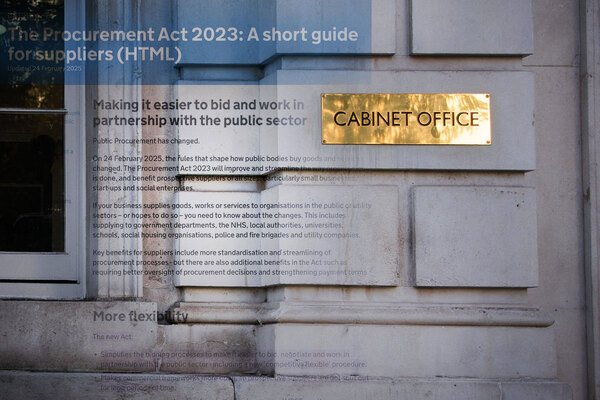
The new proposal broadens this to all contracting authorities, which will now have to exclude suppliers from bidding for contracts above £5m if they cannot show they pay their invoices on time.
“Extending the current policy beyond central government organisations would ensure that more suppliers across the public sector are committed to paying their supply chains on time,” the consultation said.
In changes aimed at making procurement for SMEs more flexible, the government is also seeking views on whether public contracts should be awarded for certain services delivered to people with support needs without full competitive procedure.
Other proposals include introducing KPIs in public contracts relating to jobs, opportunities and skills, and plans for contracting authorities to carry out a public interest test before outsourcing large service contracts.
These changes build on the Procurement Act 2023, which sought to reform the rules governing the £385bn spent through public bodies each year.
The act came into force in February with a new National Procurement Policy Statement setting out the government’s strategic priorities for public procurement.
From April this year, all central government departments are expected to set three-year targets for direct spend with SMEs and publish their progress annually.
From 2026, they will also have to make targets for voluntary, community and social enterprises.
Public procurement is a key part of the government’s Industrial Strategy. Labour believes that public service and procurement reform is becoming a powerful lever in its plans for national renewal.
Labour MP Georgia Gould, parliamentary secretary for the Cabinet Office, said: “Through these reforms, public procurement will truly be in the service of the people - empowering British businesses, supporting social enterprise, safeguarding our national interests, and tackling today’s challenges while building a prosperous and fair future for all.”
The consultation is now open and closes on 5 September.

Related stories