You are viewing 1 of your 1 free articles
Birmingham City Council has launched a longer-term leasing scheme for temporary accommodation in a bid to reduce the cost pressures associated with subsidy rules.

The 10 year plus one day scheme aims to lease private sector homes the council uses for temporary accommodation for more than 10 years, which legally allows it to account for the costs in its Housing Revenue Account (HRA) instead of its general fund.
According to a council report, it could help Birmingham avoid the £7m gap it covers per year as a result of the temporary accommodation subsidy rules. These only allow local authorities to claim back 90% of Local Housing Allowance (LHA) rates from January 2011.
Alongside this, the council launched a dynamic purchasing scheme (DPS) in May, which aims to obtain additional properties to add to the 10 year plus one day arrangement.
“The initial aim will be to transition the 346 existing properties provisioned on the outgoing DPS and seek to obtain up to 500 additional properties per year,” according to the report.
The details emerged in a document providing an update on approved recommendations set out in a 2024 report to the council cabinet on options to address the cost, quality and supply challenges related to the statutory provision of temporary accommodation.
One of those options was to obtain properties on leases of more than 10 years within the HRA.
The HRA (Exclusion of Leases) Direction 1997 excludes leases of up to 10 years from the HRA for homes used by councils to house people experiencing homelessness.
If the leases are for 10 years or more, the cost can be covered from within the HRA, which can be under less pressure than the general fund.
This also allows the council to apply an affordable rent to accommodation used for the purposes of housing – 80% of market rent – which is recoverable from the Department for Work and Pensions (DWP).
Councils can pay millions of pounds per year to fill the gap caused by the subsidy rules.
According to Birmingham’s report, the subsidy restriction “passes the cost pressure on to the council’s general fund which amounts to an annualised cost of circa £7m for 957 properties”.
It said that, in 2024, via Manchester City Council, the local authority was made aware of “an opportunity for the council to capitalise HRA legislation to develop a much-improved subsidy recovery arrangement”, referring to the 1997 direction.
“Leases over 10 years can be accounted for within the HRA thus allowing the council to apply a ‘reasonable rent’ to accommodation used for the purpose of housing with leases placed upon dwellings for a period more than 10 years and one day,” the report said.
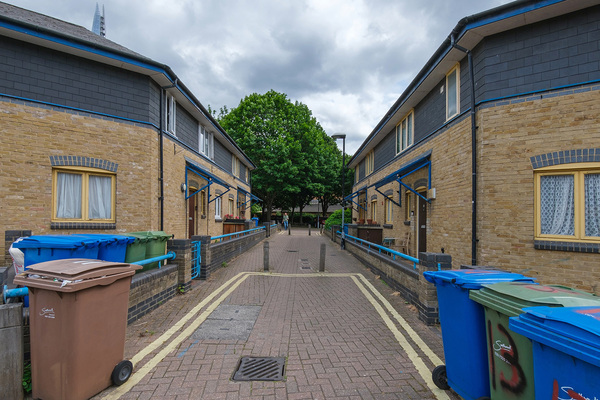
As it stands, the council’s general fund temporary accommodation block contract consists of 957 private sector leased properties (PSLs).
The homes were procured in 2021-22 under a block contract arrangement to use as temporary accommodation as an alternative to B&Bs.
The council has communicated with all landlords to promote the 10 year plus one day leasing initiative.
“Agreement has been secured with the revenue and benefits service to apply affordable rents (80% of market rates). Through these efforts, the first 200 properties are confirmed to transition to the 10 year plus one day scheme,” the report said.
However, it said there was still “significant progress to make to ensure the full 957 properties come across to the new arrangement, noting that any properties that do not come across to the scheme still present a significant financial liability to the general fund”.
“The risk is that this is a voluntary agreement and will require continued and sustained engagement to ensure providers and landlords are comfortable with the new arrangements.”
However, it said the DWP contribution “allows the council to provide a financial incentive to current and prospective landlords by offering a larger percentage of rent imbursement to the participating parties”.
As of March, 24% (220) of existing PSL properties were confirmed to be transitioning to the 10 year plus one leasing scheme.
A further 38% of properties are a ‘maybe’, 21% are unknown, 4% could not be considered, as they had already issued notice to withdraw, and 38% are with providers that do not want to be part of the scheme.
According to the report, work will continue across June to “encourage providers to be part of the scheme”.
Jayne Francis, cabinet member for housing and homelessness at the council, said: “An approach to our provision of temporary accommodation that meets our statutory obligations and seeks to manage the associated costs was approved by cabinet in September 2024.
“Part of our approach reviews the way homes from private landlords are secured to be used as temporary accommodation.
“To provide both greater assurance of the supply of temporary housing and assurance to the landlords, we are working with these private landlords and providers to, where possible, secure a lease of over 10 years.
“Following due diligence, we understand that a lease of more than 10 years can be accounted for in the HRA and that we can apply a rent that at least reduces the subsidy currently required, with an affordable rent being used as the benchmark.
“A new framework for the supply of additional homes on a lease arrangement of more than 10 years has been offered to the market. Birmingham City Council is currently finalising offers arising from this framework.”
Already have an account? Click here to manage your newsletters
Related stories