You are viewing 1 of your 1 free articles
Delivery targets, lack of Gypsy and Traveller sites, and accessibility concerns raised at GLA meeting
London Assembly members have accused the mayor’s team of failing to deliver affordable housing, not meeting targets for Gypsy and Traveller sites, and raised concerns around accessible homes.


 Delivery targets, lack of Gypsy and Traveller sites, and accessibility concerns raised at GLA meeting #UKhousingLondon Assembly members have accused the mayor’s team of failing to deliver affordable housing, Gypsy and Traveller sites and accessible homes #UKhousing
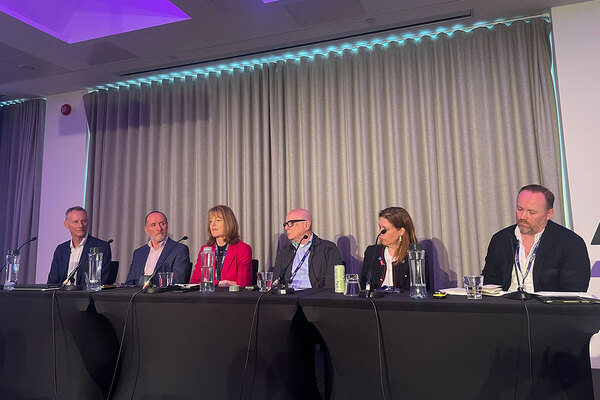
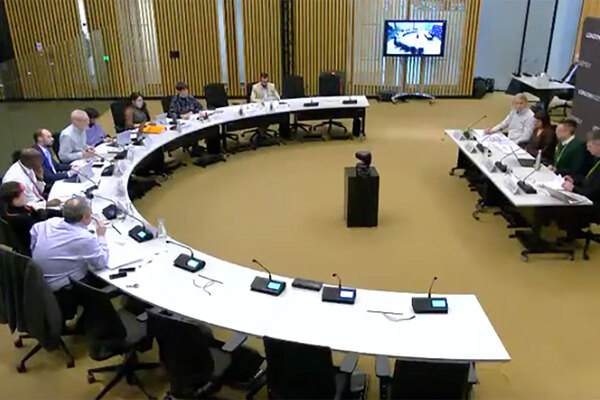
The concerns were raised at meeting of the Greater London Authority’s (GLA) housing committee on Wednesday.
It was revealed that just 979 homes have been completed under London mayor Sadiq Khan’s 2021-26 Affordable Homes Programme (AHP) – 5.5% of the revised 17,800 target.
More than 12,000 planned homes have not been started. The figure is up from the total of 876 grant-funded affordable homes that Inside Housing reported in August were completed during the first quarter of 2025-26.
These latest figures from the GLA showed that just 347 new affordable homes have been started in the capital since April.
For Traveller sites, City Hall promised hundreds, but delivered only 10 new pitches in 15 years, despite its own estimates that up to 708 were needed for London’s 30,000-strong Gypsy and Traveller community.
The London Gypsies and Travellers (LGT) charity has said there are “errors” in the mayor’s plan which have led to a big undercount of the number of new Traveller pitches needed in the capital.
Read more


Researchers from LGT pointed out that a previous GLA plan from 2008 for new Traveller pitches in London established a need for 1,626 pitches in London and that the highest figure proposed by the plan for 2025, which is currently in its draft form, has been reduced to about half that.
For disabled Londoners, nearly a third rely on social housing, but just 3% of homes approved last year were built to accessibility standards and only 1% were wheelchair-accessible, according to charity Inclusion London’s report in February.
Tom Copley, deputy London mayor for housing and residential development, admitted there was “no way to sugarcoat” that the numbers of Traveller pitches and accessible housing have “fallen short”, but pointed to central and local government delays, as well as shocks to the housing market.
Labour London assembly member Sem Moema said funding should be tied to the delivery of Gypsy and Traveller pitches, and accused City Hall of decades of broken promises.
“Unless targets are enforced, the message is that Travellers are Londoners in name only,” she said.
Mr Copley defended the methodology of the Gypsy and Traveller Accommodation Needs Assessment, despite campaigners warning it underestimates need and locks families into unsuitable housing.
Green assembly member Zoë Garbett also challenged whether the £11.7bn grant for 2026-36 would stretch to provide enough wheelchair-accessible homes.
She said: “If new homes aren’t accessible, thousands of Londoners are excluded from the start. What matters now is delivery.”
Metrics used to assess affordability in London were also put under the microscope, including London Living Rent (LLR) and the key worker rent pilot.
Forty per cent of new homes are earmarked for intermediate housing, but Ms Garbett warned the model was “neither one thing nor another” and risked discouraging investment. The list of eligible key workers varies by borough, creating a “postcode lottery”.
Ms Moema said the £26,000 minimum income threshold excluded many new nurses and paramedics.
Having recently visited the London Ambulance Service, she said: “We heard of people sleeping in hospital car parks because they can’t afford to live in London.”
Ms Moema also challenged whether Mr Khan’s pledge to cap LLR at 40% of local incomes was meaningful. She said: “When developers tell us their discount market rent is ‘affordable’, we need to ask, ‘Affordable for whom?’”
Mr Copley pushed back that flexibility was needed to attract private investors and landlord financial stability was crucial.
Transparency on the target of enrolling 6,000 households onto the key worker scheme was also demanded.
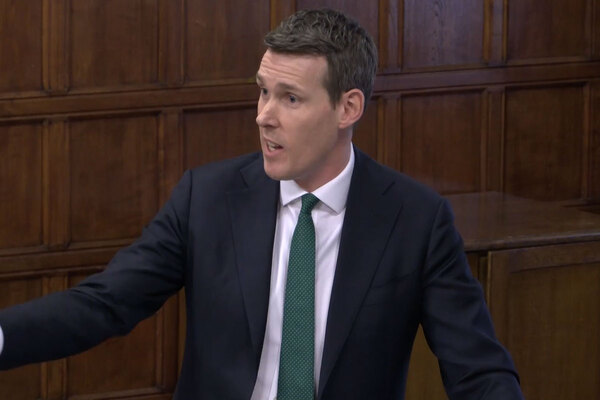
Conservative member Andrew Boff, deputy chair of the London Assembly, scoffed at Mr Copley’s attempts to present the 2021-26 AHP as a success.
“We keep hearing about starts, but people can’t live in starts; they can only live in completed homes,” he said.
Mr Copley cited the coronavirus pandemic, Brexit, rising costs, tougher building rules and fire safety requirements as obstacles that led to the failure to meet targets.
He reserved remarks for former housing secretary Michael Gove, who delayed approval of the programme until October 2023 due to an alleged spat between the Treasury and the then Department for Levelling Up, Housing and Communities.
Mr Copley said: “We are still dealing with the consequences of Michael Gove’s delays. We lost momentum. The sector lost confidence. That damage cannot be undone overnight. That delay was not down to City Hall. That is time lost to Londoners.”
He also cited the record 25,658 homes built in 2022-23, arguing that there is always an uptick in a “hockey stick” shape at the end of a building period.
“You always see completions ramp up towards the end of the programme. We saw it last time and we’ll see it again. This is how housing delivery works,” he explained.
Mr Boff replied: “You can’t just blame the government forever. Londoners see spades in the ground and then nothing happens. Hockey sticks mean very little to families who are still waiting.”
Conservative assembly member Peter Fortune calculated that the average subsidy for the 2021-26 programme was £217,000 per home, with £4bn allocated for 18,400 homes – significantly higher than the 116,000 homes completed between 2016 and 2023.
Mr Copley explained that costs simply have increased and there is no feasible way around this sector-wide issue.
Mr Fortune added: “Whether it’s this mayor or the last secretary of state, the fact is London is only building a fraction of the homes it needs. If the mayor can’t even meet his own targets, it raises very big questions of relevance.”
Sign up for our development and finance newsletter
Already have an account? Click here to manage your newsletters
Related stories