You are viewing 1 of your 1 free articles
Exclusive: Lowest rate of shared owners staircasing to full ownership in a decade
The rate of shared owners in England staircasing to full ownership of their home is at its lowest level in a decade, a report has found.


 Exclusive: Lowest rate of shared owners staircasing to full ownership in a decade #UKhousing
Research from property agency CBRE, shared first with Inside Housing, found that the rate of shared owners staircasing to full ownership fell to 1% of total shared ownership stock in 2023-24. That is the lowest number of the past decade.
Staircasing is the process in which shared owners can buy a larger stake in their home, with the goal of reaching 100% ownership. Both the rate and number of 100% staircases fell in 2023-24 against a difficult economic backdrop, the report said.
The recent slowdown means the average rate of 100% staircasing over the past five years (2020-24) stood at 2% of total shared ownership stock, down from 3% during the preceding five years (2015-19).
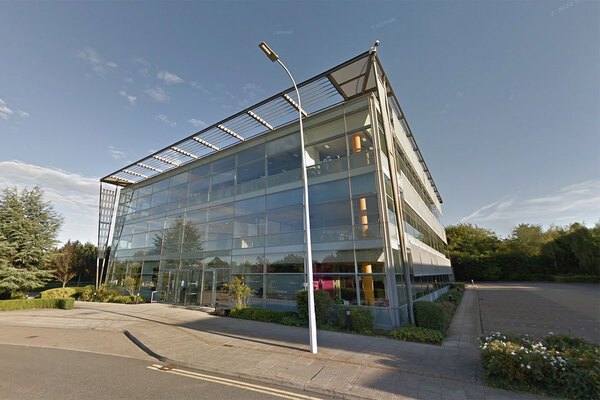
These findings come after housing minister Matthew Pennycook told Inside Housing earlier this month that there may be some tweaks to improve the shared ownership model.
The report blamed the slowdown in staircasing on high inflation over recent years, which affected households’ ability to save, particularly since the rent that shared owners pay on the remaining share of their home is linked to the Consumer Price Index.
While shared owners are now staircasing less frequently to full ownership, when they are staircasing they are doing so in larger chunks. The analysis cited data from Legal & General Affordable Homes, which found the average equity share bought in staircasing events rose from 34% in 2022 to 43% in 2025. Similarly, the value of the additional share bought rose by £15,000 in that period.
This trend has likely been driven by higher interest rates, which drove up savings for those who have money to save.
Alex Cakkos, senior director of affordable valuation and advisory services at CBRE, said: “The staircasing landscape has changed. This latest fall is in line with higher interest rates impacting mortgages and lower HPI [house price index] rates over the last three years.
“Looking forward, as mortgage rates continue to soften, we are optimistic over future staircasing uptake.”
The report, titled The Future of Shared Ownership, reveals that measures introduced by the previous Conservative government to make staircasing easier and more incremental for shared owners have not had the desired effect.
In 2021, the minimum initial share of a shared ownership home was reduced from 25% to 10%, while the minimum staircasing instalment was lowered from 10% to 1%. The two years following the change saw an uptick in the rate of shared ownership households staircasing to full ownership to 2.5% of all stock, but staircasing rates have declined since then.
There are more than 260,000 shared ownership homes in England, accounting for 6% of total social housing stock. The tenure has accounted for an average of 34% of all new affordable housing over the past six years.
Shared ownership first tranche sales reached a new high of 17,806 in 2023-24. That represents an increase of 4% from the previous year and more than 10,000 compared to 10 years ago.
Regions with the most stretched affordability have the most shared ownership homes. In London and the South East, the two regions with the highest house price to earnings ratio, shared ownership homes account for 10% of social housing stock and 2% of total homes. In the North East, where affordability is higher, shared ownership equates to just 2% of social homes.
Average monthly payments for shared ownership are lower than both open market purchases and private rents, CBRE said. In London, monthly shared ownership payments are nearly £1,200 lower than those of the open market, while the required deposit is around £120,000 less for a shared ownership home.
However, in the North East, average monthly payments and deposit for shared ownership are just £190 and £19,200 lower than the open market respectively.
Supply of new shared ownership homes has fallen recently. More than half of all shared ownership homes in the past 10 years have been delivered through Section 106. Supply is therefore largely reliant on private housebuilding, which is currently struggling, especially in cities such as London.
Social landlords have also faced challenges building shared ownership homes, such as rising maintenance and energy costs and insufficient public funding.
However, the government’s new Social and Affordable Homes Programme could provide “much-needed support”, the report said.
Inside Housing understands that as much as 30% of the £39bn scheme will be directed to building new shared ownership homes. The report said an additional 180,000 shared ownership homes could be built over the next 10 years.
Paul Hawkey, senior director of residential capital markets at CBRE, said: “As inflation gradually cools and staircasing becomes more accessible, we expect renewed demand and deeper investor engagement, with shared ownership poised to play a pivotal role in delivering the next generation of affordable housing.”
Shared ownership has consistently faced challenges around ensuring potential buyers fully understand the scheme and its costs.
A new Shared Ownership Code launched in June to standardise best practice and consumer protection. The New Homes Quality Board, which runs the Shared Ownership Code, declined to comment for this article.
Sue Phillips, founder of the website Shared Ownership Resources, told Inside Housing: “Many shared owners find that staircasing is pushed ever further out of reach as property prices rise faster than typical household incomes. Research suggests that staircasing is more likely for highly paid young professionals, households in receipt of a ‘windfall’ (such as an inheritance) or where a single-person household becomes a two-person household.
“However, it’s essential to consider the long-term implications, impact and opportunity costs where less fortunate shared owners find themselves unable to staircase to 100%.
“The scheme wasn’t designed with long-term partial ‘ownership’ in mind, and many shared owners report finding themselves trapped in increasingly unaffordable homes with no viable exit route.”
She added that claims shared ownership is cheaper than the private rented sector or private sale “often take a relatively short-term perspective, or rely on unsubstantiated ‘industry benchmarks’ (such as a 0.25% initial service charge assumption), which may bear little resemblance to the lived experience of many shared owners”.
A spokesperson for the Shared Owners’ Network told Inside Housing: “These latest staircasing figures are not a surprise. The truth about staircasing to full ownership is that only a tiny minority of shared owners will ever be able to afford it.
“The reason is simple: year after year, the overwhelming majority of shared owners will see their housing costs increase faster than their earnings. We’ve seen some very sharp increases in housing costs for shared owners over the last five years, particularly for flats, and especially in London.
This means that many shared owners are now facing significant financial hardship. The shared ownership scheme is effectively making them poorer.”
The spokesperson said that partial staircasing is “not only a very costly process, but it is of little or no benefit” to shared owners, not least because a larger share will make their home “much more difficult to sell”.
They added: “We are calling on the government to provide a statutory right for all shared owners to exit the scheme if their housing costs are no longer affordable, or if their home is unmortgageable.”
Sign up for our tenancy management newsletter
Already have an account? Click here to manage your newsletters
Related stories