Government has unleashed ‘grand leadership experiment’ that will require new cross-sector alliances
Senior leaders in the sector will have to seek out new ways of working in partnership and forging alliances across other sectors to help the government deliver on its housing strategy.


 Government has unleashed “grand leadership experiment” that will require new cross-sector alliances #UKhousing
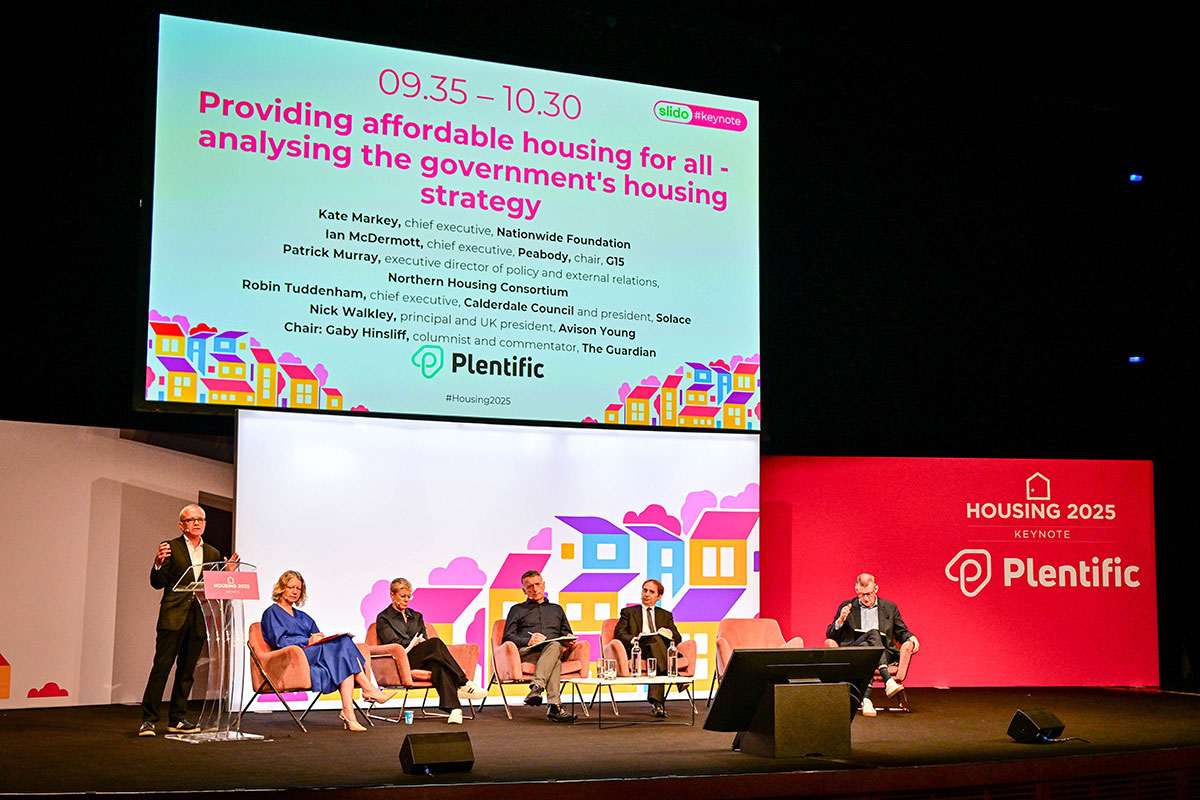
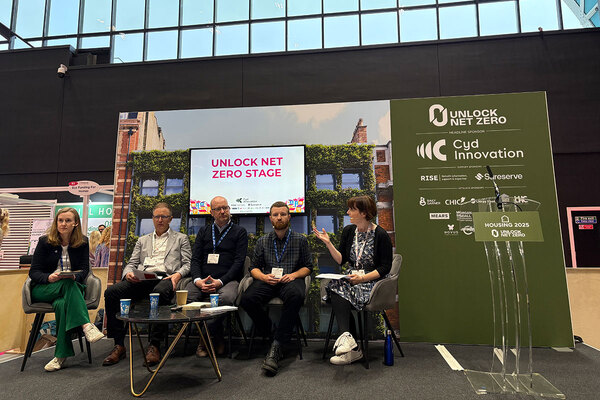
Several senior leaders took to the stage on Wednesday morning as part of a Keynote Theatre session on analysing the government’s housing strategy at Housing 2025 in Manchester.
Nick Walkley, principal and UK president at Avison Young, said: “The fact that housing appears in the national infrastructure strategy that suddenly we’ve left from being an afterthought, to sitting alongside railways, social infrastructure, water, power; as absolutely crucial to the economy and to the sustainability of the United Kingdom, as an economic force, is a very important moment.”
Mr Walkley said the sector needs to make the most of the £39bn Affordable Housing Programme (AHP) cash, and the new National Housing Bank. He said if the sector takes the opportunity to just carry on as things already are, then “we will fail”.
Read more


He added: “We’ll probably get back to about 250,000 homes a year, and then it fades away through the market cycle, and we’ll be back here in five years’ time, hoping there’s another government announcement.”
The former boss of Homes England said the sector must experiment and take risk, and identify more ways to work in partnership, even if some of these ideas fail.
He said: “The government, without announcing it, is involved in a grand governance and leadership experiment of a scale we’ve not seen for probably my lifetime.
“Devolution, new forms of government, moving things to the centre, moving the centre out into the country – that represents a really fundamental challenge to the way we lead organisations.
“I think the answer to the question about where is the appetite to develop is actually a broader question about where’s the capability and capacity for leadership around different issues.”
Robin Tuddenham, chief executive of Calderdale Council and president at Solace, agreed that now was the time for the sector to “step up”.
Mr Tuddenham said: “There are some systematic issues within viability, around housing and for local government and for place.
“There is some development hesitation around Section 106 and challenges for registered providers in making sites work.”
The council leader explained the different challenges that his rural and London colleagues face, and the inability of grant regimes to be more adaptive to the changing nature of development projects.
He added: “We’ve got to really grasp that and see the opportunities in tackling viability as a whole sector, and as a whole system. I think MHCLG [Ministry of Housing, Communities and Local Government] and Whitewall need us to step up, and it’s now time to do so.”
Much of the talk was on leadership in the sector and how boards without the right skills and capacity could take a step back, and seek the support of others who can provide the needed expertise.
Mr Walkley said: “We either end up with persistent poor-quality housing that we’re not tackling on the one hand; on the other, [there is] the shambles we’ve had over the past 10 years of unspent government money, because we’ve not been able to arrange ourselves in the right form.
“We cannot afford for that to happen again. And that means, I think, boards having to let go of some things and let others do it on their behalf, but also being confident to step in where they’ve got the skills and the capacity.”
Panellists also looked at the need to introduce private capital alongside public-private partnerships and government cash to deliver its ambitions. Other questions up for debate were: will supply chains merge? Will the sector move away from just landlord mergers to alliances with other sectors?
“Some of those will involve the private sector running and managing large assets on behalf of the public sector, but it’s not private finance initiatives (PFI). Can we be absolutely clear it’s not PFI”, added Mr Walkley.
Patrick Murray, executive director of policy and public affairs at the Northern Housing Consortium, was keen to stress that while the sector’s increased importance alongside the cash injection is welcome, it shouldn’t forget its purpose.
He said: “The reason we have this package is because the government has listened to us about what we need to unlock delivery for and with communities.
“It feels nuanced, but I just want to follow that through, because this part – the opportunity partnership – is really real. But we have to keep that in mind, because if we think about the outcomes, it means we need to think about what are the actual needs on the ground?
“Places and markets and needs are different across the country. We don’t have one housing crisis. We have a myriad of different housing crises across the country.”
Sign up for our development and finance newsletter

Already have an account? Click here to manage your newsletters
Related stories