Government officials introduced passages on revoking ‘stay put’ into national guidance after LFB omitted them
Government officials were forced to amend national firefighting guidance to include passages on when to abandon ‘stay put’ advice, after the London Fire Brigade (LFB) officers who first drafted it omitted any reference to doing so.


 Government officials were forced to amend national firefighting guidance to include passages on when to abandon ‘stay put’ advice, after the London Fire Brigade (LFB) officers who first drafted it omitted any reference to doing so #UKhousing
The Grenfell Tower Inquiry today saw that government officials expressed frustration with draft guidance the LFB prepared for not properly considering the need to revoke ‘stay put’ when a fire spread rapidly through a building.
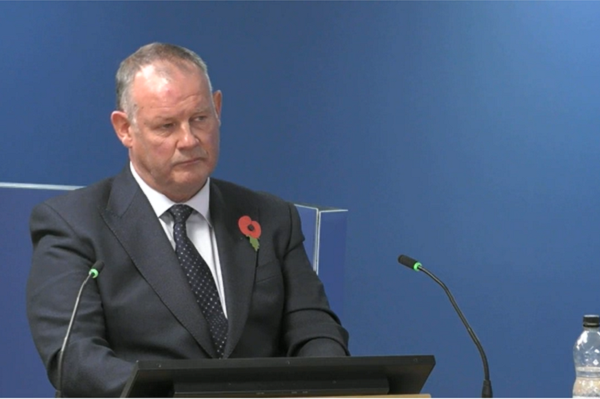
They ultimately added new passages into the final version before publication, but these were not properly taken into account by the LFB when it came to write its own local policies, former head of operational policy Peter Cowup accepted today.
As the inquiry heard yesterday, the LFB had been appointed by government to produce national guidance on firefighting in high-rise buildings, dubbed Generic Risk Assessment 3.2, in the early 2010s.
This was supposed to set the basis for all national fire services to revise their firefighting policies, following the Lakanal House fire in south London in 2009, in which six residents died after being advised to stay put in the burning building.
In June 2013, the LFB provided a final version of the new guidance to officials at what was then known as the Department for Communities and Local Government (DCLG).
However, by this point DCLG had received a letter from the coroner investigating the deaths at Lakanal in which she had ordered them to produce new guidance to inform the decision to switch away from ‘stay put’ advice should it become clear that it was “no longer tenable”.
The officials were concerned that Mr Cowup’s guidance did not address this issue, called him in for a meeting and asked him to make alterations to take the coroner’s recommendations more clearly into account.
Mr Cowup said today that he was “surprised and disappointed” to be asked to do this. “I wasn’t especially happy with what was happening because we put an awful amount of effort into this document [and] [D]CLG were involved from the outset,” he said. “I really didn’t want to jeopardise the publication of the document at this late stage.”
Read more
In September 2013, the LFB sent back another version of the document to DCLG with sections added concerning evacuations and what to do when taking calls from trapped residents.
However, these additions still contained no guidance on when to lift a ‘stay put’ policy and how to manage evacuations in a building that was reliant on ‘stay put’.
Questioned by inquiry chair Sir Martin Moore-Bick, Mr Cowup accepted that these changes “did not add anything” to his original draft.
Internal emails not shared with Mr Cowup revealed officials saying that his changes “do not add a great deal of clarity”, with one adding that the draft document had “lost its purpose”.
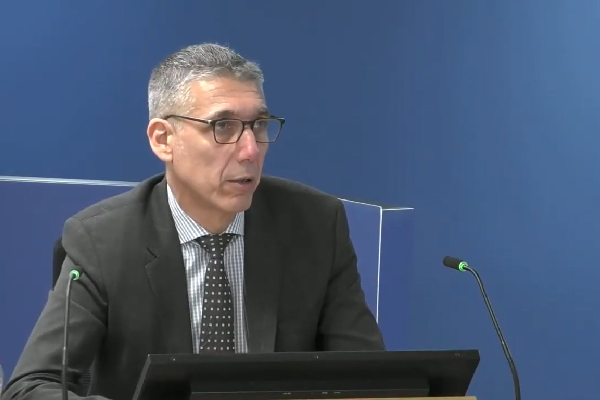
“The concern from myself and DCLG colleagues is that it does not clearly meet our commitments to the coroner,” wrote one official, Les Britzman.
Mr Cowup said today that he disagreed with the need for further changes and accused the official of being “on a crusade”.
“I felt it [the document] was fit for purpose,” he said. “Les Britzman felt to me like he was on a crusade… There was almost a ‘look at me’ element to his comments. Often when he sent emails back to me he copied in some of these more senior colleagues, I don’t know whether he was trying to show that he was fighting the good fight.”
Ultimately, DCLG published a final version of the document in February 2014, to which officials had unilaterally added lines on stay put and evacuation.
One of these said incident commanders should “understand when a full or partial evacuation might become necessary” in a building that usually relied on ‘stay put’ while another called for contingency plans for events including “fire spread beyond the compartment of origin and the potential for multiple rescues”.
But the LFB has accepted that at the time of the fire it did not provide “any guidance or direction in either its policies or training as to when and how a stay put strategy should be reversed”.
Asked if he could explain why this was the case, given the work that had gone into GRA 3.2, Mr Cowup replied: “I can’t.”
He said that the answer was likely to lie in the “training commissioning process”, which he said others were responsible for.
“Can I put something bluntly and directly to you: that the reason why no guidance or direction was available in either policies or training was that neither you nor your department had properly considered the impact of [D]CLGs amendments to GRA 3.2 at all?” asked counsel to the inquiry Andrew Kinnier QC.
“I think the people who could answer that best [and] more in an informed way would be the people who drew up the training specification,” said Mr Cowup.
The LFB had prepared and reviewed its own local policy document to implement GRA 3.2 in 2013, meaning it did not include the late amendments introduced by DCLG, the inquiry heard today.
A major training exercise to test its new policy was also done before the changes were introduced by the government and never repeated.
“Did you not consider that due to the significant changes that had been made to GRA 3.2 by [D]CLG it would be a benefit to design and carry out a fresh operational exercise that reflected those later changes?” asked Mr Kinnier.
“I think it’s fair to say that I didn’t give [that] any active consideration and I can see a reflection that that was probably a mistake,” said Mr Cowup.
On the night of the Grenfell Tower fire, the first incident commander to attend failed to reverse the stay put policy when flames began to race up the outside of the building shortly after 1am.
He would later tell the inquiry that he was shocked by the rapid spread of the fire and that his training had not prepared him for dealing with it.
The stay put advice was not revoked until 2.47am, by which point many residents had lost the opportunity to escape, as smoke filled the stairwell and communal lobbies.
Lawyers for the bereaved last week criticised DCLG officials for pushing for these changes to firefighting guidance, despite supporting other guidance to housing providers at the same time, which encouraged firm reliance on stay put.
The inquiry continues with further evidence from Mr Cowup tomorrow.
Sign up for our weekly Grenfell Inquiry newsletter
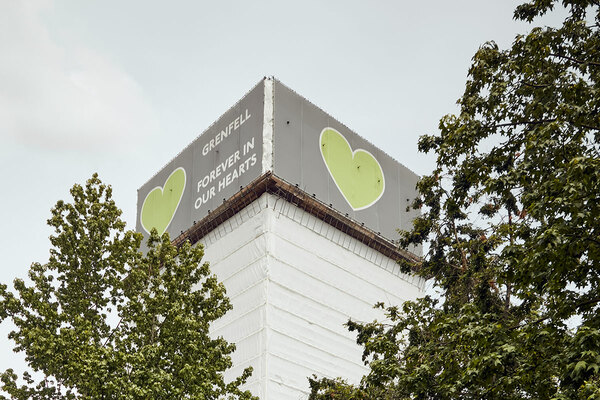
Each week we send out a newsletter rounding up the key news from the Grenfell Inquiry, along with the headlines from the week
Already have an account? Click here to manage your newsletters
Related stories