You are viewing 1 of your 1 free articles
Labour should ‘proceed very carefully’ with land value capture, expert says
The Labour Party should “proceed very carefully” with land value capture if it wishes to develop its promised new towns, a housing industry expert has said.


 The Labour Party should “proceed very carefully” with land value capture if it wishes to develop its promised new towns, a housing industry expert has said #UKhousing
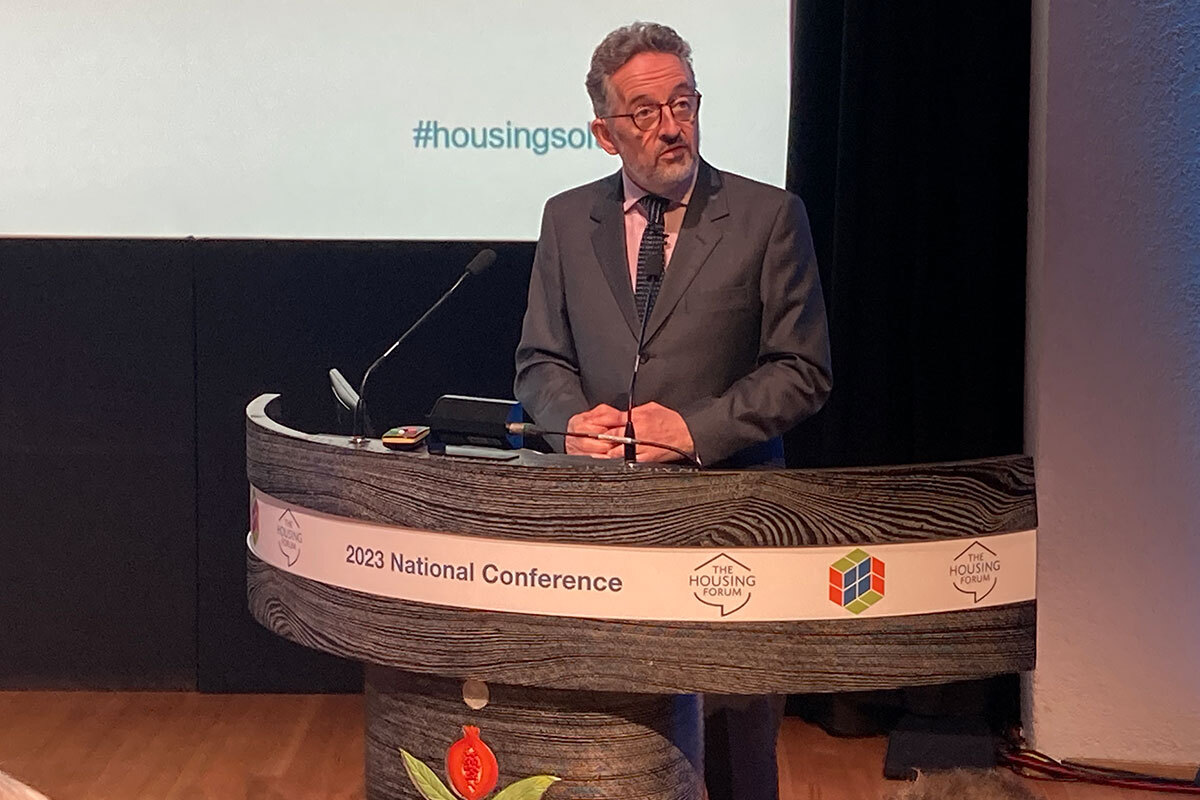
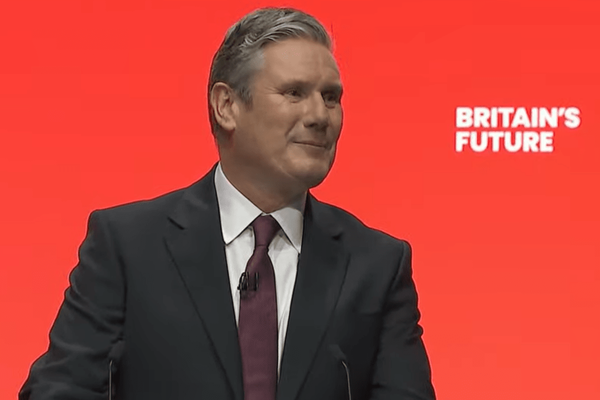
Simon Rawlinson, head of strategic research and insight at Arcadis, said Keir Starmer’s party saw “the politics of land” as the solution to deliver new towns, but warned it was “one of the most controversial areas” of Labour’s plans.
Speaking at The Housing Forum conference in London on 24 October, Mr Rawlinson said recent comments from the Institute of Fiscal Studies highlighted “what a bind all governments are going to be in over the next 10 years”.
Asked by Inside Housing what he made of Labour’s policies, including the next generation of new towns and planning reform, Mr Rawlinson said: “The new towns idea is a really interesting idea and it picks up on some lessons around long-term delivery and large programmes.
Read more


“I think where the risks are [is] probably in the politics of land and land value capture, which is probably one of the most controversial areas.
“[Labour] sees land value capture as the solution to how you can deliver affordable homes… and I think they just need to proceed with that very carefully if they want to maintain the delivery of homes at a reasonable scale.”
Labour plans to reform how land is valued under compulsory purchase orders (CPOs). However, the measures are likely to provoke opposition from landowners, especially those with fields suitable for development.
The Levelling Up and Regeneration Bill currently going through parliament proposes a number of changes to the existing CPO system, including extending the period in which the powers can be exercised and giving inspectors the ability to choose the appropriate procedure to confirm a CPO.
Mr Rawlinson was also sceptical of the Labour leader’s pledge earlier this month to develop 1.5 million homes over the next parliament, or 300,000 a year.
“That idea of getting up to 300,000 [homes] very quickly is debatable,” he said, given “constraints” faced by the house building industry such as a “crisis in the labour market” and “the fact that we are now moving into a cyclical downturn”.
In his keynote address, Mr Rawlinson told attendees that “there is probably nothing more political than housing”.
He said: “We’ve probably stretched one single housing model to breaking point, and the cost of living crisis has exposed that.
“We’re still tied to that cyclical for-sale market, whether we’re delivering affordable, whether we’re delivering mixed market, whether we’re delivering prime market.
“My reflection is that we should have added politics to that mix right from the start.”
Mr Starmer pledged to “bulldoze through” what he described as a “restrictive” planning system to deliver the “next generation of Labour new towns”.
Speaking to Inside Housing after the announcement, shadow housing minister Matthew Pennycook added some flesh to the bones of those proposals and explained what planning reforms he thinks are needed to quickly boost housebuilding.
He said: "We’re very clear that you’ve got to do a lot of stuff early on in terms of the planning system. We’ve got to amend the National Planning Policy Framework to undo some of the damaging changes the government has made.
“There are other interventions such as writing to chief planning officers with directions, as we’re going to get more serious about enforcing local plan coverage and trying to drive up rates of plans that are up to date.”
Sign up for our development and finance newsletter
Already have an account? Click here to manage your newsletters
Related stories