You are viewing 1 of your 1 free articles
New AHP could deliver 500,000 affordable homes over next decade with additional £100bn in private finance
Research has found that the new Affordable Homes Programme (AHP) could deliver as much 500,000 homes in the next decade, but will need roughly another £100bn in private finance to plug a viability gap.


 New AHP could deliver 500,000 affordable homes over next decade with additional £100bn in private finance #UKhousingThe new Affordable Homes Programme could deliver 500,000 homes in the next decade, but will need roughly another £100bn in private finance to plug a viability gap #UKhousing
The research by JLL looked at whether the AHP funding is enough to help the government reach its target of 1.5 million new homes this parliament.
The consultancy used previous grant funding models, split between social and affordable rent and shared ownership, to reach the 50,000 homes per annum estimate. However, this would be “at a stretch”.
This assumes that the affordable housing sector would broadly continue with its current delivery model. The government confirmed on Monday that the new AHP will prioritise social rent.
A previous analysis by the National Housing Federation has shown that a 10-year AHP, with an average of £4.6bn per year over its first five years, could deliver 320,000 new affordable homes.
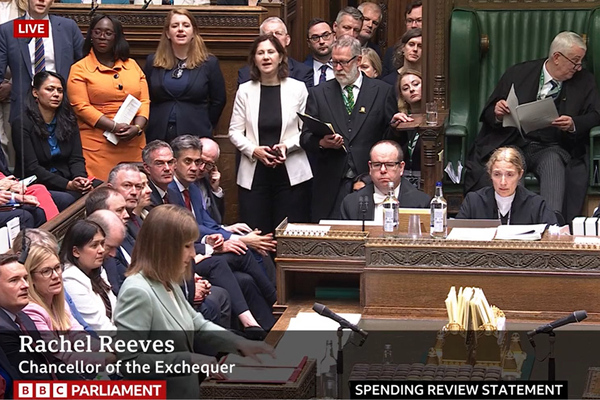
This is a slightly higher figure than what the government has promised at around £3.9bn a year.
Read more
JLL has admitted that the answer of whether the cash is enough is difficult because if it was a case of dividing the money by the cost to build – taking into account land, build costs and other expenses – £39bn could fully fund only around 130,000 new three-bed homes over the next decade.
However, this would be inefficient as this is not the only type of home needed. Another issue is that the grant money does not cover the full cost of an affordable home.
In order to plug this funding and viability gap, roughly another £100bn in private finance would be needed. This would mean additional borrowing for a social housing sector that is already near the limit of what it can service in terms of interest payments, even if there is plenty of security available to charge.
This would narrow the shortfall gap against the 1.5 million target. JLL acknowledges that a significant proportion of affordable delivery would still come through Section 106.
For this reason, the 10-year rent settlement announced in the Spending Review and the upcoming consultation on rent convergence are of pivotal importance.
Another concern for JLL is whether the government’s planning reforms will deliver the rise in permissions it is hoping for, at a time when there are 200,000 fewer construction workers in the UK compared with pre-coronavirus pandemic and 500,000 fewer than before the global financial crisis.
Despite the gaps highlighted by JLL, the firm believes that this “could potentially be the beginning of the road to bringing the waiting list back down below one million for the first time this millennium”.
Nick Whitten, head of living research and strategy at JLL, said: “A £39bn pledge for new affordable housing over the next decade is the largest government commitment we’ve seen in half a century – and one that has to be commended at a time when the public purse is more than a little stretched. But while the ambition is clear, the reality is complex.
“If used as part of a typical grant funding model and spread appropriately across tenures, this sum could support delivery of up to 500,000 affordable homes over the next decade, or around 50,000 a year at a stretch. However, that still leaves a significant shortfall against the national target.
“Fully closing the gap to 1.5 million new homes this parliament now depends on unlocking additional private investment, streamlining the planning system and addressing the shrinking construction workforce.
“If the stars align, this could kick-start the biggest top-up of UK affordable housing stock in decades, taking the government closer to its target than many would have predicted. The opportunity is huge, but so is the challenge.”
JLL also highlighted some positives, including confidence gradually improving in the wider UK housing market.
With the Bank of England expected to reduce interest rates further over the coming months, the combined effect of rising sales and improved affordability is creating some room for positivity.
This would be welcomed by first-time buyers, but they are not the only group who would benefit. Data from a recent JLL Landlord Survey revealed that half of landlords would be prepared to increase their portfolio size if rates fell below 3%.
In an attempt to tackle the wider shortage in the private rented sector, the Spending Review set aside £10bn for financial investments. Roughly half is being given to Homes England to unlock new homes of all tenures. JLL believes that most if this would be expected to be channelled towards new private rental housing.
While JLL has welcomed the new AHP cash, its impact depends on efficient and effective procurement and addressing some critical challenges.
Sign up for our development and finance newsletter
Already have an account? Click here to manage your newsletters
Related stories