You are viewing 1 of your 1 free articles
London’s estate regeneration plans could deliver 151% increase in homes, report claims
Approved estate regeneration projects in London would increase housing stock by 151%, with 90,000 new homes built, but less than half of them would be affordable, a report by a planning consultancy has claimed.


 Approved estate regeneration projects in London would increase housing stock by 151%, with 90,000 new homes built, but less than half of them would be affordable, a report by Lichfields has claimed #UKhousing
A study by Lichfields found that planned regeneration work across 200 estates in the capital could significantly increase density, particularly in inner London boroughs. The study found that 48% of the approved homes were deemed affordable.
It did not specify what tenure these homes would be, but said the figure included homes built to replace existing affordable homes that would be demolished under the plans.
Rules set by the Greater London Authority (GLA) require, as a minimum, that an estate’s existing affordable housing must be re-provided through regeneration at the same tenure.
The report said that London’s estates “often provide opportunities for far higher densities”.
“Many of London’s estates are low rise, poorly laid out and represent an inefficient use of accessible urban land,” it added.
“As a general rule, a two to three-fold increase in homes is required for a project to be viable and deliverable, while yielding sufficient new affordable homes,” the report said.
Individual estate regeneration projects are most common in Tower Hamlets, which had 23 projects. Islington had 17 projects, 16 were in Lambeth, Hackney had 15 and Southwark had 13.
The report noted that outer London appeared to hold “less political ambition and less policy focus on estate regeneration”.
In terms of outer London boroughs, Barnet, Brent and Ealing had some estate regeneration programmes, but other boroughs had no substantial estate regeneration plans at all.
The pattern of estate regeneration across inner London, according the report, also saw clusters of small and medium estate projects built alongside isolated strategic developments.
Read more


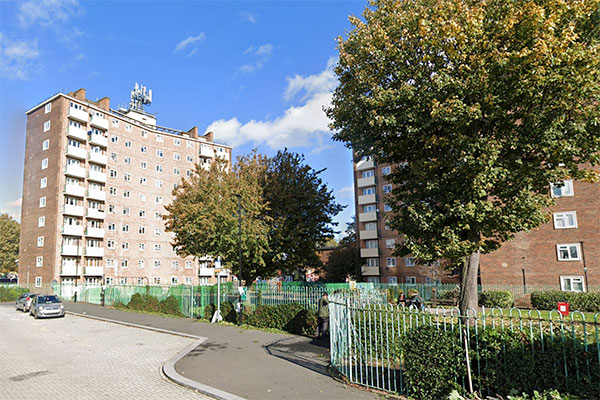
Estate regeneration has become increasingly controversial in the capital in recent years, with critics claiming it results in the loss of the city’s working-class communities.
But proponents argue it is one of the only viable means to release enough land to build homes at scale in the city.
Since 2018, it has been a requirement that regeneration schemes with more than 150 homes funded by GLA grant hold a ballot of residents before proceeding.
The report said that “almost all of the ballots to date have been overwhelmingly positive, and the frequency and scale of estate renewal projects in London continues to grow”.
“Lichfields’ view is that the mayor’s approach to estate regeneration and the ballot process provide clarity and support for well conceived development at London’s estates,” the report said.
“The ballot provides a mandate for regeneration and the mayor’s approach allows these often sensitive and charged developments to be progressed in a manner that is acceptable both politically and to communities.”
The report also recommended changes to the planning system. “The planning process for estate regeneration projects must be front-loaded, analytical, well evidenced and collaborative. The planning strategy must be informed by early analysis of the estate, feasibility work and design development,” it said.
Ben Kelway, senior director at Lichfields, said: “Through this important research we can see that estate regeneration provides a profound opportunity for significant housing and affordable housing delivery alongside meaningful improvements to many neighbourhoods across the capital. In London we have witnessed progressive growth in this sector in recent years and we expect this to continue.
“The opportunity is there to more than double the number of homes on London’s housing estates and provide much-needed improvements in housing quality, community well-being and the public realm. Investment in estate regeneration has the potential to unlock high levels of new affordable housing and the capacity to create well-designed, sustainable, mixed-tenure communities.”
The report also stated that resident engagement is key to successfully delivering estate regeneration.
Clare Catherall, associate director at Lichfields and co-author of the Insight report, said: “There’s a number of common themes associated with successful estate regeneration.
“These include positive engagement with local residents, encouraging communities to become involved in the process as early as possible, together with good housing design and well thought out urban design and public realm.
“Navigating these projects through the residents’ ballot process and developing an effective phasing and decant strategy are also paramount to their success. A positive ballot provides a mandate for good estate regeneration and community consensus, enabling delivery of the vision residents, the GLA and planning authorities all want to see.”
Sign up for our development and finance newsletter
Already have an account? Click here to manage your newsletters
Related stories