North East social landlords reveal delivery ambition for next decade in new prospectus
Housing associations and councils in the North East of England have revealed in a new prospectus that they will aim to deliver a minimum of 15,000 homes over the next 10 years.


 North East social landlords reveal delivery ambition for next decade in new prospectus #UKhousingSocial landlords in the North East of England have revealed in a new prospectus that they will aim to deliver a minimum of 15,000 homes over the next 10 years #UKhousing
In a prospectus from the North East Housing Partnership (NEHP) setting out regional delivery plans, the social landlords have pledged to work as a collective on co-ordinated pipelines of new homes.
The NEHP is made up of 20 housing associations and local authorities that operate in the region. The prospectus contained new detail of the North East’s bid to Homes England’s Social and Affordable Homes Programme (SAHP).
It said that as part of that 15,000 figure, the emerging partnership bid has “the potential to deliver more than 8,000 affordable homes across the North East over the next decade, providing a step change in the coordination of delivery in the region”.
Read more



The prospectus set out plans to create “a single strategic housing conversation that includes Homes England, local authorities and housing providers, to align development pipelines, funding programmes and delivery priorities”, the prospectus stated.
The prospectus also promised a big focus on regeneration. This will involve a “shared approach to regeneration and additionality, in which additionality is considered at a regional scale rather than site-by-site, so that housing investment can support both new supply and the renewal of existing communities”.
Inside Housing understands that 10% of the region’s bid to the SAHP is related to unlocking regeneration schemes, and is working with the Northern Housing Consortium and PlaceShapers to look at how best to unlock regeneration across the UK as part of our ongoing Spotlight on Regeneration series.
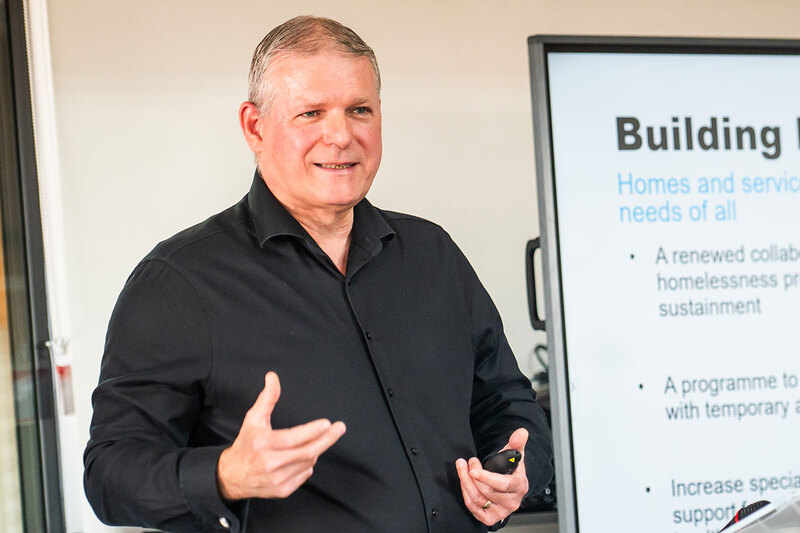
Speaking at the launch of the prospectus, John Johnston, chief executive of Bernicia Homes and chair of the NEHP, said the plans represent the results of an unprecedented level of collaboration between housing providers in the region.
“We’ve chosen collaboration over competition and put aside personal profile, organisational profile, for long-term impact and positive impact on our communities,” he said.
“We set ourselves the ambition to deliver at least 15,000 homes over the next 10 years, and we expect to go further and beyond that figure,” he stated.
Part of driving delivery will involve working together to give private developers clarity over what collective standards are expected on homes delivered through Section 106 agreements.
Regeneration is also a crucial part of helping deliver successful places in the North East, Mr Johnston said.
He added: “I think that is about having a conversation at a regional level about what we mean about regeneration, both the physical and the social and how we can deliver regeneration of the existing stock within some of the constraints of the funding frameworks.
“But if you are building 15,000 homes, there has to be room within that framework to have a positive discussion about how we renew some of the stock and evidence that the quantum is still increasing.”
The prospectus set out the partners’ ambition for delivery across four key areas: development and regeneration; quality of homes and investment; better lives; and homelessness, specialist and supported housing.
In terms of quality, the partnership has pledged to work together on joint procurement and repairs innovations, for example by aligning store management arrangements to create material savings of at least £1m every year.
Just a few weeks ago, the NEHP announced the collective procurement of kitchen replacements by a number of members. This saw several NEHP members work together to procure kitchens from a single supplier, JTC Furniture.
The programme is expected to deliver 70,000 kitchens across the North East over the next 10 years, resulting in savings of roughly £10m in comparison to individual procurement approaches.
In the coming months, the partnership will also be launching a housing and construction careers programme, to help build a skills pipeline and opportunity for tenants and residents.
The prospectus also set out plans to develop a regional temporary accommodation delivery plan to help councils increase the supply.
It pledged to agree a regional approach for allocation that will help the region’s councils “better meet housing need”.
It promised to evaluate a Housing First pilot that has been running in Gateshead and South Tyneside, “with a view to developing a regional Housing First business case to increase property supply”.
It also pledged to make sure that specialist housing provision is integrated in wider regeneration and development programmes.
Speaking at the launch event, North East mayor Kim McGuinness said she “completely endorsed” the plans laid out in the prospectus.
“It is what families need here, and I will be following it through the system on their behalf to make sure that together we get it done,” she said.
“Because you are clearly dedicated to the households that together you represent, that you support, that you look after.”
Ms McGuinness added that the housing shortage had led to a “stability crisis” for families in the region. “That means that instead of housing as an outcome, stability I think should be our outcome.
“You are now, as far as I’m concerned, all part of the same team – the delivery team that will get it done,” she added.
Tracy Harrison, chief executive of the Northern Housing Consortium, said the prospectus demonstrated that the partners are ready to deliver for the region.
“We do have lots of issues to deal with, but the prospectus also recognises and leans into the many strengths we have as a region,” she added.
Sign up to Inside Housing’s Daily News bulletin
Sign up to Inside Housing’s Daily News bulletin, featuring the latest social housing news delivered to your inbox.
Already have an account? Click here to manage your newsletters.
Related stories