ao link

You are viewing 1 of your 1 free articles

54% of surveyed residents feel stigmatised because of their landlord’s actions, campaign group finds

Campaign group Stop Social Housing Stigma’s (SSHS) national tenant survey has revealed that 54% feel stigmatised because of something their landlord has done.
Linked InTwitterFacebookeCard
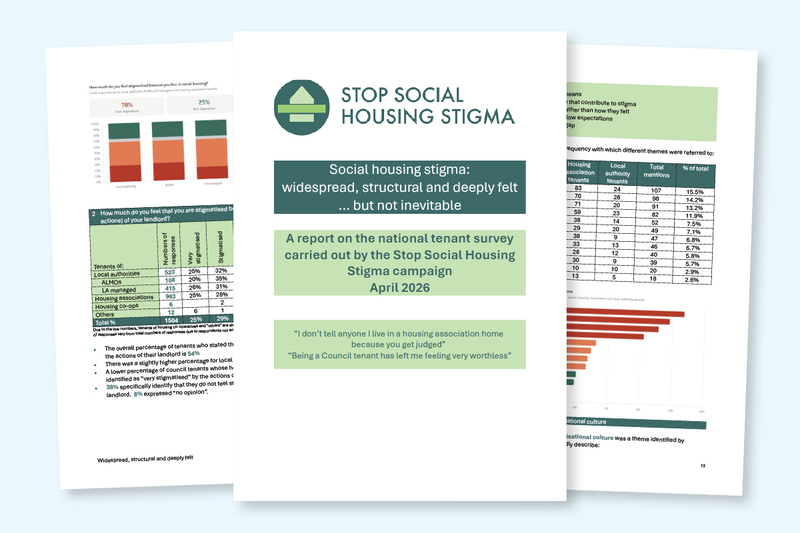
Pages from Stop Social Housing Stigma’s national tenant survey
Stop Social Housing Stigma’s national tenant survey includes responses from 1,643 social housing tenants
Sharelines

LinkedIn IH54% of surveyed residents feel stigmatised because of their landlord’s actions #UKhousing

The survey, which builds on interim findings in November last year, includes responses from 1,643 social housing tenants. It also found that 70% of these tenants feel stigmatised.

A total of 68% of respondents believe that successive governments since the Grenfell Tower tragedy have done little or nothing to tackle stigma.

However, more than 27% said they trust their landlord “a lot” or “a great deal”.

SSHS believes the feedback shows that stigma remains a daily reality for most people living in social housing, and the problem “is being actively reinforced by the systems meant to support them”.

The findings were drawn from hundreds of comments by tenants of 156 housing associations and local authorities.

SSHS said that if surveyed residents’ figures were replicated across the social housing sector, this would amount to 2.5 million households feeling stigmatised because of where they live. And more than two million would feel stigmatised because of something the landlord has done.


Read more

Housing stigma campaign group launches as membership organisationHousing stigma campaign group launches as membership organisation

Tenants also described being spoken to “as if we are stupid”, treated “like scum”, and routinely disbelieved when reporting problems.

Many reported that repairs take months or years to carry out, with some tenants living in damp, mouldy or unsafe homes. Others report that anti-social behaviour is ignored, leaving victims to gather evidence while perpetrators continue unchecked.

Tenants link these experiences directly to stigma. They told SSHS they feel they “are not valued” when homes and neighbourhoods are visibly neglected.

In response, housing ombudsman Richard Blakeway said: “The results from this report should be a moment the sector stands still and reflects.

“Stigma in social housing must be tackled wherever it is found. It is clear that too many actions being taken, even if they are being made with the best of intentions, are not having a positive impact on how residents feel about the homes they live in.

“The need to hear residents’ voices on these issues and tackle stigma is one of the reasons we called for a national resident representative body in our latest Spotlight report.

“Stigma is sometimes overt in our casework but more often unconscious, such as poor communication or missed appointments. We have called out both in our reports, but there is more everyone in the sector can do.”

Media stereotypes also play a role. Tenants say they are routinely portrayed as “benefit scroungers”, criminals or irresponsible – despite many working, caring for families or living on pensions.

The analysis also highlights internalised stigma, with many tenants avoiding telling friends, colleagues or even family that they live in social housing.

Another finding shows that “stigma is not inevitable”, according to SSHS. The survey found that 25% of tenants feel respected, listened to and proud of their homes.

These tenants typically experience good communication, respectful staff, well-maintained homes and mixed-tenure communities.

SSHS is calling on tenants, the government, senior housing professionals, the media and civil society to come together with the campaign group to drive cultural transformation across communities.

The campaign group said: “It is welcome that steps have been taken towards ensuring greater standards of health and safety; towards establishing a regulator that is interested in the services that tenants receive; and towards establishing an ombudsman that seeks to drive up standards of complaints-handling.

“But whilst the cultures, attitudes and behaviours that required these changes to be made persist, tenants will continue to be stigmatised second-class citizens.”

Baroness Taylor, the Lords minister for housing and local government, described the findings as “concerning” and has agreed to chair a roundtable discussion that will include the National Housing Federation, the Local Government Association and the Chartered Institute of Housing.

She said this will help to “identify examples of good practice”.

Last year, Baroness Taylor said that a new national tenants’ body must move forward “as quickly as possible”.

Tenants have been calling for national representation for years, and the Housing Ombudsman backed the move in May amid an unprecedented surge in repairs complaints.

Research at the start of last year – sponsored by the the G15 Residents’ Group, a forum set up to deliver resident-led change within the housing sector – found that 45% of London’s social renters have experienced prejudice or discrimination because of their housing status, while 35% described feelings of embarrassment.

At the time, Daisy Armstrong, chair of the group, said: “The findings in this report deliver a clear call to action. Stigma must be addressed at every level, starting with those who provide and manage our homes. 

“Grenfell’s aftermath has reshaped how social landlords operate, with new consumer standards requiring more resident involvement. But to enact real change, this involvement must be genuine, not a tick-box exercise.”


Sign up to Inside Housing’s Tenancy Management newsletter


Sign up to Inside Housing’s Tenancy Management newsletter, a weekly round-up of stories on all aspects of tenancy management, from allocations to evictions.

Already have an account? Click here to manage your newsletters.

Click here to register and sign up for the newsletter