You are viewing 1 of your 1 free articles
‘Real workforce challenges’ in Welsh councils as they prepare to become building safety regulators
Welsh local authorities are facing significant workforce issues as they get ready to take on the role of building safety regulator, a government official has said.


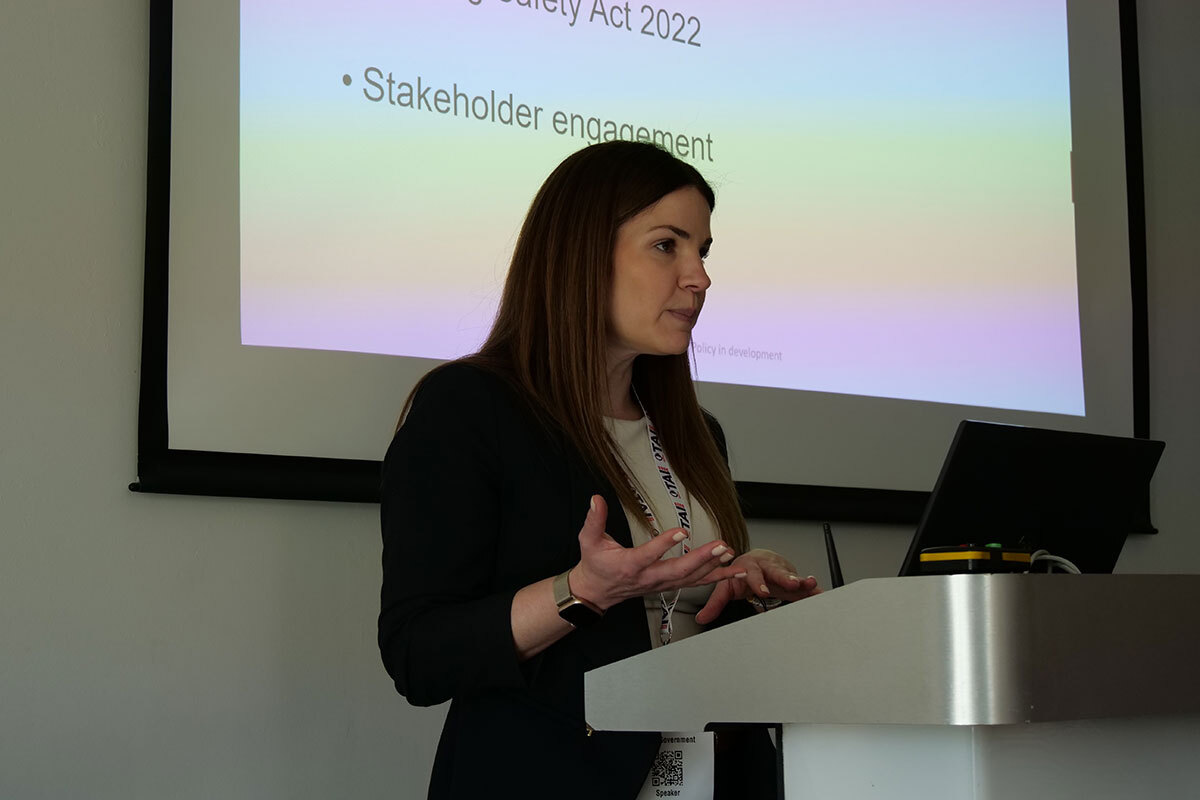 Welsh local authorities are facing significant workforce issues as they get ready to take on the role of building safety regulator, a government official has said #UKhousing
Under the forthcoming Building Safety (Wales) Bill, councils will become building safety authorities rather than having a separate body like England’s Building Safety Regulator.
Sarah Cullen, the Welsh government’s head of building safety policy reform, said the government had established a specific workstream to look at the capacity of building safety staff in councils.
“There are real workforce challenges within local authorities in terms of the building safety workforce,” she told delegates at the Chartered Institute of Housing Cymru’s annual Tai conference near Cardiff.
Read more

The aim of the workstream was “to try and establish what the gaps are and what levers that we as [the] Welsh government and local authorities themselves have” to help prepare for the new legislation, she said.
In Wales, the Building Safety Act (BSA) 2022 covers the design and construction of buildings, while the Building Safety (Wales) Bill will deal with the occupation phase.
Ms Cullen said the new bill was set to be introduced into the Senedd in July. “There’s going to be some flexibility in the way that local authorities can organise themselves,” she added.
“They can each decide they’re going to regulate just their own patch. We might have 22 building safety authorities, but conversely, they could come together and work jointly in discharging some of these functions.”
Each building safety authority must hold a register of buildings in its geographical area, as well as oversee how key dutyholders for buildings carry out their roles.
Ms Cullen stressed that planning for the new regime “needs to be starting now”.
Buildings will also need to have accountable persons and principal accountable persons, who will have a range of duties, such as registering with the regulator, maintaining the ‘golden thread’ of information and carrying out mandatory reporting.
Ms Cullen said: “I think the reality is that lots of building owners already will be fulfilling lots of these duties, if I can offer a little bit of reassurance.
“In terms of the detail of some of these duties, a lot of that remains still to be specified and set out within secondary legislation.”
The new bill will also cover duties for residents, such as not acting in a way that creates a significant risk to building safety or interfering with a safety item in common areas.
“We’ve had to tread carefully in terms of how we set out the duties that we are going to be placing on residents in this legislation,” Ms Cullen explained.
“Essentially, what we’ve done is try to focus in on some of those behaviours that residents might undertake that may pose a risk to some of their neighbours.”
Ms Cullen pointed out that the Welsh government was planning to take “a very gradual” approach to enforcement.
In England, the BSA applies only to buildings of 18 metres or higher, but in Wales the legislation will apply to all multi-occupied residential buildings.
The Welsh government recently launched a consultation on the next phase of its building control regime for higher-risk buildings under the BSA.
Also speaking on the panel at Tai was Douglas Haig, non-executive director at the National Residential Landlords Association and managing director of property management firm Seraph, who raised concerns over the slow pace of developer-led remediation.
He also said there was a “very severe lack of transparency as to what [developers are] doing, where they are, how they’re going to remediate things”, with no clear schedule for action.
Mr Haig echoed concerns raised by John Griffiths, the chair of the Senedd’s Local Government and Housing Committee, in March over the pace of fire safety remediation work in Wales.
Sign up for our Wales newsletter

New to Inside Housing? Click here to register and receive our Wales round-up straight to your inbox
Already have an account? Click here to manage your newsletters
Related stories