ao link

You are viewing 1 of your 1 free articles

Redraft of key cladding methodology ‘does not go far enough’, insurers say

Insurers have warned that redrafts of official guidance on cladding remediation “do not go far enough”, meaning residents could still be exposed to high premiums even after work completes.


Linked InTwitterFacebookeCard
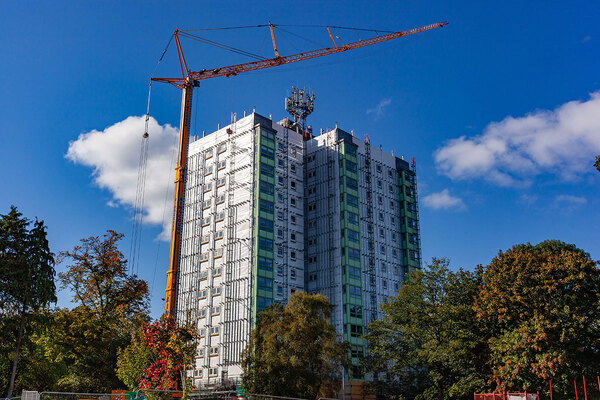
Cladding removal underway in London
Cladding being removed from a residential block in Goswell Road, central London (picture: Alamy)
Sharelines

LinkedIn IHRedraft of key cladding methodology ‘does not go far enough’, insurers say #UKhousing

A steering group convened by the British Standards Institution (BSI) is currently working on a redrafted version of PAS 9980, which is due to be published later this year.

The guidance provides a methodology for fire professionals to carry out a ‘risk-based’ review of the danger to life in blocks of flats from combustible materials in the external walls – and guides them to deem the risk ‘tolerable’ if they believe this risk is low. 

But insurers can sometimes elect to keep insurance premiums inflated following remediation work carried out under one of these assessments, because they believe a risk of enhanced property damage still remains.


Read more

‘This is going to go badly pear-shaped’: what will PAS 9980 mean for the building safety crisis?‘This is going to go badly pear-shaped’: what will PAS 9980 mean for the building safety crisis?
Government warns insurers as landlords see 400% hike in premiums over PAS 9980Government warns insurers as landlords see 400% hike in premiums over PAS 9980
PAS 9980: is government-backed cladding guidance resulting in safe buildings, or allowing developers to dodge responsibility?PAS 9980: is government-backed cladding guidance resulting in safe buildings, or allowing developers to dodge responsibility?

This means building owners can see insurance costs jump by as much as 400%, even in a block which has completed PAS 9980-compliant remediation work or been assessed as not requiring any, with these costs usually passed on to individual leaseholders through their service charge.

Asked by Inside Housing if the group agreed with the current proposed changes, the Association of British Insurers (ABI) said: “We absolutely support all efforts to improve building safety, and we’ve been very clear about the vital importance of making sure buildings are remediated to a standard that allows people to escape safely in the event of a fire.

“But from an insurance perspective, it’s also essential that we look at property resilience to fire. It’s not just about getting out of the building, it’s about ensuring that people still have a home to return to afterwards. 

“While we do support PAS 9980, those standards on their own don’t guarantee property protection, and in some cases will allow for ‘tolerable risks’ to remain which could result in the loss of a building.

“Insurers need a more comprehensive understanding of cladding systems and other fire safety issues, so we can properly assess both the likelihood and severity of potential losses. And that’s why, for us, the current redrafts don’t go far enough.”

The ABI is not among the 15 organisations represented on the steering group for the redrafting of the guidance.

In its statement to Inside Housing, the ABI added that it would like to see a “more robust framework” for assessing fire risks, because the current standards “don’t fully reflect the kinds of risks the industry and insurers are seeing on the ground”.

“Remediating to a PAS 9980 standard does not guarantee property protection, so depending on the building, there could still be risk factors which would be reflected in the premiums,” the group said.

However, it added that remediation which genuinely reduced the risk to life would be expected to result in reduced premiums if nothing else had changed.

It also pointed to a Fire Safety Reinsurance Facility, which launched last year and has seen 760 buildings enter, with some gaining insurance cover when they might not have otherwise been able to.

“We recognise that leaseholders have been carrying a huge financial and emotional burden through no fault of their own, and insurers have taken tangible steps to support them,” the group added. 

Giles Grover, a spokesperson for the End Our Cladding Scandal campaign, which represents leaseholders in buildings impacted by building safety problems, said: “It’s well over a year since Labour said it would consider whether it might intervene in this space; however, that has only led to more surveys and the can being kicked as far down the road as possible.

“The ongoing siloed approach to remediation looks set to remain focused on sweeping safety risks under the carpet to ensure industry is protected as fully as possible, with people left neither being safe nor feeling safe in their homes and leaseholders still trapped and unable to sell.”

Mr Grover added that Labour had promised a government-backed reinsurance facility in opposition, something it has not yet delivered. He said it was “yet another area” in which the government was failing to live up to its promises of change.

The PAS 9980 redrafting process comes ahead of use of the guidance to assess risks to external walls being included in law later this year. 

Mark London, a partner in the construction team at the law firm Devonshires, said that this may make it harder for building owners to insist on a more robust type of remediation.

“PAS 9980 speeds things up by limiting what needs to be done to make the building safe,” he said. 

He explained that while a change in the law would not explicitly ban anyone from calling for more rigorous works, they would “need to be cognisant of the fact that [they] could face criminal sanction if the building is not remediated within the timeframes set by government” – placing them under considerable pressure not to object to the PAS 9980 route.

“The direction of travel is clear,” he added. “The government wants buildings fixed quickly, and that simply can’t happen if you do it properly.”

The guidance does, however, have support from some building safety professionals who feel it offers a flexible means to assess risk in different buildings and balance limited remediation in favour of those where the risk is greatest. 

Dan Hollas, director of building safety at Clarion Housing Group, said the flexibility of this guidance offers a means to find pragmatic solutions. The housing association manages 87 buildings over 18 metres and many more medium-rise blocks of varying age and design.

“[The guidance] has allowed us to be able to work constructively with fire engineers in terms of providing solutions, where previously it had been really difficult to work out what to do in those situations without doing absolutely everything,” he said.

“And, thinking about the limited resources available and the pressure and disruption remediation can cause for residents, we needed to work out how to achieve that safely. So we found it to be a good document to work with for our fire engineers.”

spokesperson for the BSI said: “The code of practice for fire risk appraisal and assessment of external wall construction and cladding of existing blocks of flats (PAS 9980) will provide recommendations on how to determine whether or not buildings require a fire risk appraisal of external walls (FRAEW), and how to undertake a FRAEW of an existing block of flats.

“A FRAEW is a risk-based approach that considers the probability of fire spread via external wall constructions resulting in harm to building occupants.”

An spokesperson for the Ministry of Housing, Communities and Local Government said: “We’re doing everything we can to ensure peoples’ homes are well protected from the risk of fires. 

“We’re protecting residents by requiring high-quality checks for external walls, while making sure they do not have to face unnecessary work to their homes. This is alongside existing checks for internal fire safety defects to help ensure the safety of buildings.”

You can read Inside Housing’s investigation into this issue here.


Sign up to Inside Housing’s Building and Fire Safety newsletter


Sign up to Inside Housing’s fortnightly Building and Fire Safety newsletter, now including a monthly update on building safety from Inside Housing’s contributing editor Peter Apps.

Click here to register and receive the Building and Fire Safety newsletter straight to your inbox.

And subscribe to Inside Housing by clicking here.

Already have an account? Click here to manage your newsletters.


Sign up for Housing 2026


Join us at Housing 2026 and hear from the sector’s most influential voices. Leading housing organisations curate their stages, showcasing the speakers and discussions that matter most.

Take part in purposeful, tech-enabled networking – see who’s attending, handpick the people you want to meet, and engage in meaningful, in-person conversations.

Connect with every key decision-maker under one roof, from local authorities and housing associations to investors, developers and operators.

Find out and more and book your delegate pass