You are viewing 1 of your 1 free articles
PAS 9980: is government-backed cladding guidance resulting in safe buildings, or allowing developers to dodge responsibility?
PAS 9980 was intended to help solve the country’s most pressing building safety risks, but the guidance appears open to exploitation. Peter Apps speaks to experts to find out more


 PAS 9980 was intended to help solve the country’s most pressing building safety risks, but the guidance appears open to exploitation. Peter Apps speaks to experts to find out more #UKhousing
There is a large development in north London which cuts to the heart of the current controversy about how we are approaching the building safety crisis.
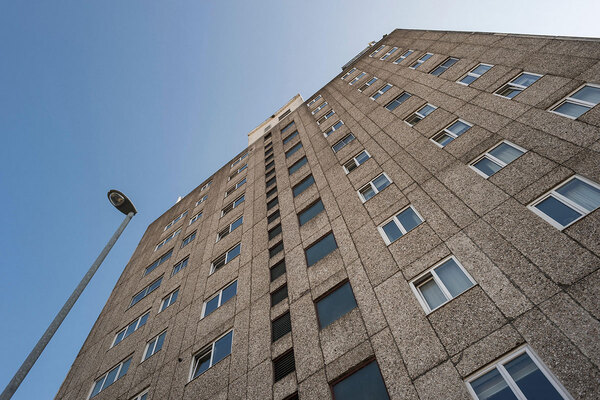
Since the devastating Grenfell Tower fire in 2017, it has become obvious that we have tens of thousands of blocks of flats around the country with at least some combustible materials in their external walls.
From balconies to cladding systems to insulation to spandrel panels, the use of combustible plastic and timber became ubiquitous in construction in the 2000s and 2010s.
This leads to a simple but very difficult question: how many of them need to be fixed?
The government’s attempt to provide an answer in 2022 saw it sponsor the creation of new official guidance, known as PAS 9980, which provides a methodology for a ‘risk-based’ appraisal of external walls. This aims to identify those where the risk is ‘tolerable’ and those where remediation is an absolute necessity to protect lives.
Which brings us to the large development in north London.
Read more
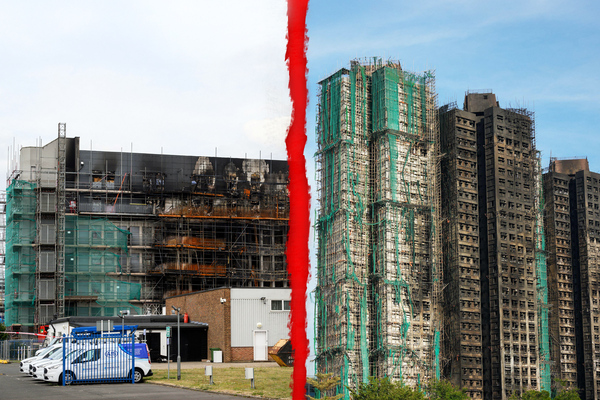 From Dagenham to Hong Kong: should we be more worried about scaffolding fires in occupied buildings?
The development comprises thousands of homes across more than a dozen different tower blocks of varying heights. The scheme has been built out in various phases since the early 2000s by a major private house builder. Some of the blocks are now owned by housing associations and used as affordable housing.
Inside Housing has been sent dozens of documents relating to this development. The walls of the different buildings have a variety of cladding and insulation types: some combustible, some not.
Several – including some of the affordable housing blocks – have expanded polystyrene (EPS) insulation rendered onto the walls. They are also fitted with timber balconies.
Both of these elements come with a potentially serious fire risk: EPS systems have been shown to have a disastrous performance in official safety tests, while government-sponsored testing on timber balconies last year said they “demonstrated poor fire performance”.
“Tests showed rapid fire spread within minutes. Timber decking was identified as the dominant factor in fire spread,” the report said.
Put them together on the walls of a tall building, and you might expect it to be a prime candidate for remediation.
Except it isn’t. Despite having been built by a major signatory to the government’s ‘developer remediation contract’ (under which developers promise to pay for the remediation of blocks they built), the insulation and balconies are staying on the walls. The fire safety strategy for the building remains ‘stay put’.
This is because when the buildings were reviewed in 2023, every single block in the development was deemed to present a “tolerable” risk to life safety. This review was conducted by TriFire, the firm established by the disgraced fire risk assessor Adam Kiziak, who was struck off by the Institute of Fire Engineers last year. As of last year, new fire consultants assessing the buildings had not overridden this decision.
This is the controversy about PAS 9980. To its supporters, it allows competent fire engineers to offer pragmatic solutions to complex questions of fire engineering. To its critics, it offers developers a route to game the system, by paying for a report which deems serious risks to be tolerable.
As the guidance undergoes its first major rewrite, ahead of potentially being included in statute later this year, it is worth asking: is it actually working? And how, if at all, should it change?
Understanding the position we are in requires some recent history. After the Grenfell Tower fire, government focus turned first to buildings with the same sort of cladding that was present on the tower – aluminium composite material (ACM). In the end, 511 tall buildings with dangerous systems containing this material were discovered, and work to fix them (largely funded by taxpayers) is now almost complete.
But fires in other buildings and the emergence of disturbing test data about other products caused concern about several other types of widely used combustible cladding.
The government responded by publishing an advice note which said that unless a building had an entirely non-combustible facade, or used a system which had passed a large-scale test, it required a professional review.
This led to a bottleneck with almost every tall building in the country left awaiting approval. This in turn caused utter pandemonium in the market for flat sales. No one could buy or sell.
To fix this, the Royal Institution of Chartered Surveyors published a methodology for valuing buildings with combustible materials in the external wall: the EWS1 form.
This, too, proved a disaster. Before long, banks were requesting the assessments for blocks of flats at every height. Surveyors – under pressure from their professional indemnity insurers – took a risk-averse approach, and buildings with relatively minor risks found themselves in need of multimillion-pound refurbishments in order for buyers to obtain a mortgage.
“We had a problem with EWS1. Most of the blocks of flats in the country built before Grenfell have some level of combustible materials,” says Aaron Treliving, managing director of consultancy Treliving Real Estate.
“So people would be left unable to sell and needing very complex work even though the actual risks weren’t always that great.”
PAS 9980 was intended to fix this mess. Unlike an EWS1, which is about valuation, this was supposed to be an assessment of the risk to life in a building, and intended to focus the country’s limited remediation capacity on blocks with the most serious risks.
“Before PAS 9980 was published, there was no textbook on external wall fire spread. The authors essentially had to create one,” says Benjamin Ralph, head of building safety and fire at consultancy Hollis.
“There are some buildings that can wait longer than others for remediation, and some which might not need remediation at all. It is OK to prioritise like that. The problem is the way in which the PAS goes about it”
“As a really high-level concept, there’s nothing wrong with PAS 9980 as an idea,” says one senior fire engineer who preferred not to be named.
“There are some buildings that can wait longer than others for remediation, and some which might not need remediation at all. It is OK to prioritise like that. The problem is the way in which the PAS goes about it.”
Despite being very long (it runs to more than 180 pages), the guidance eschews any prescriptive answers about what is safe and what is not. It contains only three risk categories for an external wall: ‘low’, ‘medium’ and ‘high’.
‘Low risk’ is supposed to represent a non-combustible masonry wall, while a ‘high’ is intended to apply to a building with a similar fire performance to the ACM used on Grenfell.
The reality of high-rise construction, however, is that most buildings will fall into neither of these brackets. Instead, they will be considered a ‘medium’ risk and the decision about remediation will come down to the assessment of the risk assessor about whether the risk is ‘tolerable’, defined as confidence “that people will be able to escape or be rescued by the fire and rescue service before being harmed”.
This is clearly a subjective judgement – something the guidance itself makes clear. “The criteria are inevitably subjective and reliant on the use of professional judgement by competent persons,” it says.
This can present difficulties. A building may be assessed by a fire engineer as only presenting a ‘tolerable’ risk to life, or undergo a partial remediation to reduce the risk to this level.
But because its walls still contain combustible materials, a risk of heightened fire spread remains. This becomes a trigger for insurers to raise premiums – out of concern that property damage will be more extensive than previously expected, even if people escape alive. Even after a building is remediated to a PAS 9980 standard, building owners can still end up paying inflated insurance costs, sometimes 400% higher than they were previously.
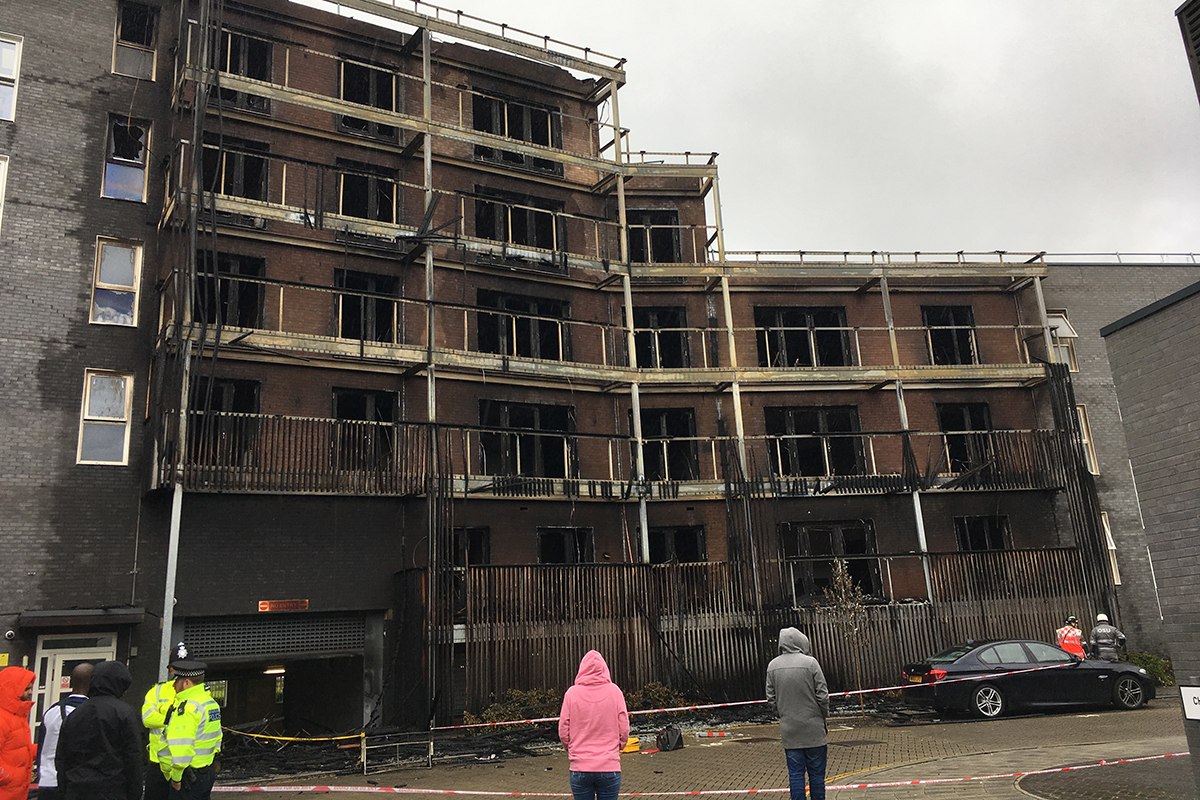
The guidance is currently being redrafted by a team of technical authors, but this problem appears likely to remain, based on a draft released to key industry stakeholders last year. In a statement to Inside Housing, a spokesperson for the Association of British Insurers (ABI) says the group feels “the current redrafts don’t go far enough”.
“The current PAS 9980 standards don’t fully reflect the kinds of risks the industry and insurers are seeing on the ground,” the spokesperson adds.
“Remediating to a PAS 9980 standard does not guarantee property protection, so depending on the building, there could still be risk factors which would be reflected in the premiums.”
In addition, the subjectivity in the guidance can cause delay. The party paying for the remediation (often the original developer) has an incentive to seek the cheapest possible remediation, while the party that owns the building has an incentive to ensure a more thorough fix, and may pursue a remedy under the original contract to achieve this.
Some fear that if use of the guidance is included in the forthcoming Remediation Bill – as the government intends – it could become difficult for building owners to push for a less partial fix.
“PAS 9980 speeds things up by limiting what needs to be done to make the building safe,” says Mark London, a partner in the construction team at law firm Devonshires.
He explains that while a change in the law would not explicitly ban anyone from calling for more rigorous works, they would “need to be cognisant of the fact that [they] could face criminal sanction if the building is not remediated within the timeframes set by government” – placing them under considerable pressure not to object to the PAS 9980 route.
“The direction of travel is clear,” he adds. “The government wants buildings fixed quickly, and that simply can’t happen if you do it properly.”
This brings us to the big controversy about the guidance: safety. Are the reviews being carried out under PAS 9980 truly making buildings safe?
In England, 54 major developers have signed contracts to fix “life safety defects” in blocks they built. This involves potentially billions of pounds of remedial work. If they can find fire engineers willing to recommend partial works, or deem the facades ‘tolerable’, their bills decrease.
“The differences between PAS 9980s undertaken by different fire engineers on the same building can sometimes be astonishing. It is unsurprising that those produced by the major contractors, for whom the responsibility for remediation will fall, can be less rigorous than those produced by the building owner,” says Mr London.
“The government’s naive belief that all PAS 9980s are created equally and can be safely relied upon is simply for the birds.”
Alongside the blocks in north London mentioned at the start of this piece, there are other buildings out there where expanded polystyrene has been deemed ‘tolerable’ under a PAS 9980 assessment. This worries some fire engineers.
“Over the last four years, we’ve gone through a learning curve as an industry and while PAS 9980 is not the final answer, I think it is a big step forward from where we were”
“For me, every block I have reviewed with significant EPS on it, I have had remediated because of the life safety risk,” says Mr Treliving.
Despite these concerns, there are those operating in the industry who feel the PAS guidance is working well enough – providing a framework for risk assessors to offer sensible, proportionate solutions as well as being adaptable enough to be applicable to different building types.
“We’ve had things that have really undermined the industry [a reference to the Kiziak saga], and it hasn’t always looked good from an outsider’s perspective,” says Noel Pells, a director at PRP Architects.
“But over the last four years, we’ve gone through a learning curve as an industry and while PAS 9980 is not the final answer, I think it is a big step forward from where we were. It provides a methodology we can all follow, and I think it’s positive overall.”
“In our experience, the knowledge of what the guidance is supposed to achieve has increased, and PAS 9980 has become more useful as that has happened,” Mr Ralph adds.
He says his experience has been that assessors have tended to be more likely to recommend remediation when in doubt. “I can only talk about what I see, but if anything more people have probably erred on the side of being more cautious in terms of remediation,” he says.
For Dan Hollas, director of building safety at Clarion Housing Group, the flexibility of this guidance offers a means to find pragmatic solutions. The housing association manages 87 buildings that are over 18 metres tall, as well as many more medium-rise blocks of varying age and design.
“[The guidance] has allowed us to be able to work constructively with fire engineers in terms of providing solutions, where previously it had been really difficult to work out what to do in those situations without doing absolutely everything,” he says.
“And, thinking about the limited resources available and the pressure and disruption remediation can cause for residents, we needed to work out how to achieve that safely. So we found it to be a good document to work with for our fire engineers.”
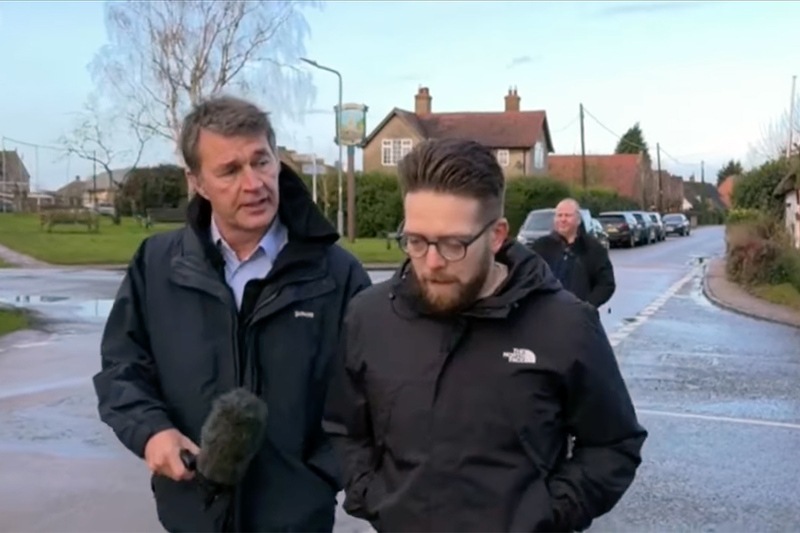
Anthony Robson, head of fire engineering at consultancy Frankham, says he does not believe fire engineers are influenced by what their clients want them to say.
“No one I’ve worked with would change their report based on their appointment. Any self-respecting individual or company wouldn’t be tainted by who they’re working for. They’d make the same decision based on the evidence they find,” he says.
A process of peer review, recently established by Homes England for projects being funded publicly, means PAS 9980 remediation recommendations are scrutinised by five other firms before the remediation is agreed.
But there are still critics. One problem some raise is that the guidance fails to fully consider other risks which might turn an apparently tolerable external wall system into a deadly fire.
“The PAS guidance encourages you not to think about what’s happening inside the building properly,” one expert says.
“You are supposed to assume it’s all working. You assume everyone can run… in order to escape. But life safety risks depend on who’s in the building, how far the fire can spread and how quickly. If you have 10 disabled residents on the upper floors and major internal defects, the risk will be very different.”
“There are significant problems with fire-stopping and that will have a big impact on how serious a facade fire will be in terms of life safety,” Mr Treliving adds. “In most of the pre-2018 blocks I see, the fire-stopping is like a cheese grater.”
In the consultation on the redraft of the document, which closed in December, similar concerns emerge.
“The standard as it is currently drafted still fails to deliver on its purpose,” the respected engineering consultancy Arup said in its response. Arup also called for the guidance to be made “clear and succinct” and “better explain how the [assessment of the external wall] interfaces with the building’s fire risk assessment to arrive at holistic view of fire risk”.
Arup has helped the US-based National Fire Protection Association design an assessment methodology which assesses the risk from external walls and takes a wider range of considerations into account than the PAS.
“The tolerance for risk in the draft PAS 9980 is far too high,” another unnamed respondent adds. “The draft PAS seriously undermines the importance of meeting the legal requirements of the building regulations, while supporting a culture of complacency in the construction industry.”
“[As residents] we’ve just wanted clarity. That’s all we’ve wanted from the start – does this building need to be fixed or doesn’t it? If we’d just had a clear answer two years ago, it may well have finished by now”
These comments are currently being assessed by a steering group as they finalise the redraft, due to be released later this year. Dr David Crowder, a fire engineer and director of the consultancy DCCH, is understood to be taking a prominent role in this work. He was one of the technical authors of the original document.
Before co-founding DCCH with a colleague, Dr Crowder worked at the Building Research Establishment (BRE). He worked on the Real Fires project, which reported on real-world fires in the years before Grenfell, and led it from 2015.
This work was subject to criticism in the eventual Grenfell Inquiry report, which said it was “regrettable” that the BRE “decided not to give advice to the government that it knew would be unwelcome” in its reports.
A source with knowledge of the discussions says they believe a similar issue is occurring now with the PAS 9980 redraft. The technical authors are understood to be weighing the impact of any changes they make on the cost to the public purse and the speed of remediation, in the knowledge that these are outcomes the government wants.
“They are making the same mistake as before, in thinking about what the government wants to hear instead of just giving impartial technical advice,” the source says.
In a statement to Inside Housing, Dr Crowder says: “The issues raised about the Real Fires project… do not in my view apply to the redrafting of PAS 9980 which is managed by [the British Standards Institution] in accordance with PAS 0 [the principles governing the development of new standards].”
A spokesperson for the British Standards Institution (BSI) adds: “The technical author is impartial in fulfilling their duties. Their role is to support BSI to meet the project brief and its deliverables, and they are involved from the start of the project to its completion.
“All decisions are made within the steering group, under the direction of the BSI project manager, who is also expected to remain impartial. BSI aims to ensure that steering groups contain the appropriate technical expertise and fairly represent the relevant range of interests.”
Whatever comes of the PAS review, those who live in affected buildings are clear about what they need: clarity and consistency, not changing decisions and partial remediation that leaves buildings unsafe and expensive even after the scaffolding has been removed.
Inside Housing spoke to Richard Vincent, a leaseholder in a block in Leyton, east London. His building was deemed safe in 2023, before a fresh review last year came to a different conclusion and scuppered his attempt to sell and move on. The original assessor had deemed ACM and plywood tolerable, because it was used only on upper floors. A different fire engineer disagreed.
“It’s been an absolute nightmare, a roller coaster,” says Mr Vincent. “One minute we’re being told it’s safe, then the next minute, the whole thing needs to be ripped apart.
“We’ve just wanted clarity. That’s all we’ve wanted from the start – does this building need to be fixed or doesn’t it? If we’d just had a clear answer two years ago, it may well have finished by now.”
For too many, this clarity is missing.
A Ministry of Housing, Communities and Local Government spokesperson says: “We’re doing everything we can to ensure people’s homes are well protected from the risk of fires.
“We’re protecting residents by requiring high-quality checks for external walls, while making sure they do not have to face unnecessary work to their homes.
“This is alongside existing checks for internal fire safety defects to help ensure the safety of buildings.”
Sign up to Inside Housing’s Building and Fire Safety newsletter
Sign up to Inside Housing’s fortnightly Building and Fire Safety newsletter, now including a monthly update on building safety from Inside Housing’s contributing editor Peter Apps.
Already have an account? Click here to manage your newsletters.
Related stories