You are viewing 1 of your 1 free articles
Renters Reform Bill could see takeover by large institutional landlords and PRS stock flipped to temporary accommodation
Small private landlords could be pushed out of the sector because of the Renters (Reform) Bill, the Housing 2025 conference heard, as their homes are snapped up by institutional landlords offering those homes to councils as temporary accommodation.


 Small private landlords could be pushed out of the sector because of the Renters (Reform) Bill, the Housing 2025 conference heard, as their homes are snapped up by institutional landlords offering those homes to councils as temporary accommodation #UKhousing
The points were made at a lively discussion on Wednesday afternoon at the Housing 2025 conference about the knock-on effects of the bill. The bill includes a ban on Section 21 ‘no-fault’ evictions, a new private rented sector redress scheme, extra enforcement powers for councils, and new grounds for evicting tenants.
So what will the impact be on social housing provision and services? How can housing associations and councils work with the private rented sector (PRS) on best practice and shared learning to create a fairer system?
A big concern was that institutional investors are snapping up PRS stock and then offering those homes to local authorities for use as temporary accommodation.
Read more

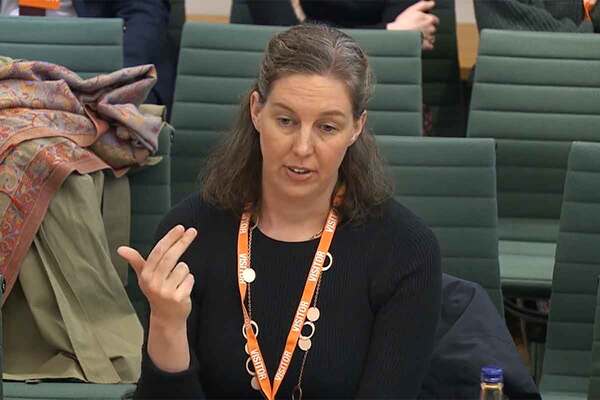

Hakeem Osinaike, strategic director of housing at Southwark Council, said: “There is a feeling that the reason why the legislation might be passed is to move the country to institutional landlords.
“We’re seeing signs of that, but we’re only seeing it in build-to-rent, because of all the properties that are disappearing. So, in London, about 40% of the PRS has disappeared, but they’ve all been bought by institutions, hedge funders, and now they’re offering those properties to local authorities for temporary accommodation.
“You’re buying properties, then evicting the tenants in there, who are then approaching local authorities for help as homeless families, and then you’re offering the same properties to local authorities as temporary accommodation, only now at a significantly higher rate.”
It’s not the first time this issue has been raised.
In November 2024, the cross-party Housing, Communities and Local Government Committee held its first evidence session into the issue of children living in temporary accommodation.
Laura Neilson, chief executive of the Shared Health Foundation charity, told MPs that families were being evicted from their homes because landlords wanted to change the tenure of their property to get higher payments from the council.
Dr Neilson said: “Local landlords are switching accommodation from social [or] private rent into temporary accommodation, because they can get higher payments from the council.
“So they’ll evict a family from their property, change it into temporary accommodation and move another family into that property for higher rent. And we’re seeing that reasonably often.”
Pete Apps, a contributing editor at Inside Housing who chaired the Wednesday afternoon session, made a similar point backed up by data from cross-party group London Councils. He said: “I’m glad you said that point about this being a drive towards institutional landlords.
“I remember some research last year from London Councils which talked about the departure of landlords from the sector in London. I think the findings were that it was particularly extreme at the lowest end in terms of price range.
“So it was the cheapest PRS accommodation that was going first. And I just wondered, when you sit with your fellow directors of housing in London boroughs, how worried are you about the impact of this legislation on that supply of rented housing at the lower or cheaper end, to house key workers, to house families?”
Mr Osinaike said: “As I explained earlier, people who have been living in what they consider to be their long-term homes, paying their rent, not doing anything wrong [are] being asked to leave, and all of a sudden they’ve been shifted into bed and breakfasts and hotels up and down the country.
“Local authorities are overspending by hundreds of millions of pounds on temporary accommodation for these reasons. The reason we have this crisis is simply because the PRS is shrinking.
“I don’t have to tell people in this room what it means for children to grow up in temporary accommodation. The most expensive accommodation is the crappiest, which is just crazy.”
Earlier this year, Inside Housing and the i newspaper joined forces to examine how the £2bn a year of taxpayer money is being spent, and shone a light, for the first time, on the companies profiting from it.
Helen Watson, chief executive of charity Rentstart, highlighted that the financial cost was just one area that was out of control, and said the human cost was also immense.
She pointed to the number of child deaths in temporary accommodation, with many of these children being under one year old.
She said: “That is because there are no cots. So, to me, it’s the next big scandal. I think it’s going to be like the Post Office; it is going to be like the [infected] blood scandal. Whichever colour of government has got us into this mess, we’re going to be paying for it for years to come.
“They have to place people outside of their local area. People are losing their places in schools. It’s a scandal, and we’ve just sort of sleepwalked into it.”
Helen Walsham, chief culture and talent officer at Bromford Flagship, provided some insight into how social landlords will be affected.
She said: “It’s quite difficult for most housing associations, because our tenants are recommended to us from the housing list. My fear with some of these people that become homeless is that, by definition, you have a need because you’re homeless, but actually, those people are more likely to be in work, they’re more likely to be in a situation where they come relatively low on the housing list or on the priorities. So they won’t necessarily be high on the list for social housing.”
Sign up for our homelessness bulletin

Already have an account? Click here to manage your newsletters
Related stories