Managing flood risk through a framework
Amid the changing climate, the risk that flooding poses to housing development is set to increase. Tanmay Desai explains how Pension Insurance Corporation’s framework helps with managing flood risk


 Amid the changing climate, the risk that flooding poses to housing development is set to increase. Tanmay Desai explains how Pension Insurance Corporation’s framework helps with managing flood risk #UKhousing
In association with:

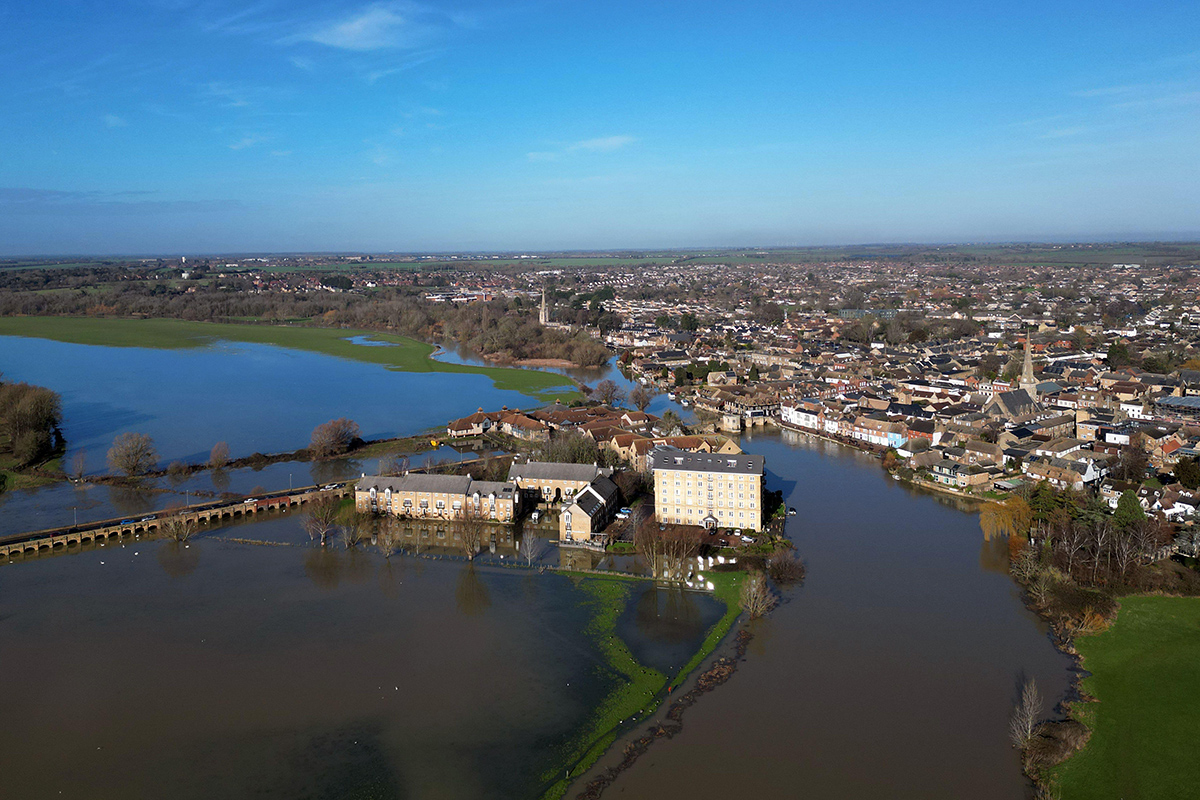
As a long-term investor with a growing housing and infrastructure asset portfolio, Pension Insurance Corporation (PIC) recognises the increasing threat that climate change – and the associated risk of flooding – poses to development.
According to the Environment Agency’s National Flood Risk Assessment, around 6.3 million properties (homes and businesses) in England are in areas at risk of flooding. Estimates by the public policy consultancy Public First suggest that a third of England’s critical infrastructure – including roads, railways, energy networks and water systems – is at risk, and that the impact of flood events costs the overall UK economy £2.4bn a year in direct physical property and infrastructure damages.
Read more



Framework developed
To manage flooding risk, PIC has developed a flood risk framework, which assesses the risks associated with flooding to the assets already in PIC’s portfolio or being considered for new investment. The framework allows PIC, at due diligence stage, to identify the acceptable flood risk levels for different asset types, outline steps to consider for flood risk dependent on the levels, and specify if further modelling and development mitigations are required. PIC can also rule out an investment if the flood risk exposure is too high over the investment period for that asset type.
With PIC holding many assets for 30 to 50 years, flooding can be a material risk throughout the life of a development and get worse during the ownership term. While the exact rate of climate change and regularity of events is unknown, experts agree that higher magnitude flood events are likely to occur at an increased frequency. Consequently, historic flooding events are not always the best indicator of what will happen in the future. Recent research suggests that the proportion of homes at risk of flooding could rise to one in four by 2050. If current trends continue, up to 115,000 of the government’s planned 1.5 million homes could be built on high-risk flood zones.

Tanmay Desai is head of built environment at Pension Insurance Corporation, where he leads a team overseeing technical due diligence and construction monitoring. He has over two decades of experience in consultancy, client-side, development and funding roles.
He is also a board member on the estates committee at University College London.
Flood risk includes physical risks such as damage to the assets; commercial risks such as reductions in asset value and income; and human risk to the occupants. Flood risk comes in many forms, including riverbanks overflowing, tidal and coastal, sewage overflow, reservoirs, canals and dams overflowing, surface water run-off and excess ground water. Operational plans are required to manage these impacts.
PIC’s framework utilises the Environment Agency’s data on building stock and flood risk to understand the scale of the issue. PIC’s assessment is informed by external sector specialists such as valuers, insurers and water consultants. We look at five broad flooding risk indicators: the flood zone rating, probability level, return period for the asset, likelihood, and future risk. The latter can only be determined by specialist modelling. We identify where more modelling or acts of development mitigation are appropriate, which reduces the need for expensive retrofit or repair work.
Flood risk managed
An example of the flood risk framework in action is PIC’s £130m investment in Millers Quay, a waterfront scheme in the Wirral. PIC worked with the developer to commission surveys which confirmed the dock wall had voids below the waterline. A repair specification with a minimum design lifetime of 50 years was developed and repairs were undertaken with full quality assurance checks. Mitigation helped PIC deliver this sustainable, award-winning urban regeneration.
PIC prioritises investment in low-risk flooding areas, seeks to limit and diversify assets in areas with flood defences, and excludes assets in high-risk flood areas without flood defences, except for water infrastructure. We look at the number of years we will own an asset and the likelihood of a flooding event occurring in the current year. Clearly, flood risk can be managed, as demonstrated by the Netherlands and its comprehensive flood management strategy. However, a framework is required to shape the management and mitigation of
a strategy, which the flood risk framework provides.
Sign up to Inside Housing’s Asset Management newsletter
Inside Housing’s Asset Management newsletter brings you comprehensive in-depth news, comment, insight and analysis of how affordable housing providers are managing their homes
Click here to register and receive the Asset Management newsletter straight to your inbox.
And subscribe to Inside Housing by clicking here.
Already have an account? Click here to manage your newsletters.
Related stories