You are viewing 1 of your 1 free articles
As we focus on warm homes, do we risk homes that are too warm?
As the UK faces freezing temperatures this winter, it can be easy to forget a growing and increasingly dangerous challenge: overheating. As the UK hurtles toward a hotter future, many homes built for winter warmth are now turning into heat traps. Aniqa Lasker reports


 As the UK faces freezing temperatures this winter, it can be easy to forget a growing and increasingly dangerous challenge: overheating. Aniqa Lasker reports #UKhousing
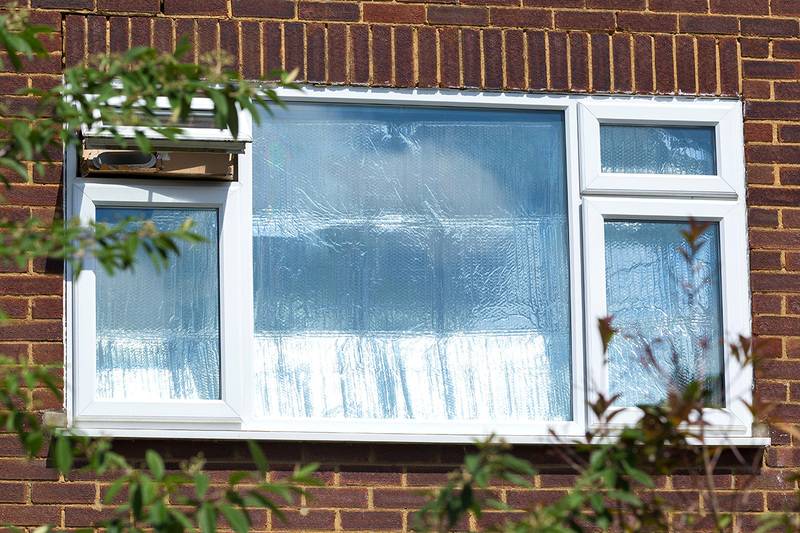
Reading this in a chilly and damp February, most people are focused on how to keep their homes as warm as possible. But some have the opposite problem. In December, a London council was hit by an Awaab’s Law notification for a Category 1 hazard due to internal heat. According to the resident’s solicitor, the flat was 27°C with no heating on, during the nighttime in November.
For years, Britain’s housing policies have been driven by the push to decarbonise, with investment focused on insulation, airtight homes and low-carbon heating, while adapting homes prone to overheating has remained secondary.
As this summer will likely be another of record-breaking temperatures, should landlords be using the winter season to ‘fix the roof while the sun is shining’ – or rather, prevent overheating before the sun starts beating down on our buildings?
The evidence shows that the UK’s housing system is still geared towards winter, even as summers grow hotter, longer and more dangerous, and experts are warning that the country is perilously unprepared for what is to come.
Read more

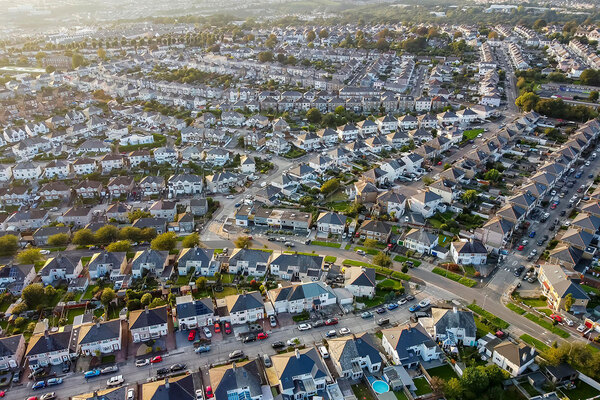
A report from the University of East London (UEL) and the Chartered Institute of Housing (CIH) highlights overheating as a growing worry, particularly for social housing tenants, older people and those in poorly ventilated flats. The findings show that heatwaves are exposing serious flaws in building regulations and housing quality, and proving that energy-efficient homes are not the only priority.
Researchers found that more than 80% of UK households now experience overheating during the summer months, with many reporting sustained indoor temperatures above 26°C, the World Health Organisation’s recommended upper comfort limit.
“The UK is still treating extreme heat as exceptional, when in reality overheating is now the norm,” says Dr Mehri Khosravi, senior research fellow at UEL’s Sustainability Research Institute, who co-authored the report.
“Without urgent reform of building regulations, improving heat risk communications, better protection for frontline workers and clear, practical advice for households, we will continue to see avoidable illness and death during hot summers.”
Her research builds on the Resolution Foundation’s 2023 study, It’s Getting Hot in Here, which warned that one in four UK homes is already prone to dangerous indoor temperatures during extreme heat events. Using household temperature data and social survey analysis, the thinktank concluded that by 2050, without intervention, heat-related deaths could triple.
Matthew Scott, policy manager at the CIH and Dr Khosravi’s co-author, says if temperatures continue to rise, overheating in buildings could cause 4,500 premature deaths per year by 2050.
“As our world warms, we urgently need to adapt our homes to make them resilient to the health risks posed by extreme heat,” Mr Scott says.
“While climate projections carry an inherent degree of uncertainty, the target of limiting warming to 1.5°C is slipping from reach.”
A ‘cool homes plan’
In July last year, retrofit installers called on the government to introduce a ‘cool homes plan’ to tackle the deadly risks of overheating. The House of Commons Environmental Audit Committee has also warned that current government schemes treat housing efficiency as a winter-only concern.
Just a week after these concerns were raised, the Centre for Ageing Better warned that Britain’s ageing housing stock posed a “significant” risk for residents over the summer and during increasingly hotter summers in the future.
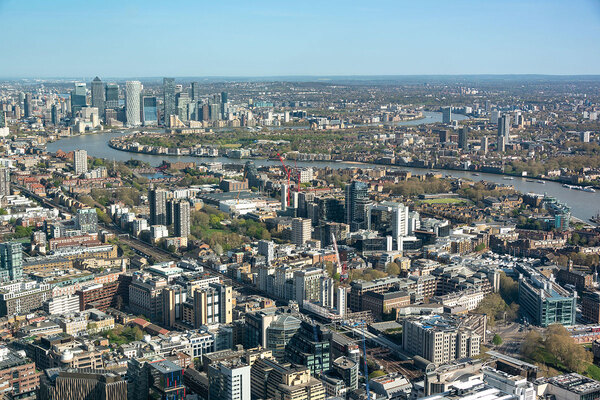
The UEL/CIH report also warned that London’s temperature is rising 5°C faster than the UK average due to the urban heat island effect, and that the city’s social housing tenants are disproportionately affected.
The Greater London Authority’s (GLA) 2024 report Properties Vulnerable to Heat Impacts in London found that tens of thousands of properties, especially high rises, converted offices and top-floor flats, are already facing unsafe temperatures during summer. Overheating is most acute in boroughs with older building stock, high-density housing and lower-income populations, revealing a new layer of climate inequality in housing.
“If you think you’ve got bad heating now, in two to four years it’s going to become chronic, and people will die in buildings, as they already are,” says Professor Susan Roaf of Heriot-Watt University. “It’s always the vulnerable who die first. It’s always [older people] and the very poor.”
Professor Roaf’s work has shown that buildings designed purely for energy efficiency can trap heat, creating what she calls “thermal prisons”. She says there is a need for a shift towards bioclimatic design, where architecture responds to local temperature patterns, orientation and air movement rather than relying on mechanical cooling.
“Good design is about resilience, not gadgetry,” she says. “We have the knowledge and materials to make homes that are both low-carbon and comfortable [so] that we’re not still building and retrofitting for yesterday’s weather.”
“For new build housing developments, integrating these features from the outset is cost-effective and scalable”
There are a number of practical upgrades that can help homes stay cooler in summer, such as external shutters, lighter-coloured facades, solar control glazing and reflective roof coatings.
“For new build housing developments, integrating these features from the outset is cost-effective and scalable,” says Rory Bergin, a former senior architect and current partner on the Sustainable Futures team at HTA Design. “With supportive policy, funding and public awareness, widespread adoption is possible within the next decade.”
Professor Roaf points to the Geelong private refuge project in Melbourne, Australia, where there was extreme overheating. The local council took 20 homes belonging to older residents or those dealing with health issues, and instead of refurbishing the entire property, they developed a cool space – a climate refuge.
She explains: “In one room of the house, the council put in more insulation, added shading, draft-stripped and refurbished it so that one room became the coolest point in the house and a climate-safe space.
“With this vulnerable cohort, it improved their physical health, their mental health, slashed their energy bills and improved their resilience... They were more sociable, felt better... and invited people over because it was liveable during the hotter weather.”
Mr Bergin believes for architects working on high-density housing areas, it is crucial to think beyond individual buildings.
“We should consider parks and green spaces as part of wider networks to create ‘cool corridors’, the interconnected green routes that improve air quality and mitigate the urban heat island effect,” he says.
“This big-picture thinking includes mapping cities to understand where heat builds up most intensely. Setting city-wide tree canopy targets to create shaded areas and focusing planting in vulnerable areas like dense housing, schools and busy streets can optimise the impact of cooling strategies.”
For Mr Scott at the CIH, current building regulations present a particular challenge.
“We don’t know whether the homes built are going to be sufficiently resilient to the kinds of temperatures that we’re going to see in the future,” he says.
“Given the changes to building regulations were relatively recent, in June 2022, a lot of homes that have been built to [them] aren’t yet finished or occupied. We don’t have much evaluation on how those homes are coping in heatwaves.”
Adaptation: a national mission
Despite this, government retrofit programmes and building regulations have not yet fully addressed overheating. The Future Homes Standard, which was scheduled for December 2025, focuses on carbon reduction but pays limited attention to thermal performance in hot weather.
Simon McWhirter, chief executive of the UK Green Building Council, says: “Without significant changes to the draft Future Homes Standard, we risk locking in new homes that are dangerously unfit for a rapidly warming climate.”
The challenge, according to experts, is to shift adaptation from a niche concern to a national mission. As the UK embarks on large-scale housing retrofit and decarbonisation programmes, researchers are urging the government to integrate heat adaptation into the Social Housing Decarbonisation Fund and the Future Homes Standard, warning that failure to do so could result in a wave of unsafe homes in the coming decades.
The government pointed out that Part O of the 2022 Building Regulations requires that new residential buildings are built to mitigate the risk of overheating. Plus, as part of the 2023 Future Homes and Buildings Standards consultation, there was a call for evidence on Part O. A response to this feedback is expected over the next few months.
“Retrofit programmes that do not include provision for climate adaptation and resilience measures are essentially flawed”
A government spokesperson says: “Our comprehensive Warm Homes Plan will set out how we will make homes cheaper and cleaner to run, cutting families’ energy bills for good.
“We are also taking action to strengthen climate resilience across government and local communities, improving our infrastructure and making sure homes are fit for the future.”
For housing associations, this means embedding resilience in every retrofit plan, every new design brief and every funding bid, Dr Khosravi explains. For local authorities, it means using planning powers to prioritise shading, ventilation and surface reflectivity in dense urban areas.
But these strategies are more on paper, she says. “Oversight is weak, unlike energy performance, and progress is slow. We need more co-ordination.”
Local authorities and housing associations are piloting a range of heat resilience measures from reflective roofing to retrofitted ventilation systems, but without national standards or funding frameworks, progress remains patchy.
The UEL/CIH report calls for heat resilience to be embedded in the Social Housing Decarbonisation Fund, ensuring that landlords addressing energy efficiency are also mitigating overheating risks. It also proposes linking health data and housing policy to better target interventions in communities most at risk of heat-related illness.
Mr Scott adds: “Retrofit programmes that do not include provision for climate adaptation and resilience measures are essentially flawed, missing an opportunity to climate-proof our homes and the people who live in them, in one fell swoop.”
Sign up to Inside Housing’s Asset Management newsletter
Inside Housing’s Asset Management newsletter brings you comprehensive in-depth news, comment, insight and analysis of how affordable housing providers are managing their homes.
Already have an account? Click here to manage your newsletters.
Related stories