Liverpool: Responding to the climate challenge from a highways perspective
Targeting technical solutions not yet been tested at scale, Liverpool formed an innovation ecosystem to support a robust ‘optioneering’ approach to decarbonise the city’s transport


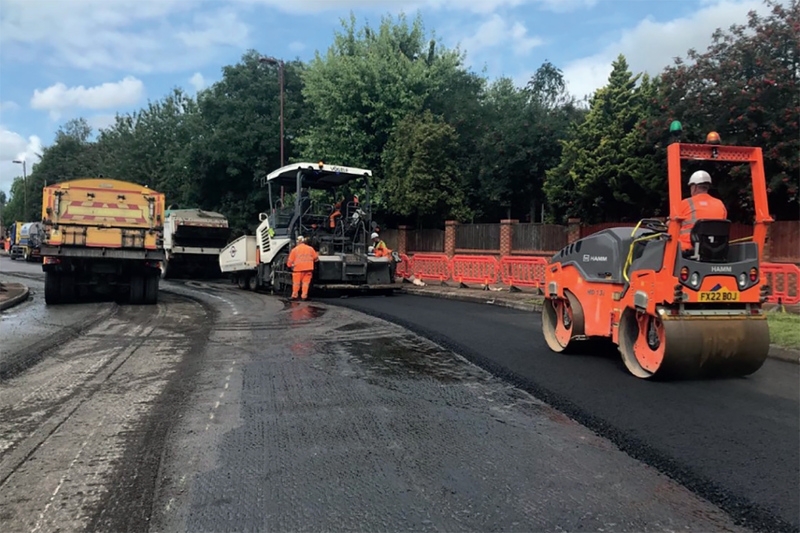 Targeting technical solutions not yet been tested at scale, Liverpool formed an innovation ecosystem to support a robust ‘optioneering’ approach to decarbonise the city’s transport
Go back to the Cities Encyclopaedia
Like many cities across the UK, Liverpool has made ambitious commitments to reduce carbon emissions across city council activities by 2030 to combat the threat of accelerating climate change.
While Liverpool City Council activity only directly contributes approximately 1% of the city’s emissions, it has a key role to play in leading by example, as well as facilitating and encouraging innovation and change wherever practically possible.
Traditionally, decarbonisation of transport in Liverpool focused on the promotion of active travel and encouraging sustainable use of public transport. This is in line with the evidence base prepared to underpin Liverpool’s net-zero commitments. However, in the longer term, focusing only on how the transport network is used will not be enough to unlock our commitments, as local road infrastructure and maintenance can make a significant and ongoing contribution to greenhouse gas emissions, climate change impacts and future resilience. So, while we recognise that this won’t be an easy task, the city’s highways, transport and parking teams have accepted the challenge of reducing carbon in day-to-day practices. We aim to accelerate this through our involvement in the ADEPT Live Labs 2 programme.
Read more
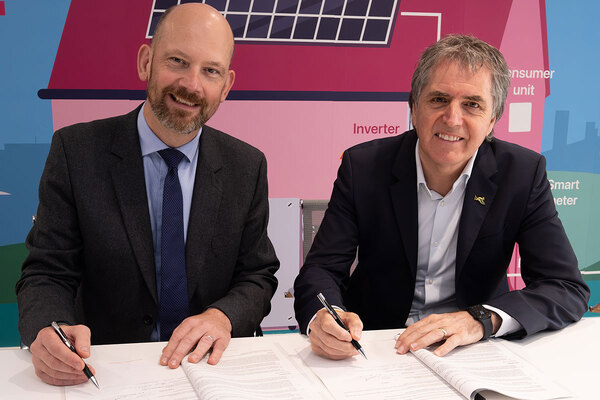
ADEPT Live Labs 2 is a UK-wide programme funded by the Department for Transport that will run until March 2026. It is focused on decarbonising local road provision. As one of seven Live Lab 2 projects awarded funding, Liverpool City Council is utilising this additional £3.9m to connect the entire value chain across the full lifecycle of the highways asset. We are using a collaborative approach to create an underpinning framework for Liverpool, which can be replicated nationwide, integrating decarbonisation principles into everyday operational highways processes for local authorities.
Deliberately targeting technical solutions which have not yet been tested at scale across a UK city, we are collaborating with industry specialists, academic partners and our local supply chain to form an innovation ecosystem to support a robust ‘optioneering’ approach. We are implementing a user-friendly decision-making tool which allows us to consider the full lifecycle carbon implications of highways maintenance schemes before any significant investment is made. Our so-called carbon hierarchy lens toolkit is designed to make data collection and assessment simple and prompt. It considers the fundamental objectives and requirements of a scheme, work and design scope, the activity and inventory-based carbon footprint associated with material quantities and operational processes, as well as social impacts. A focus on local specifics enables accurate full lifecycle cost and carbon measurement, and improved awareness for decision-makers at all levels.
“The city’s highways, transport and parking team have accepted the challenge of reducing carbon in day-to-day practices”
This tool aims to offer a comprehensive solution for Liverpool to better understand the environmental impact of materials, optimise decarbonisation efforts, standardise data tools, reporting and evaluation processes for consistency, and enhance clarity in approaches to design, planning and policy-making related to all carbon emissions in highway maintenance. It will also incorporate industry innovations across every stage of project delivery.
While there are a range of carbon-management tools on the market, we believe our hybrid approach adds value. It delves into considering carbon not just at the construction phase, but throughout the extended lifecycle of the asset or network, including anticipated maintenance, refurbishment and repairs.
Working with innovation industry specialists Pell Frischmann, Proving Services and Colas, our extended optioneering framework will bridge the gap between the council as the commissioning authority and its range of subcontractors across the design and build value chain to create a carbon-standardised approach. Our aim is for project outputs to prompt a change in our current standards, which may include the use of innovative materials, processes, or even the design and construction practices used. Through demonstrations on highways in Liverpool, our project will showcase innovative technology and new materials, and generate blueprints and user manuals supported by comprehensive data on carbon impact.
Within the context of Live Labs, we need to show our approach has relevance outside Liverpool: how the optioneering process and configurator tools generalise to other authorities, and how we can measure these impacts. Our work with the Future Highways Research Group through Proving Services will be fundamental to testing these approaches.
Focusing on urban contexts, Liverpool’s Live Lab can therefore act as a comprehensive case study for other cities, and we will share our learnings with other local authorities so that they, too, can benefit. This will start with a collaboration with Aberdeen, as both councils share coastal features and urban environments, but will also include shared learning with Newcastle City Council to provide initial feedback on the tool and its applicability outside the Liverpool test bed.
We face a significant challenge in moving from our conceptual approach to practical implementation. This challenge stems from the broad landscape of emerging innovations and new operational processes, all of which have the potential to reduce the carbon footprint of schemes in Liverpool. With an influx of new products on the market, it is important to undertake a systematic evaluation of each innovation considered to ensure that we understand the benefits of use, as well as the applicability and acceptability within Liverpool’s local context.
To achieve this, we adapted a matrix and scorecard to assess each innovation against predetermined criteria in the local context, while engaging a panel of local experts in the sector to provide constructive challenge. This has allowed us to ‘feed’ the optioneering process and make informed decisions for our upcoming demonstrators on a scheme-by-scheme basis.
We are also learning from other Live Labs, such as the UK Centre of Excellence for Decarbonising Roads (CEDR). Jointly led by North Lanarkshire Council and Transport for West Midlands, CEDR provides a hub for research and innovation for the decarbonisation of local road materials, developing a knowledge bank, real-life conditions testing and sharing and learning insights. Furthermore, work by East Riding of Yorkshire Council, which is undertaking a lighting testbed, will allow us to understand what assets are needed for future networks, and how they can be further decarbonised across their lifecycle.
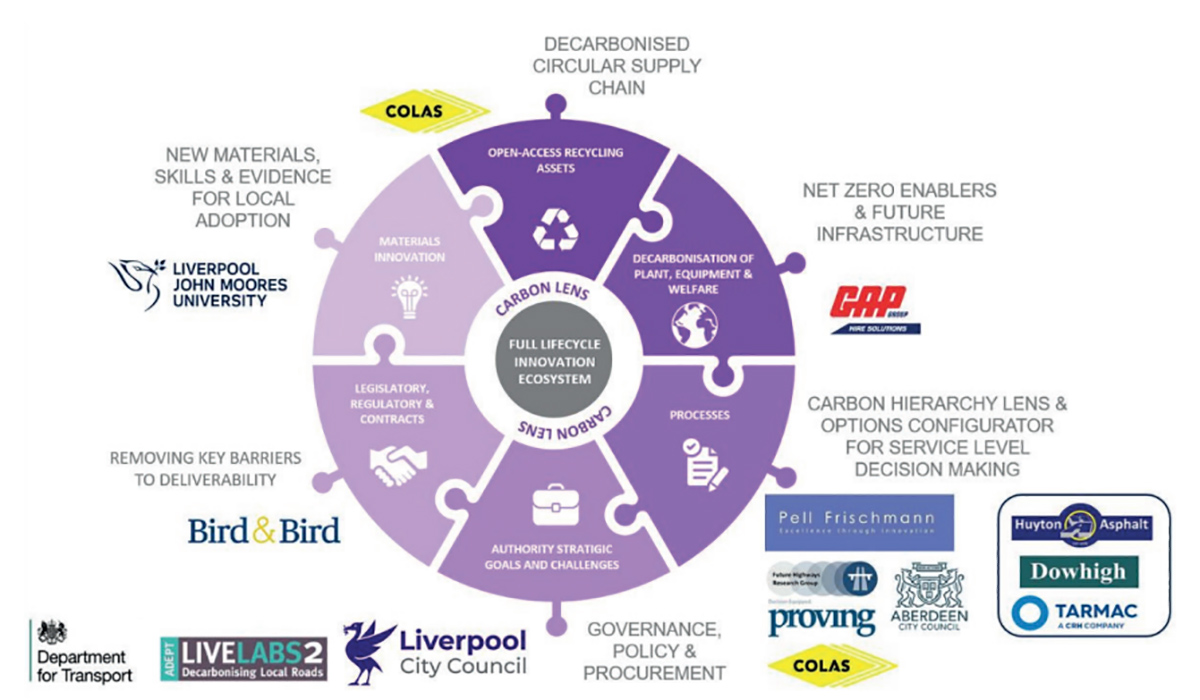
True innovation requires challenging the status quo, thinking outside the box, and taking calculated risks to drive progress and achieve outcomes. Our core project team is therefore completed by Bird and Bird, a legal practice specialising in public procurement, contracting and social value. This aspect of the project seeks to determine how to secure the deliverability of new approaches, innovations and technologies through existing contracts, while considering how we may need to change in the future.
This is fundamental if the council is to manage the risks associated with the use of innovations while accelerating decarbonisation beyond business as usual and leveraging best value from public resources. An example of this is how Gap Group – also part of the expert panel – will support us in delivering case studies focused on the adoption of low-carbon plant equipment and welfare assets. These studies will enable us to understand how new procurement standards can drive contributions towards net zero, based on demonstrated scenarios.
“We need to show our approach has relevance outside Liverpool”
Defining a lifecycle without precedents and shaping it into a functional model that aligns with our vision is complex. Via strong collaborative working, our existing highways improvement contractors (Dowhigh, Huyton Civils and Tarmac) have played a key part by sharing their approaches to scheme design, carbon accounting and recycling. The use of recycled highway material products will be a focus of our approach, in the context of sustainability, environmental considerations and circular-economy principles.
Connecting the other end of the value chain, Liverpool John Moores University will research the use of locally recycled materials in the design of new pavement materials, which we will look to test in our demonstrator schemes. We will also seek to test the material for suitability in other parts of the UK as part of the collaborative approach.
We believe Live Labs will make a significant contribution to the ambitious Realising Net Zero Liverpool plan, which is currently in development with support from the Department for Energy Security and Net Zero. This plan has synergy with Live Labs as it also focuses on assessing whole-life carbon impacts. Its simple carbon-accounting processes for construction, materials and operational emissions helps us work with contractors to understand their existing data-collection processes and identify opportunities to displace high carbon-intensity materials with lower-impact ones.
We welcome engagement with the local authority highways sector, to stimulate further discussions and interactions. Please feel free to contact us at LiveLabs@Liverpool.gov.uk.
This article was originally published in July 2024
Sign up to Inside Housing’s Sustainability newsletter
Sign up to Inside Housing’s weekly Sustainability newsletter, featuring our in-depth coverage of the sector’s journey to delivering net zero.
Already have an account? Click here to manage your newsletters.
Related stories