Newcastle: Building from the bottom up, creating low-carbon neighbourhoods
Newcastle has made the commitment to have net zero emissions by 2030. It is open and honest about the challenge, which will require far-reaching change in every part of the city, and will need collaboration and partnership working to deliver


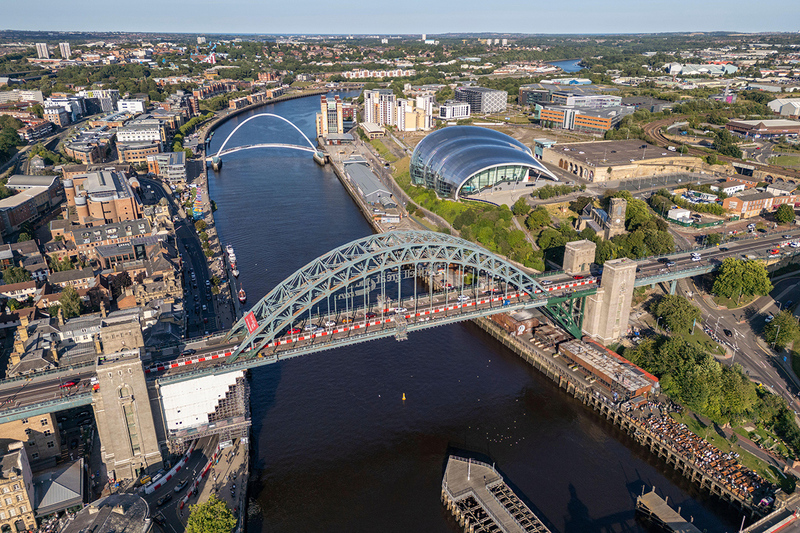 Newcastle has made the commitment to have net zero emissions by 2030. It is open and honest about the challenge, which will require far-reaching change in every part of the city, and will need collaboration and partnership working to deliver #UKhousing
Go back to the Cities Encyclopaedia
Newcastle City Council announced a climate emergency in 2019. It took a year to develop a strategic action plan. This was not just about writing a plan, but also involved setting up the right structures and recruiting teams to support change on a vast scale and over the course of a number of years. The Net Zero Newcastle: 2030 Action Plan sets out the scale of the challenge the city faces, and highlights where action is required to mitigate and adapt to climate change. The plan highlights over 100 ways in which residents, businesses and organisations can work together to achieve net zero.
Tim Rippon, principal climate change advisor at Newcastle City Council, notes that some external issues were not foreseen when the plan was produced, not least the impact of the COVID pandemic, but he feels that, on balance, things are progressing well. “Not everything moves at the same pace and some programmes are working ahead of others, but we have time to develop them all within our original timescales.”
Read more


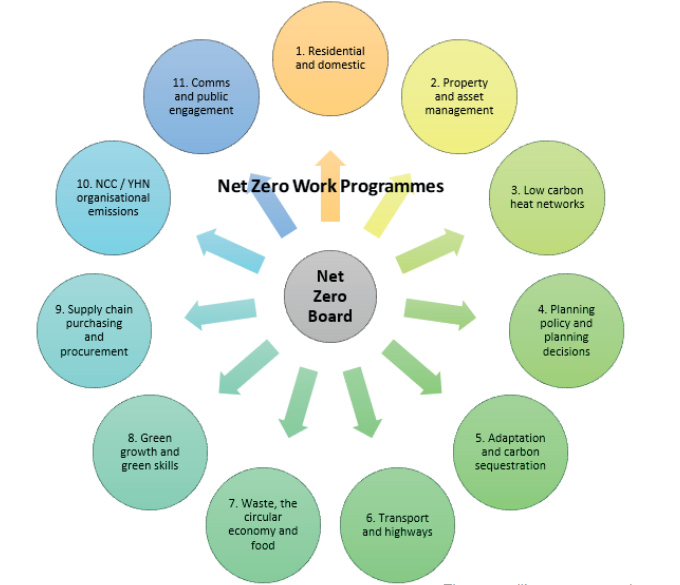
The action plan has 11 work programmes:
- Residential and domestic
- Property and asset management
- Low-carbon heat networks
- Planning policy and planning decisions
- Adaptation and carbon sequestration
- Transport and highways
- Waste, the circular economy and food
- Green growth and green skills
- Supply chain purchasing and procurement
- Newcastle City Council/Your Homes
- Newcastle organisational emissions
- Communications and public engagement
The fact that there are 11 programmes shows the complexity of delivering net zero, and consideration has to be given to the interconnectedness of work in this area. The council is trying to “simplify the process” where possible, but, as Mr Rippon acknowledges, infrastructure is the key to ultimate delivery.
The ongoing decarbonisation of the grid is helping, and the council has focused on decarbonising social housing (Newcastle has 35,000 social homes), because this allows it “to make impact at scale”, Mr Rippon says.
“[Heat networks] are a fundamental part of our strategy,” says Mr Rippon. “Infrastructure is key to the delivery of net zero. We are one of six pilot cities for heat-network zoning.”
The government says zoning will fundamentally transform the development of heat networks in towns and cities across England. By designating zones where heat networks are expected to offer the lowest-cost solution for decarbonising heat, local authorities and developers can quickly identify where new large-scale strategic heat networks should be built.
Newcastle is proud of the role it is playing in progressing this approach. The city is using its experience to provide feedback to the government to create a “real-life” evidence base to unlock funding.
When it comes to balancing decarbonisation with other council priorities, Mr Rippon believes “strong leadership is the key”.
The council has worked hard to educate and engage its employees at all levels to understand why it is taking the decarbonisation approach it is, and how they can add net-zero criteria into their strands of work.
“The council is trying to simplify the process of delivering net zero”
Mr Rippon sees the purchasing power of the council as a positive lever to create a larger low-carbon market locally and regionally. I the plan, the council says, “Our ambition is for a green city of the future, which values all residents, provides quality sustainable housing, a lowc-arbon economy which addresses poverty and looks to ensure all people feel invested and included by challenging social inequality.”
So how has Newcastle engaged its residents? It started with a call for evidence which resulted in over 1,200 responses. This provided a good evidence base for the council to develop its decision-making and informed the creation of the action plan.
In addition, the city undertook face-to-face engagement by hosting a series of summits. These summits included a wide range of residents: young people, the student community, businesses and voluntary groups.
The summits were supplemented by a citizen’s assembly led by the North of Tyne Combined Authority, which produced to a recommendation report. This advanced the creation of a brand identity to support the council’s net-zero activity, to accentuate the positive and make the switch to net zero aspirational for local residents.
How is the council managing the competing demands of increasing housing availability and reducing the carbon footprint of the city’s homes?
Mr Rippon said that, since the announcement of the climate emergency, the climate change team has been involved in reviewing major applications, but the secret is the timing of these interactions. “We would review before they got to planning,” he says, which proved beneficial, as it allowed developers to understand clearly what was expected and build requirements into the design of their proposals.
Impact of Building Regulations
Mr Rippon feels that the uplift of Part L of the Building Regulations in 2021 also helped. New buildings built to these standards are expected to produce lower regulated carbon dioxide emissions and have higher fabric energy-efficiency standards.
“It is hard now to put gas boilers into new homes” and this will only continue with the introduction of the Future Homes Standard, says Mr Rippon. “This will help us to make the case at the local level and for the majority of new homes to become low carbon in operation.”
He thinks housing operators will be able to take a holistic view and look to see “how we can develop new technology that can deliver on damp and mould and net-zero requirements”.
“Everything we are trying to do relates back to the infrastructure we are working with”
This is linked to the Newcastle approach. “We are building from the bottom up, using our knowledge to create low-carbon neighbourhoods. Everything we are trying to do relates back to the infrastructure we are working with, and we are trying not to topple the grid through our actions,” he says.
He sees the potential of microgrids across the city. In effect, these are local electricity grids that use local sources of supply. They are attached to the national grid, but have the ability to function independently should they need to.
Mr Rippon sets out three key areas for the continued delivery of the Newcastle action plan. First, he stresses the importance of heat networks in delivering the council’s 2030 ambition. Second, the ability of the council to drive the local market and carbon disclosure through procurement frameworks and the requirements they put in place. Third, as new low-carbon technologies and improved products come to market, it is important to capture that innovation to deliver net zero at pace and affordably.
Newcastle has set itself a bold ambition of reaching net zero by 2030. It is displaying a clear understanding of the issues and challenges ahead, as well as highlighting the opportunities successful delivery presents for its numerous local stakeholders. The city has based its decisions on clear evidence collected locally, and an acknowledgement that it needs to take a “positive but realistic” approach to delivery.
This article was originally published in December 2023
“With the talent and ambition across our region, we’re confident that north-east Scotland will continue to be a key player in shaping a positive, low-carbon future.”
Sign up to Inside Housing’s Sustainability newsletter
Sign up to Inside Housing’s weekly Sustainability newsletter, featuring our in-depth coverage of the sector’s journey to delivering net zero.
Click here to register and receive the Sustainability newsletter straight to your inbox.
And subscribe to Inside Housing by clicking here.
Already have an account? Click here to manage your newsletters.
Related stories