You are viewing 1 of your 1 free articles
We need your insight on delivering new towns for the 21st century
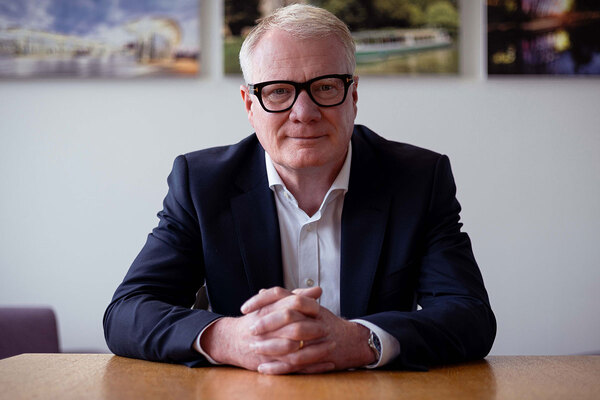
We need the sector’s insight for our new inquiry that aims to ensure the success of new towns, writes Lord Gascoigne, chair of the House of Lords Built Environment Committee



Lord Gascoigne is chair of the House of Lords Built Environment Committee
 We need your insight on delivering new towns for the 21st century #UKhousingWe need the sector’s insight for our new inquiry that aims to ensure the success of new towns, writes Lord Gascoigne, chair of the Built Environment Committee #UKhousing
The government has set itself ambitious targets for housebuilding and growth. At the same time, it is pressing ahead with major reforms both to local government and regional devolution, as well as the planning regime.
At the intersection of all of these initiatives is the government’s new towns policy. The New Towns Taskforce, under the leadership of Sir Michael Lyons, is currently investigating locations for the first wave of new towns and is planning to conclude its work this summer.
Following in the footsteps of the garden cities constructed at the turn of the 20th Century, the original, post-war new towns programme has ultimately proven, on the whole, to be successful. Towns and cities such as Stevenage and Milton Keynes made a huge contribution to the reconstruction of the UK’s housing stock after the ravages of the Second World War and enabled workers to live in comfort close to the industries that needed them.
However, subsequent programmes aiming to emulate these very real achievements have had much more limited success and, over the past four decades or so, have struggled to get off the ground at all.
Read more
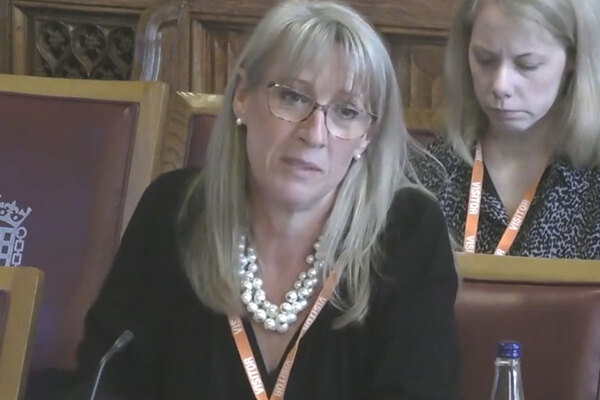

As incoming chair of the House of Lords Built Environment Committee, I was proud that my first act was to launch the committee’s major inquiry into the new towns policy. The committee recognises the importance of the policy and is determined that it should not go the way of recent programmes. We want to support the government to the best of our ability to ensure the success of the new towns programme.
Early on, we recognised that this is an enormous topic. We wanted to be able to investigate the issues in as much depth as possible, but that we do so in a way that is digestible and flexible. Therefore, we decided to break the inquiry into a series of discrete modules, each looking at the programme through a different lens and each building on the work of its predecessors and adapting to what we learn.
The first module, which is now well underway, is investigating the practical delivery of the programme. We are looking at the legal, economic, financial, governance and delivery frameworks necessary to deliver a programme of this scale and complexity to ensure that the structures are in place for the government to be able to get spades into the ground and deliver these vital developments.
We will continue to take oral evidence until July. Please do follow the progress of the inquiry at new towns: practical delivery – committees – UK parliament, where you will find links to our live broadcasts, as well as recordings and transcripts of previous oral evidence sessions.
Even more importantly, we are keen to receive written evidence from as many people as possible across all sections of society. We know that this is a topic that excites people from across the country and from all walks of life. Indeed, such has been the level of interest in the inquiry that we have now extended the deadline for submissions by 10 days – you can continue to submit written evidence until 00:01 on Friday 23 May.
You can find out about the questions we want to answer and the evidence we are hoping to receive on the inquiry website: call for evidence – committees – UK parliament.
The government is eager to deliver rapid change on a grand scale. However, building for the future isn’t just about getting it done – it’s about getting it done right, without sacrificing quality for quantity. Previous UK new towns programmes were guided by remarkable vision, but sometimes fell short of their ambitions due to foreseeable challenges.
As our inquiry develops and monitors the impact of the government’s bold planning reforms, we will act as a critical friend, offering advice, support and constructive challenge as the new towns programme takes shape.
Lord Gascoigne, chair, House of Lords Built Environment Committee
Sign up for our development and finance newsletter
Already have an account? Click here to manage your newsletters
Related stories